
Inter Milan faces a formidable challenge on Tuesday, February 24, tasked with overturning a two-goal deficit against Norway's Bodø/Glimt at San Siro to keep their UEFA Champions League campaign alive. The match, crucial for Italy's football prestige and Inter's financial outlook, will be overseen by Spanish referee Alejandro Hernández, appointed by UEFA's refereeing committee.
Why This Matters
• Economic stakes: A Champions League exit at the playoff stage would cost Inter an estimated €10M-15M in prize money and broadcasting revenues, impacting the club's transfer budget.
• Match details: Kick-off is set for 21:00 on February 24 at San Siro. Inter must win by at least two clear goals to force extra time or score three unanswered to advance directly.
• Referee appointment: Hernández, a FIFA-listed official since 2014, brings extensive La Liga and European experience to a high-pressure elimination fixture.
The Norwegian Challenge: What Happened in the First Leg
Inter's trip to Norway on February 18 ended in a disappointing 3-1 defeat at Aspmyra Stadion, where Bodø/Glimt outperformed the Italian side. The Norwegian team demonstrated strong attacking football, with Sondre Brunstad Fet opening the scoring in the 20th minute. Francesco Pio Esposito briefly equalized for Inter in the 30th minute, but Jens Petter Hauge (61') and Kasper Høgh (64') added goals to establish a commanding advantage.
The first-leg result leaves Inter facing a steep challenge at home, but the San Siro crowd and familiar surroundings could provide a psychological lift for the comeback attempt.
Bodø/Glimt's Approach: High-Energy Football
The Norwegian champions have earned respect across Europe for their fluid, high-energy attacking system. Their tactical approach emphasizes aggressive pressing, rapid transitions, and building attacks from the back. This style has proven effective against European opponents and aligns with the pressing intensity seen in teams like Atalanta.
For Inter, understanding Bodø/Glimt's tendency to convert possession into swift counter-attacks will be essential for the second leg strategy.
Inter's Challenge: Overcoming the Deficit
Inter's path forward requires scoring at least two goals without conceding to force extra time, or netting three unanswered to advance in regulation. The mathematics are stark but not impossible. San Siro has witnessed memorable European comebacks, and home advantage could prove decisive.
Inter will likely employ a more attacking approach than the first leg, seeking to exploit Bodø/Glimt's defensive structure through wing play and sustained pressure. The home crowd's energy will be a significant factor in maintaining intensity throughout the match.
Hernández Takes the Whistle: What to Expect from the Spanish Official
Alejandro Hernández Hernández, to give his full name, has officiated top-tier European matches since earning his FIFA badge in 2014. His portfolio includes Champions League assignments alongside regular appearances in Spain's La Liga.
UEFA's refereeing standards for the 2025-26 Champions League knockout phase, outlined in mid-season by refereeing chief Roberto Rosetti, call for heightened vigilance on dangerous contact, stricter monitoring of simulation, and clearer VAR communication. Rosetti's directives also emphasize limiting mass confrontations by restricting dialogue with officials to team captains only.
For Hernández, this means he'll likely adopt a no-nonsense approach to tactical fouls and gamesmanship, particularly in the technical areas where tension runs high in elimination fixtures.
What This Means for Residents
For Italy's football community, Tuesday's match carries implications beyond sporting glory. Inter's progression would secure continued representation in Europe's most lucrative club competition, bolstering the nation's UEFA coefficient ranking and preserving automatic qualification slots for Serie A clubs in future seasons.
Financially, a Champions League exit at this stage would reduce Inter's revenue by an estimated €10M-15M, constraining summer transfer activity and potentially affecting the club's ability to compete for domestic honors. For Milan-based businesses—hotels, restaurants, and transport services—a deep European run generates substantial economic activity through matchday tourism.
From a competitive perspective, the fixture represents an important test for Italian football's standing in Europe. Success would demonstrate Serie A's ability to compete against stylistically different opponents; failure would fuel ongoing debates about Italian football's competitiveness at the highest European level.
The Coefficient Context: Italy's European Standing
Italy currently ranks among the top European leagues in UEFA's coefficient system, which determines how many Champions League berths each nation receives. Every victory, draw, and advancement in European competition adds points to this national tally. Inter's elimination would not only disappoint their supporters but also marginally weaken Italy's collective standing in future allocation battles with Germany, England, and Spain.
For context, each knockout round progression is worth significant coefficient points, distributed across all Italian clubs competing in UEFA tournaments. With Juventus and Atalanta also battling in the playoff round, Italy's cumulative performance this week will shape the landscape for seasons to come.
San Siro Under the Lights: Atmosphere as the 12th Player
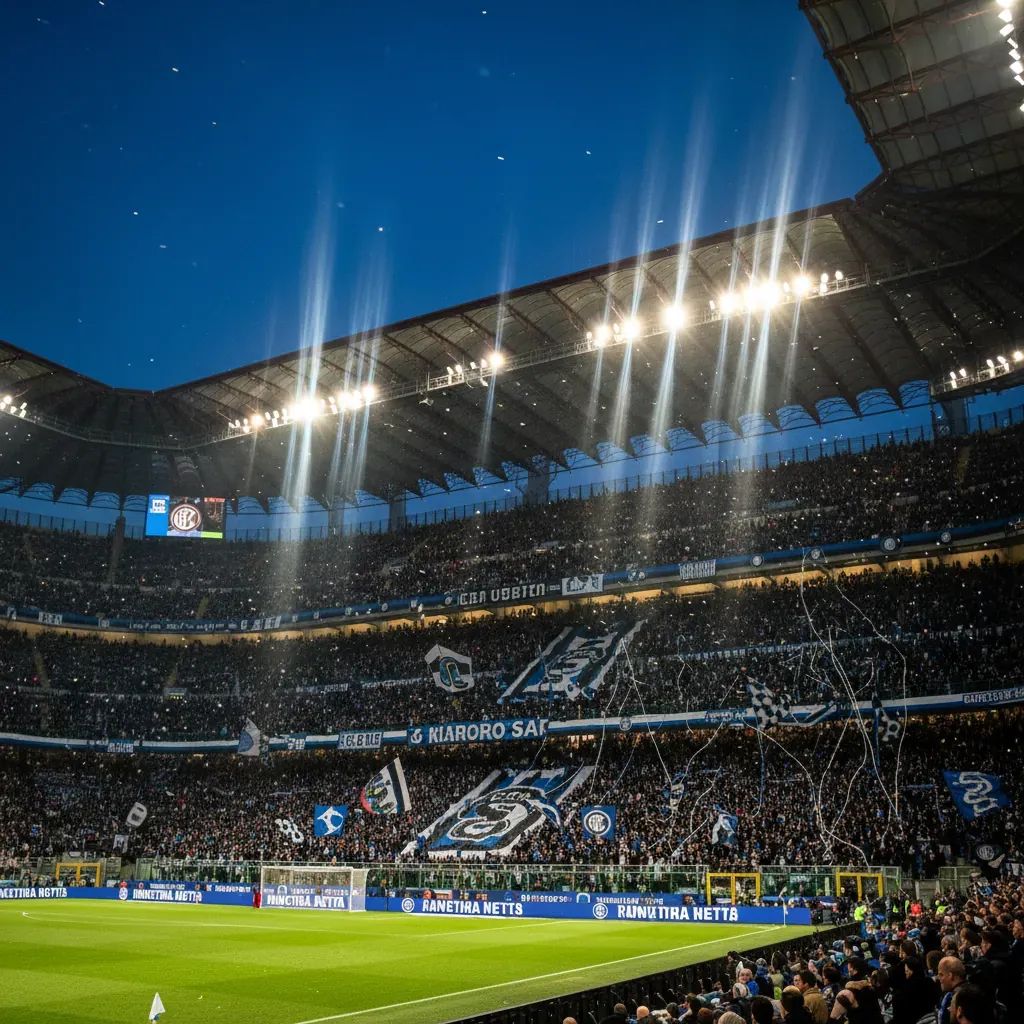
One factor working decisively in Inter's favor is the intimidating atmosphere of San Siro on European nights. The historic stadium, shared with city rivals AC Milan, transforms into a cauldron of noise and color when continental honors are at stake. For a Norwegian side accustomed to different home environments, the sensory experience could prove influential in a tight contest.
Inter's supporters are expected to create an energetic environment designed to inspire the home players and put pressure on the visitors. The crowd's role in close elimination matches is often underestimated but frequently decisive.
Looking Ahead: Implications for Serie A's Season
Beyond the immediate Champions League stakes, Tuesday's result carries implications for Inter's domestic campaign. An early European exit would free up midweek fixture congestion, potentially allowing greater focus on the Serie A title race and Coppa Italia. Conversely, it would represent a setback that could affect momentum throughout the spring.
For observers across Italy, the match offers compelling drama: Can one of the nation's storied clubs overcome adversity and an unfamiliar opponent to preserve European ambitions? Or will Bodø/Glimt's model—built on tactical discipline and efficient execution—continue its strong European run at the expense of established Italian football?
The answer arrives Tuesday night, under the San Siro floodlights, with a Spanish referee keeping time and Italy watching closely.


