
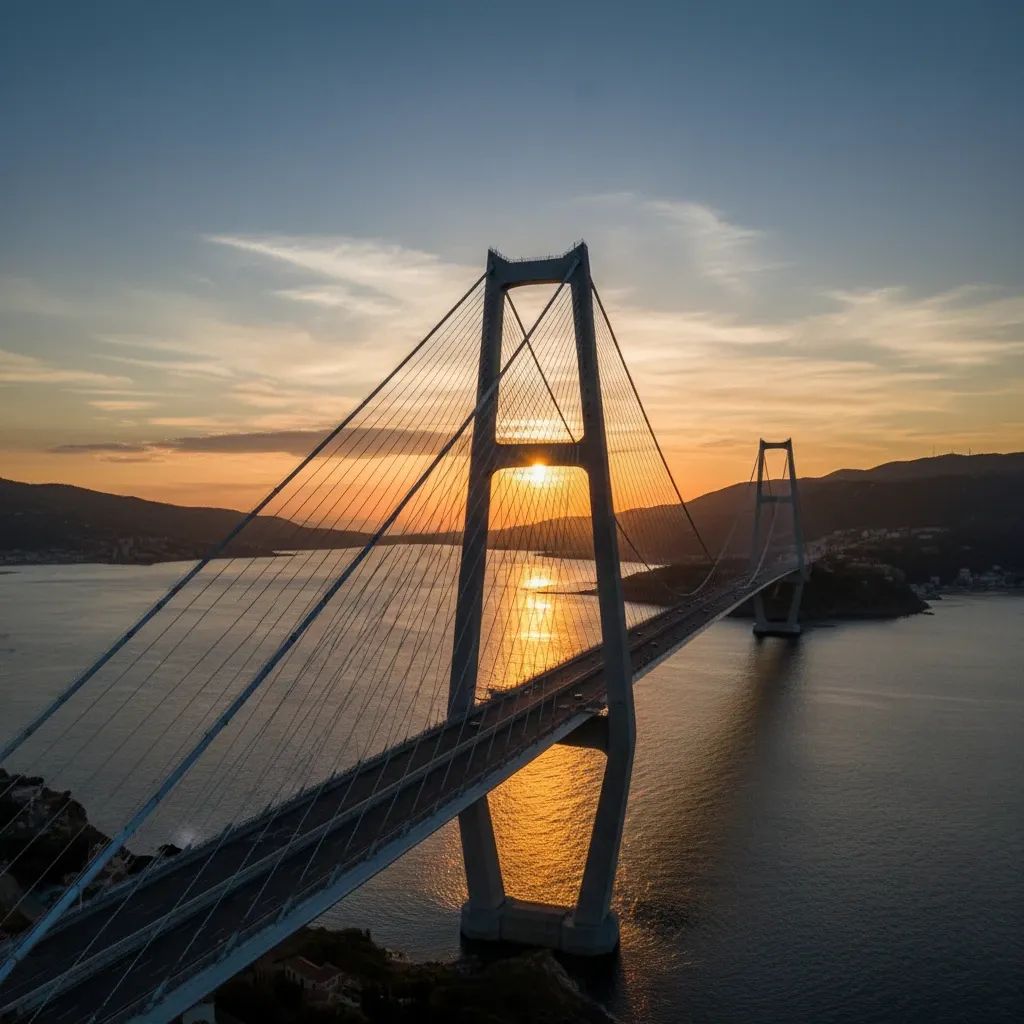
Italy's National Anti-Corruption Authority has delivered a blunt assessment of the latest legislative push to advance the Strait of Messina Bridge: the government's decree fails to address the core legal risk and may actually deepen the country's exposure to litigation and criminal infiltration. Giuseppe Busia, president of ANAC (Autorità Nazionale Anticorruzione), told senators that without a fresh public tender, the €13.5 billion project remains on shaky legal ground—and wide open to organized crime.
Why This Matters
• No new tender: The Italy Infrastructure Ministry is reviving a previous contract despite a significant cost increase, which ANAC says violates EU Directive 2014/24 requiring competitive rebidding for contracts with substantial budget growth.
• Litigation magnet: Busia warned that proceeding without a new procurement process invites drawn-out legal battles and exposes the state to major damage claims from the private consortium.
• Mafia risk: The anti-corruption chief flagged the bridge as a high-value target for organized crime, urging strict oversight and reinforced monitoring—measures the current decree does not adequately mandate.
• Senatorial scrutiny: The Italy Senate Environment Committee is examining the bill, with lawmakers weighing amendments to address ANAC's concerns.
The Legal Challenge: Contract Revival or Procurement Breach?
At the heart of ANAC's critique lies a fundamental question of European compliance. The original contract has undergone significant cost revision since its initial conception. After years of dormancy, the Italy Council of Ministers approved Decree-Law 32 to reactivate the concession and fast-track approvals, with the bridge's current price tag now standing at €13.5 billion.
Under EU procurement rules, any public contract resuming after substantial modification or cost escalation must be retendered to ensure fair competition. Busia emphasized during his Senate testimony that sidestepping a new bidding round hands the consortium a powerful legal position and eliminates competitive discipline on pricing and execution quality.
"The solution is a new public tender, a new contract in favor of a project that could be more advanced and modern," Busia told lawmakers. "It would avoid litigation and guarantee compliance with European norms."
Instead, the decree revives the existing framework, granting the consortium a strong negotiating position and shifting financial risk overwhelmingly onto taxpayers—a structural imbalance ANAC described as "tilted in favor of private interests."
Organized Crime: The Shadow Over Major Infrastructure
Sicily and Calabria's entrenched mafia networks—Cosa Nostra and the 'Ndrangheta—have long preyed on major public works. The bridge, spanning the Strait between Messina and Reggio Calabria, represents a significant procurement opportunity for southern Italy.
Busia's warning was unequivocal: "The construction of the Strait of Messina Bridge will attract the appetites of organized crime." He insisted on "reinforced and precise controls, and constraints on the use of subcontracting."
The Italy Infrastructure Ministry, led by Deputy Prime Minister Matteo Salvini, has pledged enhanced anti-mafia safeguards for the project, including mandatory vetting procedures and specialized oversight to prevent criminal infiltration of the supply chain.
ANAC, however, remains skeptical. Without binding statutory language in the decree mandating subcontracting caps and pre-award audits, Busia argues, enforcement will depend on ministerial goodwill rather than legal obligation.
What This Means for Residents
For Sicilians and Calabrians, the bridge is both promise and peril. Proponents tout job creation and improved connectivity that could enhance transport between the island and the mainland, boosting tourism and freight logistics. Critics fear a replay of Italy's costliest infrastructure debacles—projects that run over budget and schedule, straining public finances.
The decree's procedural structure compounds uncertainty. Busia noted that rigid procedural rules may complicate rather than clarify the decision-making process, potentially slowing resolutions on design changes, cost overruns, or environmental assessments.
Translation for everyday impact: disputes over project modifications could become entangled in bureaucratic delays, affecting contractor payments and public accountability.
Residents also face questions about disruptions during the construction phase, which is expected to span several years. Environmental considerations and seismic risk in one of Europe's most geologically active zones remain points of contention.
ANAC's Core Recommendation
ANAC contends that the most effective path forward is a new competitive tender. The government's response with Decree-Law 32 has attempted to address concerns through:
• Updating the economic-financial plan with current cost assessments.
• Ordering technical reviews of complex engineering aspects.
• Strengthening coordination at the Infrastructure Ministry level.
Despite these adjustments, ANAC maintains that the fundamental flaw persists: the absence of a new tender leaves the legal foundation vulnerable and the cost structure opaque.
The Political and Fiscal Stakes
With €13.5 billion on the line, the bridge is the Meloni government's flagship infrastructure commitment—and a test of Italy's ability to deliver major projects while maintaining procurement integrity. Deputy Prime Minister Salvini has championed the crossing as a national priority, while oversight bodies warn of fiscal and legal risks.
ANAC's insistence on competitive rebidding reflects a broader institutional tension: can Italy marry political ambition with procurement integrity, or will expediency override the checks that European law and domestic oversight demand?
Busia's counsel to lawmakers was direct: procedural safeguards and transparent competition are essential. Whether parliament heeds that advice in the coming weeks will shape not only the bridge's trajectory but the credibility of Italy's anti-corruption framework.
For now, residents on both shores of the Strait are watching a consequential debate over governance, fiscal responsibility, and the nation's capacity to execute transformative infrastructure without descent into waste or scandal.


