
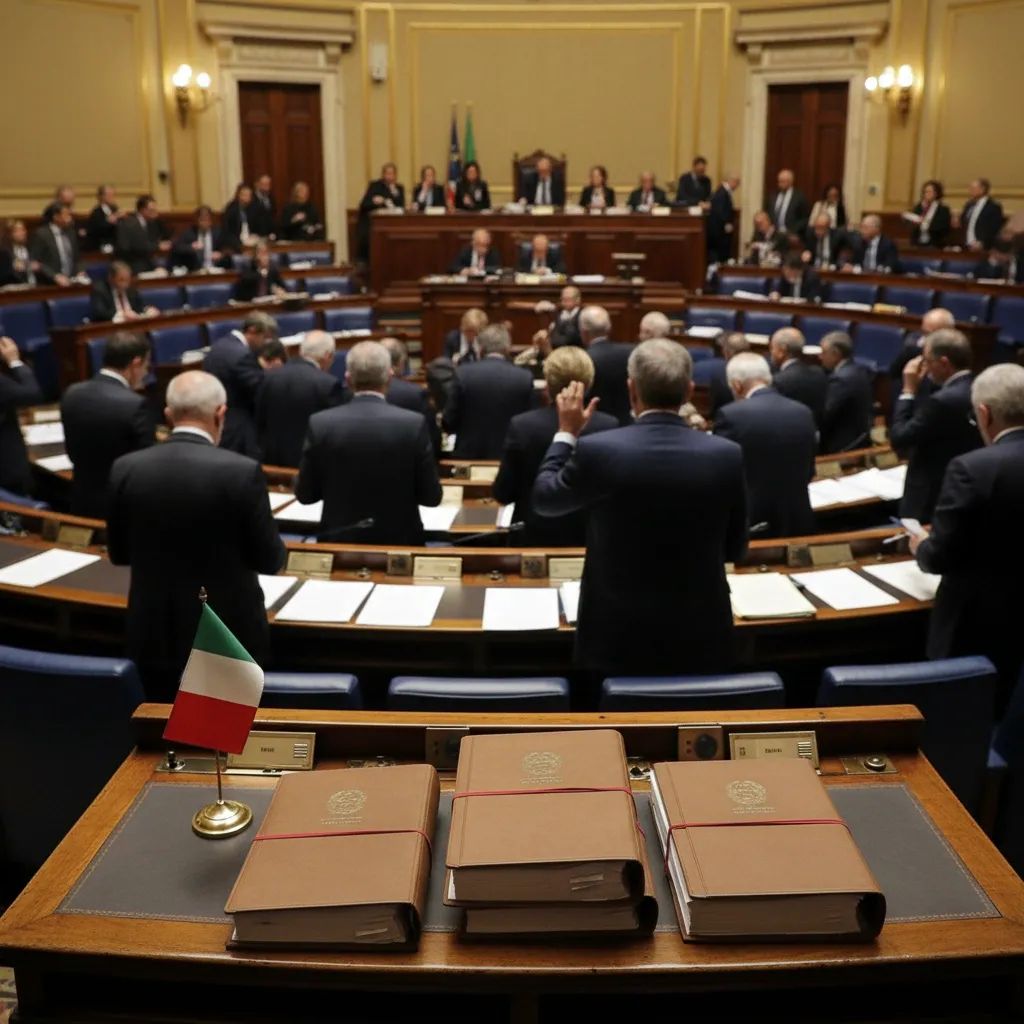
Italy's parliamentary opposition has filed no-confidence motions against Tourism Minister Daniela Santanchè in both legislative chambers, demanding immediate debate and forcing Prime Minister Giorgia Meloni to confront a political crisis that has simmered for three years. The move follows Meloni's extraordinary—and legally unprecedented—written request yesterday for Santanchè to resign, marking the first time the current administration has publicly distanced itself from the embattled minister despite ongoing criminal proceedings for alleged false accounting and aggravated fraud.
Why This Matters
• Political timing: The no-confidence push comes amid broader political tension following Italy's recent referendum defeat on justice reform, which delivered a stinging rebuke to Meloni's government and emboldened opposition parties.
• Ministerial stability: If Santanchè is forced out, it would be the first Cabinet-level casualty of the Meloni administration, potentially exposing vulnerabilities within the ruling coalition.
• Tourism sector impact: The Ministry of Tourism oversees a sector that represents a significant portion of Italy's economy—prolonged instability could delay policy decisions during the crucial spring tourism season.
• Legal precedent: Meloni's written dismissal request has no clear constitutional basis, raising questions about executive authority and ministerial autonomy that legal experts are examining.
The Three-Year Shield Cracks
Santanchè, a member of Meloni's Fratelli d'Italia party, has faced serious criminal accusations since 2023 tied to her role in the failed fashion company Visibilia Editore. Prosecutors allege she manipulated financial statements to inflate company value while serving as a board member, charges that carry potential prison sentences. Despite these allegations, Meloni has consistently defended her minister—until this week.
During today's Senate session at Palazzo Madama, opposition leaders demanded urgent scheduling of the no-confidence debate. Luca Pirondini, leader of the Five Star Movement (M5S) caucus, called the situation "an indecent spectacle that has dragged on for three years thanks to Meloni's shield." He urged the Prime Minister to "take responsibility" rather than allowing the controversy to continue damaging institutional credibility.
The Democratic Party's Antonio Nicita questioned the sudden reversal, pointing out that Parliament rejected calls for Santanchè's resignation in July 2023, July 2024, and as recently as February 2025. "What has changed today?" Nicita asked, drawing a comparison to describe the timing of the government's move. He formally requested that Meloni appear before Parliament to explain the abrupt policy shift and "respect this institution."
Cross-Party Pressure Mounts
Opposition unity on the no-confidence motion spans Italy's fractured political spectrum. Ivan Scalfarotto of Italia Viva linked the Santanchè controversy to broader tensions within the government, arguing that Meloni now faces political challenges that require accountability. "You must answer for it—not with second-tier officials, but with Giorgia Meloni, who is responsible," Scalfarotto said.
Tino Magni of the Green and Left Alliance (Avs) also backed immediate debate scheduling, reflecting the broad consensus among opposition forces that the Santanchè affair has become a litmus test for governmental accountability.
What This Means for Residents
For Italians, the parliamentary showdown carries implications beyond Rome's political theater. The Ministry of Tourism plays a pivotal role in regulating accommodation standards, promoting international travel to Italy, and distributing EU recovery funds earmarked for hospitality infrastructure. Leadership uncertainty during the March-to-June period—when tourism operators finalize summer season contracts and regional authorities coordinate promotional campaigns—could delay critical decisions.
Additionally, the constitutional questions raised by Meloni's dismissal letter are attracting legal scrutiny. Italian ministers serve at the Prime Minister's discretion but are also independent constitutional officers. Legal experts are examining whether a formal mechanism exists for a sitting premier to publicly demand a minister's resignation without actually dismissing them, creating ambiguity about Santanchè's legal obligations.
If the no-confidence motion advances, Parliament would hold a binding vote. A successful motion would compel Santanchè's immediate removal, though the timing remains uncertain—Senate President Ignazio La Russa controls the legislative calendar and could delay debate for weeks. Opposition leaders are pressing for scheduling within days, arguing that the matter has already consumed excessive parliamentary attention.
Political Context and Calculations
The opposition's aggressive stance reflects broader political tensions. Some political observers suggest that by distancing herself from the embattled minister, Meloni may be attempting to regain political standing while avoiding the appearance of protecting allies facing serious legal scrutiny. However, the government has offered no public explanation for the sudden shift in position.
Santanchè has consistently denied wrongdoing and refused to resign voluntarily. Her legal team argues that the charges stem from civil corporate disputes rather than criminal misconduct, and that her continued service poses no constitutional impediment. Italy's legal framework does not automatically disqualify ministers facing trial, unlike some European peers that mandate suspension upon indictment.
What Happens Next
The opposition's challenge is to convert political pressure into a binding parliamentary outcome. No-confidence motions require absolute majorities in both chambers—a threshold that remains mathematically difficult given the government coalition's numerical strength. However, the symbolic weight of forcing a public vote could fracture coalition discipline, particularly among moderate lawmakers uncomfortable with defending a minister facing fraud accusations.
For now, Italy's political establishment waits to see whether Meloni will personally address Parliament—a step opposition leaders frame as essential to democratic accountability. Her appearance or refusal could significantly influence the trajectory of this controversy. The coming days will determine whether this remains a manageable political issue or escalates into a broader Cabinet crisis with implications for Italy's legislative agenda and international standing.


