
The Italian Foreign Ministry has issued an urgent directive for all Italian nationals in Afghanistan to evacuate immediately, as Pakistan's sustained military offensive against the Taliban-controlled nation enters its most dangerous phase yet.
Why This Matters for Italians
• Commercial flight availability is dwindling — Italians still in Afghanistan must secure seats on the few remaining commercial routes out of Kabul before air corridors close entirely.
• Italy's Embassy operates from Doha, meaning no on-the-ground consular assistance is possible if the security situation deteriorates further.
• Kabul and Kandahar have come under direct bombardment — the capital experienced intense aerial strikes on February 26-27, marking the first time in years that core urban centers faced such concentrated foreign military action.
The Military Escalation
Pakistan declared what officials in Islamabad are calling "open war" against Afghanistan's Taliban government following a chain of cross-border incidents. On February 21, the Pakistani Air Force (PAF) struck seven alleged militant camps in the eastern provinces, targeting both the Tehrik-i-Taliban Pakistan (TTP) and Islamic State – Khorasan Province (ISIS-K).
Five days later, the campaign escalated dramatically. Pakistani jets bombed Kabul and Kandahar overnight between February 26 and 27, hitting densely populated areas and triggering a Taliban counteroffensive. Afghan forces responded with drone strikes and artillery barrages against Pakistani military facilities. The Afghan Ministry of Defense reported 18 civilian deaths, 8 soldiers killed, and 11 wounded in the initial Pakistani strikes.
Italian NGO Operations Under Strain
Italian humanitarian organizations are facing critical decisions as the conflict intensifies. Emergency, which operates surgical centers across Afghanistan, reported receiving wounded civilians following the February 26-27 strikes. Intersos, another Italian organization active in the country, warned that Afghanistan's healthcare infrastructure — already fragile after decades of conflict and the 2021 Taliban takeover — is collapsing under the strain of mass casualty events.
Several humanitarian groups have begun quietly relocating international staff to neighboring countries, though most decline to discuss evacuation plans publicly.
The Underlying Conflict
The current hostilities represent an intensification of a longstanding territorial dispute. The Durand Line, a 2,640 km border established in 1893, bisects the ethnic Pashtun homeland between Afghanistan and Pakistan. Afghanistan has never formally recognized this border, and cross-border tensions have simmered for decades. Pakistan accuses Afghanistan of harboring the TTP, a militant network Islamabad holds responsible for deadly terrorist attacks. The Taliban government denies this allegation.
International Responses
China called for immediate de-escalation and offered mediation. Russia and Iran also proposed themselves as neutral arbiters. The European Union's High Representative, Kaja Kallas, called for an immediate ceasefire, while UN Secretary-General António Guterres expressed concern for the civilian toll, warning that prolonged hostilities could trigger a humanitarian catastrophe in a country already suffering from extreme poverty.
Consular Support and Registration
The Viaggiare Sicuri portal — Italy's official travel advisory platform — upgraded its Afghanistan notice on February 27. The Italian Embassy has not operated on Afghan soil since August 2021, when Italy completed its military withdrawal.
All consular services are now channeled through Doha, Qatar, where Italian diplomats maintain a mission. The embassy provides a 24-hour emergency contact line (+974 5015 3374), though officials emphasize this is a communications channel, not a rescue hotline. Physical extraction by Italian authorities is not feasible.
The Foreign Ministry strongly recommends that anyone remaining in Afghanistan register their presence on the Viaggiare Sicuri website or mobile app. This registration allows the government to maintain communications and send emergency alerts, but does not guarantee assistance.
What's Available for Departure
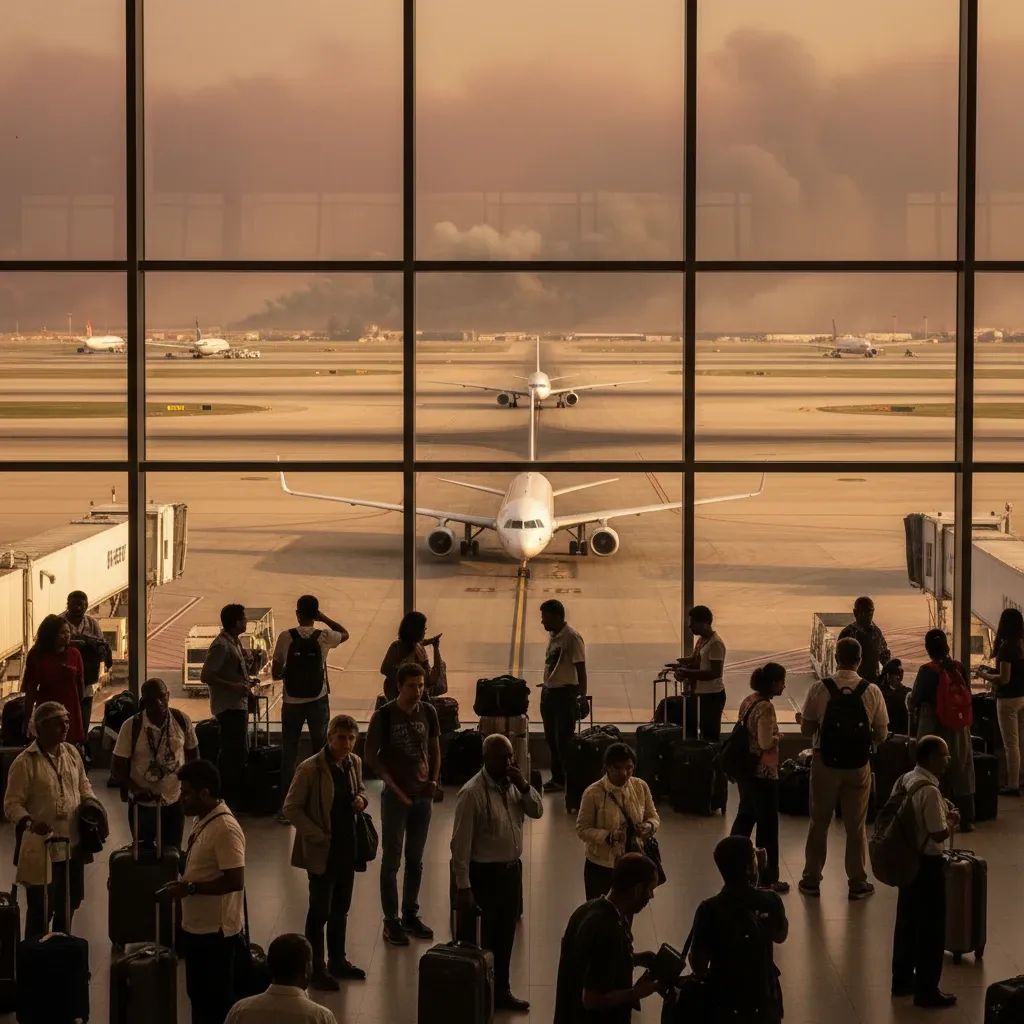
Commercial flights from Hamid Karzai International Airport in Kabul continue on a reduced schedule, primarily to Istanbul, Dubai, and Doha, though airlines are revising schedules daily. Anyone with family, colleagues, or business connections in Afghanistan should facilitate departure now.
What Comes Next
The trajectory of the conflict remains unpredictable. Pakistan has not ruled out ground incursions into Afghan territory, and the Taliban have vowed a "comprehensive response" if strikes continue. Neither side has articulated clear ceasefire conditions, and no third-party mediation effort has gained traction.
For Italy, the immediate priority is ensuring that no Italian national is stranded in a combat zone. The February 27 advisory represents the most urgent language the Foreign Ministry has used for Afghanistan since the August 2021 Kabul airport evacuation — but unlike that crisis, this one offers no safety net, only a shrinking number of commercial seats and a narrow window to use them.


