
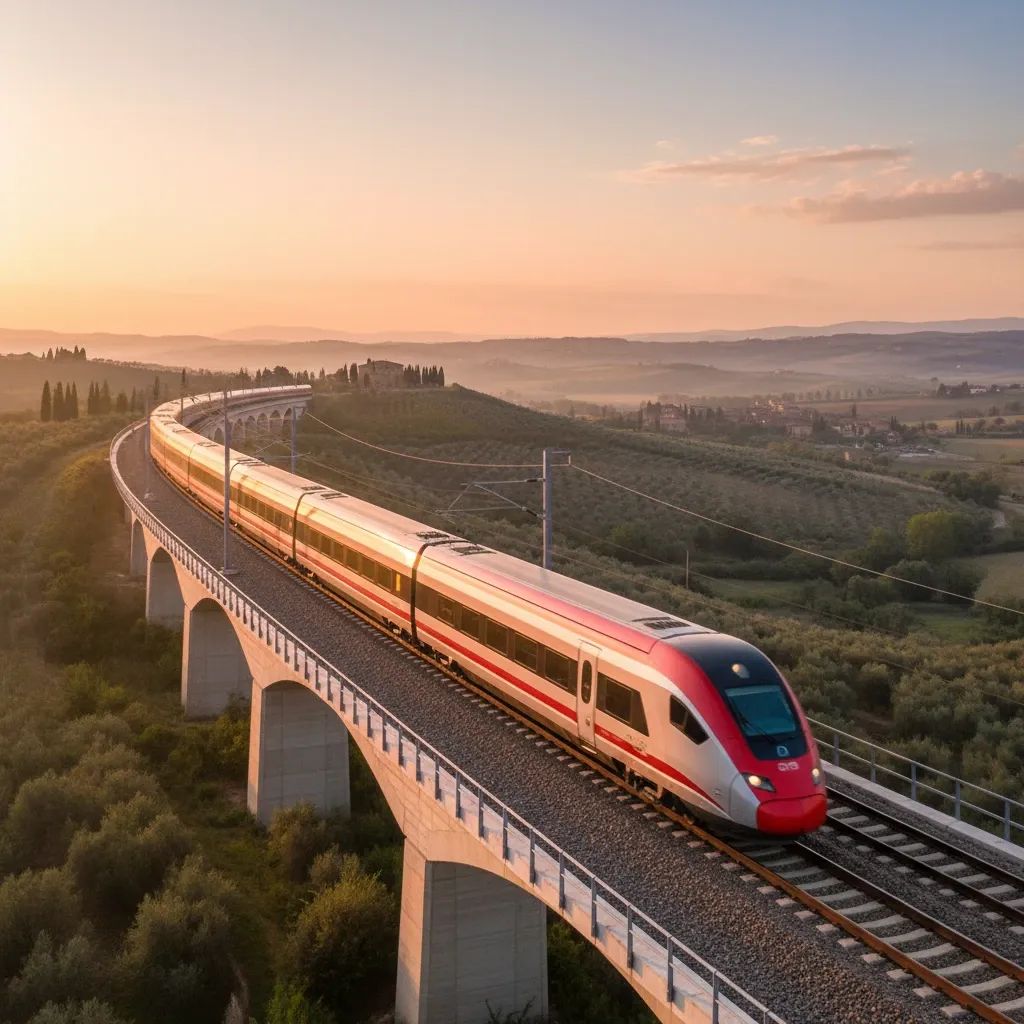
Italy's competition authority has forced the national railway infrastructure manager to open the door to a third high-speed train operator, ending a decade-long duopoly and potentially lowering ticket prices for millions of travelers starting in late 2027.
Why This Matters
• Trenitalia and Italo must surrender track slots to make room for French operator SNCF, which plans to launch service by September 2027.
• 18 guaranteed time slots daily across the Turin-Milan-Rome and Turin-Milan-Venice corridors for 10 years ensure the newcomer can compete.
• Lower fares and more departures are expected as competition intensifies on Italy's busiest rail routes.
• Over 4,000 new jobs could be created through the expansion, according to SNCF projections.
The Antitrust Ruling That Changed Everything
On March 6, 2026, the Italy Antitrust Authority (AGCM) accepted and made binding a series of commitments from Rete Ferroviaria Italiana (RFI), the state-owned entity that manages the national rail network. The decision concludes a year-long investigation launched in March 2025 following a complaint filed by SNCF Voyages Italia in June 2024, which alleged RFI was abusing its dominant position by restricting access to high-speed track capacity.
The investigation found that RFI's allocation procedures were potentially discriminatory, creating barriers for new operators attempting to enter the lucrative high-speed passenger market. Until now, only Trenitalia (state-owned) and Italo (privately held by GIP) have operated Italy's high-speed trains, a duopoly that consumer advocates argue has kept prices elevated and service innovation limited.
The binding commitments now require RFI to fundamentally alter how it distributes track capacity, explicitly aligning its rules with European Union principles on infrastructure access, passenger protection, and market competition.
What RFI Must Do Now
Under the enforceable agreement, RFI will allocate a minimum package of 18 daily time slots to the new entrant on the country's most traveled high-speed routes: the Turin-Milan-Rome axis and the Turin-Milan-Venice corridor. These slots are guaranteed for 10 years, providing the stability necessary for a new operator to invest in rolling stock, hire staff, and build a customer base.
The authority also mandated immediate changes to RFI's Network Information Prospectus, the regulatory document governing track allocation. A transitional framework will give new and future entrants priority access to available or underutilized capacity, ensuring they can gradually expand service without facing artificial bottlenecks.
AGCM officials stated the measures are designed to eliminate the competitive distortions identified during the probe, ensuring "equitable, transparent, and non-discriminatory access" to the high-speed network. The goal is a market that benefits passengers through improved service quality, expanded scheduling options, and downward pressure on ticket costs.
Who's Coming and What They're Bringing
The third operator is widely understood to be SNCF Voyages Italia, the Italian subsidiary of France's state railway. The company plans to deploy 15 new-generation TGV M double-decker trains under the Ouigo low-cost brand, aiming to transport more than 10 million passengers annually once fully operational.
SNCF's initial service plan includes 9 daily round trips between Turin and Naples, plus 4 round trips linking Turin and Venice. The French operator has welcomed the antitrust decision but noted it still requires additional commitments from RFI regarding maintenance facility access and train certification procedures before it can proceed with the September 2027 launch.
Another challenger, Arenaways—an Italian company now 33% owned by Spain's Renfe—is also preparing to enter the high-speed market around the same timeframe, signaling a broader reshaping of the sector.
Impact on Existing Operators
The ruling directly challenges the market position of Trenitalia and Italo, which together have controlled Italy's high-speed rail network since Italo launched in 2012. Both operators will be required to relinquish some of their currently allocated capacity to accommodate the new entrants, according to market analysts tracking the decision.
While neither company has issued detailed public statements, industry observers expect both to adjust pricing strategies and service offerings in response to intensified competition. Trenitalia, as the incumbent state carrier, operates the majority of high-speed services, while Italo has positioned itself as a premium alternative with competitive fares on select routes.
What This Means for Travelers and Residents
For anyone living in or traveling through Italy, the practical implications are straightforward: more options, potentially lower prices, and increased frequency on the nation's most important intercity corridors.
Federconsumatori, a leading consumer advocacy group, praised the antitrust authority's decision, noting that passengers have endured years of delays, limited schedule flexibility, and high fares under the current duopoly. The organization anticipates that competitive pressure will force all operators to improve punctuality, expand off-peak service, and offer promotional pricing to attract and retain customers.
The 10-year guarantee of track slots is particularly significant. Unlike short-term capacity allocations, which can leave new entrants vulnerable to incumbent lobbying or regulatory shifts, the decade-long commitment provides SNCF and any future operators the certainty needed to make long-term investments in staff, equipment, and customer service infrastructure.
Broader Context: Europe's Push for Open Rail Markets
Italy's decision reflects a broader European Union initiative to liberalize domestic rail markets, which historically have been dominated by national champions. The EU's Fourth Railway Package, fully implemented across member states in recent years, requires infrastructure managers to allocate capacity fairly and prohibits discrimination against new entrants.
Several other European countries have seen similar antitrust interventions. Spain opened its high-speed network to competition in 2021, allowing France's SNCF and Italy's Trenitalia to challenge Renfe on Madrid-Barcelona and other routes. Germany, Austria, and the Czech Republic have also taken steps to dismantle monopolies and encourage cross-border rail operators.
The Italian case is notable for the speed and specificity of the remedy. Rather than imposing fines or ordering lengthy restructuring processes, AGCM secured binding commitments that provide a clear roadmap for market entry, complete with guaranteed capacity and enforceable timelines.
Challenges Ahead
Despite the regulatory breakthrough, significant hurdles remain. SNCF has publicly stated it needs further assurances on maintenance depot access—a critical bottleneck, as high-speed trains require specialized facilities for servicing and repairs. If RFI or incumbent operators control these facilities and restrict access, the newcomer's operations could be jeopardized.
Train certification is another potential friction point. Italy's rail safety authority must approve foreign rolling stock for domestic operation, a process that can involve extensive testing and documentation. Delays or unexpected technical requirements could push back SNCF's launch date.
Finally, the commercial viability of a third operator remains unproven. While the low-cost Ouigo model has succeeded in France and Spain, Italy's high-speed market is geographically constrained, with limited room for route differentiation. Whether three operators can coexist profitably—or whether the market will eventually consolidate—is an open question.
What Comes Next
RFI is now legally bound to implement the commitments, with AGCM retaining oversight authority to ensure compliance. The transitional framework for new entrants takes effect immediately, meaning SNCF and Arenaways can begin formal negotiations for track slots and auxiliary services.
If the September 2027 target holds, Italian rail passengers will have a fundamentally different market within 18 months. The success or failure of this experiment will likely influence regulatory decisions across Europe, where several countries are still debating how aggressively to open their rail networks to competition.
For now, the message is clear: Italy's high-speed rail duopoly is over, and the era of multi-operator competition is beginning.


