
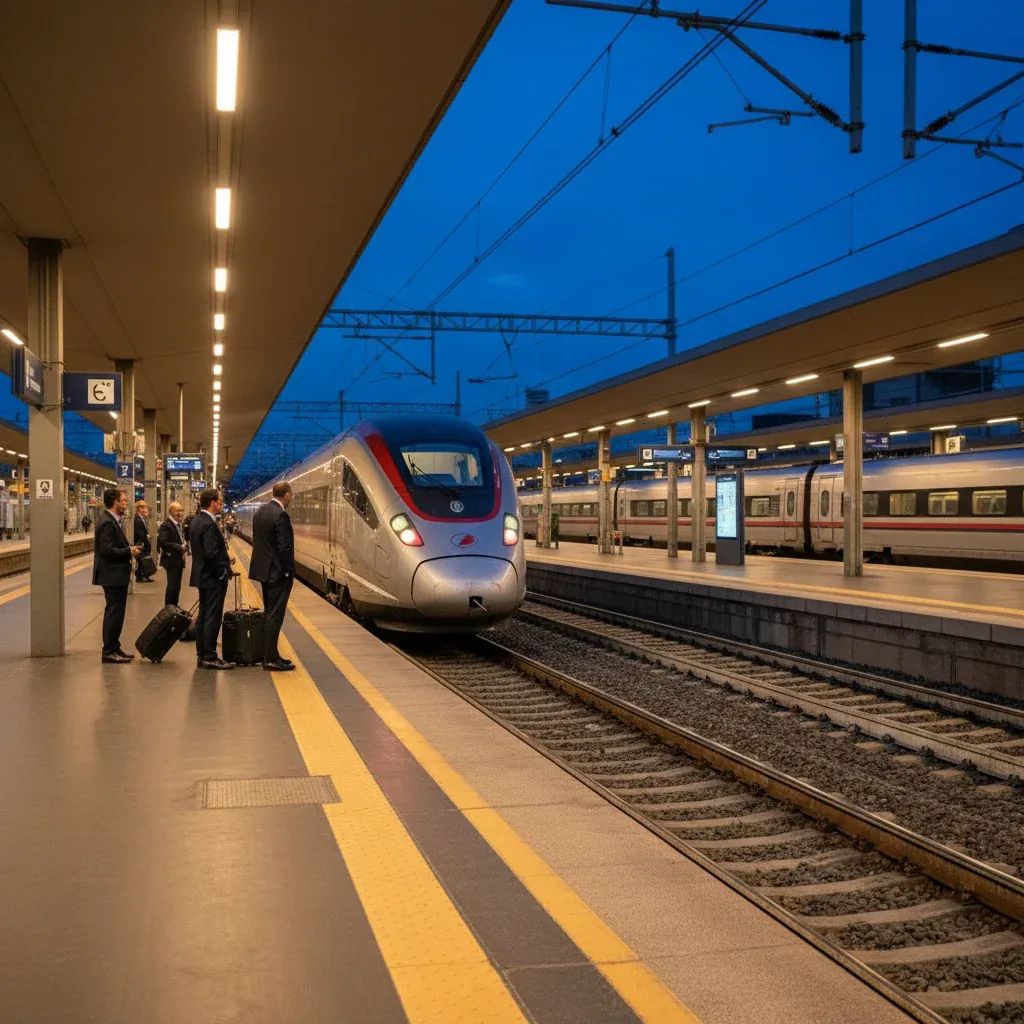
Ferrovie dello Stato has confirmed scheduled closures across Italy's high-speed rail network this August, with the Florence-Rome Direttissima facing an 18-day shutdown that will force travelers onto slower conventional tracks and extend journey times by up to 90 minutes.
Key Closure Details
Florence-Rome Line (August 10-28): All high-speed trains between Chiusi Sud and Orvieto Nord will be rerouted onto the conventional rail network. This closure targets maintenance work on critical infrastructure, including the Fabro tunnel and Paglia viaduct near Orvieto, which require structural reinforcement and systems upgrades.
Milan-Bologna Line (August 10-17): A separate 8-day closure will interrupt service between Piacenza Est and Melegnano, affecting Frecciarossa, Italo, Intercity, and regional services.
What Residents Need to Know
Travel disruptions: Passengers on the Florence-Rome high-speed line during the closure window will experience mandatory diversions to the conventional rail network, resulting in significantly slower journeys. Journey times will increase by up to 90 minutes compared to the usual high-speed service.
Alternative services: Ferrovie dello Stato promises bus substitutions and alternative itineraries. However, bus services will not accommodate bicycles or pets (except service dogs), and seating may be limited. The company states that "adequate levels of mobility and rail service" will be maintained through alternative routing and service adjustments, though passengers should expect measurably slower trips.
Capacity constraints: FS has cautioned that road congestion could inflate travel times further and that capacity constraints may create crowding on substitute bus services. Advance booking and flexibility are advised.
Planning Your Travel
For anyone traveling in central Italy during August, check your itinerary well in advance. Trenitalia and Italo booking systems have been updated with revised timetables and expected delays.
If possible, consider alternative departure dates. If your schedule is fixed, factor in extra travel time and contact FS customer service in advance, particularly if traveling with luggage or mobility constraints.
Alternative routes: The Adriatic route via Ancona or the Tyrrhenian line through Pisa may offer viable alternatives, though these journeys will be longer. The Adriatic and Tyrrhenian coastal routes will remain fully operational to support summer tourism flows.
Long-Term Infrastructure Investment
The August closures reflect ongoing infrastructure maintenance across Italy's rail network, supported by the National Recovery and Resilience Plan (PNRR). These works are part of a broader effort to enhance safety, speed, and reliability on critical rail corridors. Residents should expect that maintenance work of this scale will continue as Italy's rail infrastructure undergoes systematic upgrades in the coming years.
The maintenance approach involves concentrated closures during periods of lower passenger volume, allowing crews to execute multiple tasks in parallel rather than spreading work across months of nightly or weekend disruptions.


