
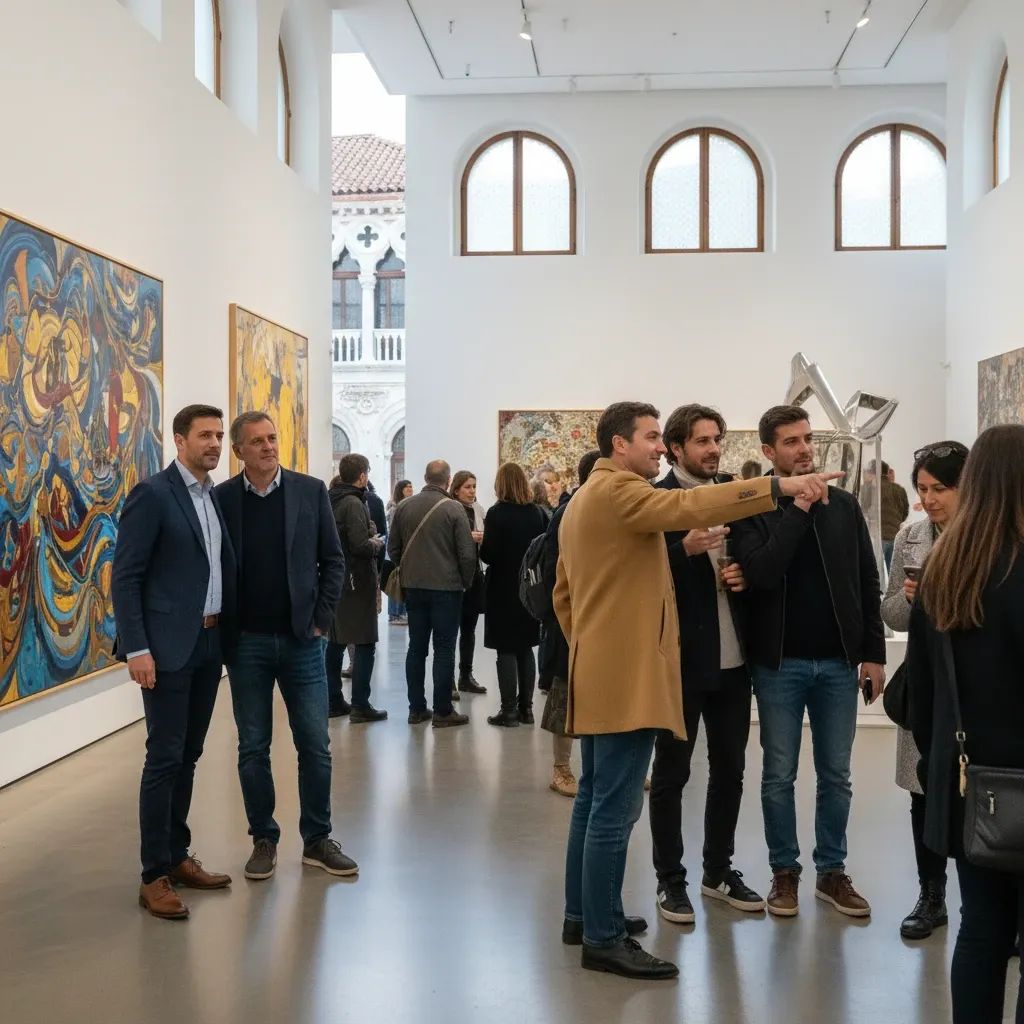
The Biennale di Venezia has opened its 2026 art exhibition to a surge of public interest, with the first full day of access drawing roughly 10,000 visitors to the Giardini and Arsenale sites—a 10% jump compared to the equivalent Saturday in 2024. The early turnout signals robust demand for this year's edition, titled In Minor Keys and curated by Koyo Kouoh, and sets the stage for what organizers expect could be a record-breaking run through November.
Why This Matters
• Tourism spike: Venice now faces six months of elevated cultural tourism, with projections of 800,000 to 1 M total visitors paying to enter the exhibition before it closes on November 22.
• Economic footprint: The event employs roughly 15,000 people and influences 10–15% of Venice's tourist flow during its seven-month window, amplifying demand for hotels, restaurants, and transport.
• Real estate demand: Demand for exhibition and hybrid gallery-residential space in Venice has been rising steadily, with a 15% increase documented since the 2024 Biennale—a trend that continues into 2026.
• Media presence: Pre-opening days registered 3,733 accredited journalists, 70% from outside Italy, underscoring the international pull of the event.
Pre-Opening Momentum
Between May 5 and May 8, the Biennale hosted three days of restricted access for industry professionals, collectors, and press. Those preview sessions drew 27,935 accredited guests, a 4% increase over the 2024 equivalent. While percentage growth in the professional cohort was modest, the absolute numbers confirm that Venice remains a non-negotiable fixture on the global art calendar. Curators, gallery owners, and museum directors converge in these early days to scout talent, negotiate acquisitions, and set the critical tone that shapes public perception for the rest of the run.
The journalist contingent—nearly 3,700 strong—represents a media apparatus that extends far beyond traditional art criticism. Fashion magazines, lifestyle platforms, and even business outlets now cover the Biennale, reflecting art's crossover into luxury branding and investment portfolios. For Italy, that media saturation translates into sustained international visibility, reinforcing Venice's status as a cultural capital and indirectly promoting Italian heritage sites elsewhere in the country.
What This Means for Residents and Business Owners
For those living or working in Venice and the Veneto region, the Biennale is both opportunity and friction. The event guarantees a steady stream of high-spending visitors—collectors and culture tourists typically allocate more per day than mass-market travelers—but it also intensifies pressure on transport infrastructure, housing availability, and daily services. Local hoteliers and restaurateurs can expect elevated occupancy and average checks through the autumn, yet residents frequently report disruption to routine errands and commutes during peak periods.
Residents in Castello and Cannaregio, nearest the Arsenale and Giardini, typically experience the heaviest foot traffic and should expect crowded vaporetto lines on routes 1, 2, 4.1, and 5.1 during weekends through November. Booking multi-day transit passes in advance and timing visits outside morning and late-afternoon rushes can help ease commuting challenges.
Landlords and commercial property owners should note the ongoing demand for spaces that can double as galleries or showrooms. Mixed-use properties—residential with ground-floor exhibition capability—are seeing increased lease inquiries, appealing to artists, dealers, and lifestyle brands eager to anchor themselves near the Biennale circuit.
Curatorial Direction and Thematic Context
Koyo Kouoh, the first African woman to lead the central exhibition, has structured In Minor Keys around voices historically marginalized in the Western art canon. The thematic framing resonates with current debates about representation, equity, and the global distribution of cultural capital—topics that attract both scholarly interest and popular curiosity. Early curatorial decisions, including the selection of artists and the spatial layout within the Arsenale's vast industrial halls, will become clearer as visitor feedback and critical reviews accumulate over the coming weeks.
What is already evident is that the curatorial approach has succeeded in generating anticipation. The 10% year-on-year growth in opening-day attendance suggests that messaging around the exhibition has cut through, whether via social media, art-world gossip, or mainstream press coverage. Kouoh's profile as an institution-builder—she directs the Zeitz Museum of Contemporary Art Africa in Cape Town—adds a layer of credibility that resonates with collectors and curators seeking to diversify their holdings and exhibitions.
Looking Ahead: Seasonality and Regional Impact
The Biennale's May-to-November calendar smooths out Venice's tourism seasonality, which historically peaks in summer and tapers sharply in winter. By sustaining visitor interest into late autumn, the exhibition helps hospitality operators extend their high season and provides more stable employment for seasonal workers. The 10–15% share of total tourist flow attributed to the Biennale during its run is significant in a city where over-tourism has sparked local protest and regulatory intervention.
Beyond Venice, the ripple effect touches cities across the northeast. Travelers often combine Biennale visits with excursions to Padua, Verona, Treviso, and Trieste, distributing spending across the Veneto and Friuli-Venezia Giulia regions. Rail operators and coach services adjust schedules to accommodate increased demand, and regional tourism boards coordinate joint marketing campaigns that leverage Venice's star power.
Practical Considerations for Visitors
Tickets are sold in advance online and at the gate, with pricing typically structured to favor early booking. Expect longer queues on weekends and public holidays, particularly during the summer months when general tourism to Venice peaks. The exhibition spans two main sites—the historic Giardini and the sprawling Arsenale—requiring a half-day minimum for a focused visit and a full day for thorough exploration. National pavilions are distributed across both locations and throughout the city, including churches, palazzos, and converted warehouses.
Transportation within Venice remains boat-based, with vaporetto lines serving the main Biennale stops. During peak periods, water-bus crowding can be intense; consider purchasing multi-day transit passes or timing visits to avoid morning and late-afternoon rushes. Dining near the exhibition sites tends to be pricier and more tourist-oriented; walking ten minutes inland often yields better value and more authentic menus.
For those planning extended stays, accommodation in Mestre or the Lido offers cost savings and easier parking, with frequent rail and ferry connections to the historic center. Booking well in advance is essential, as hotels fill quickly around major weekends and during parallel events such as the Venice Film Festival in late August and early September.


