
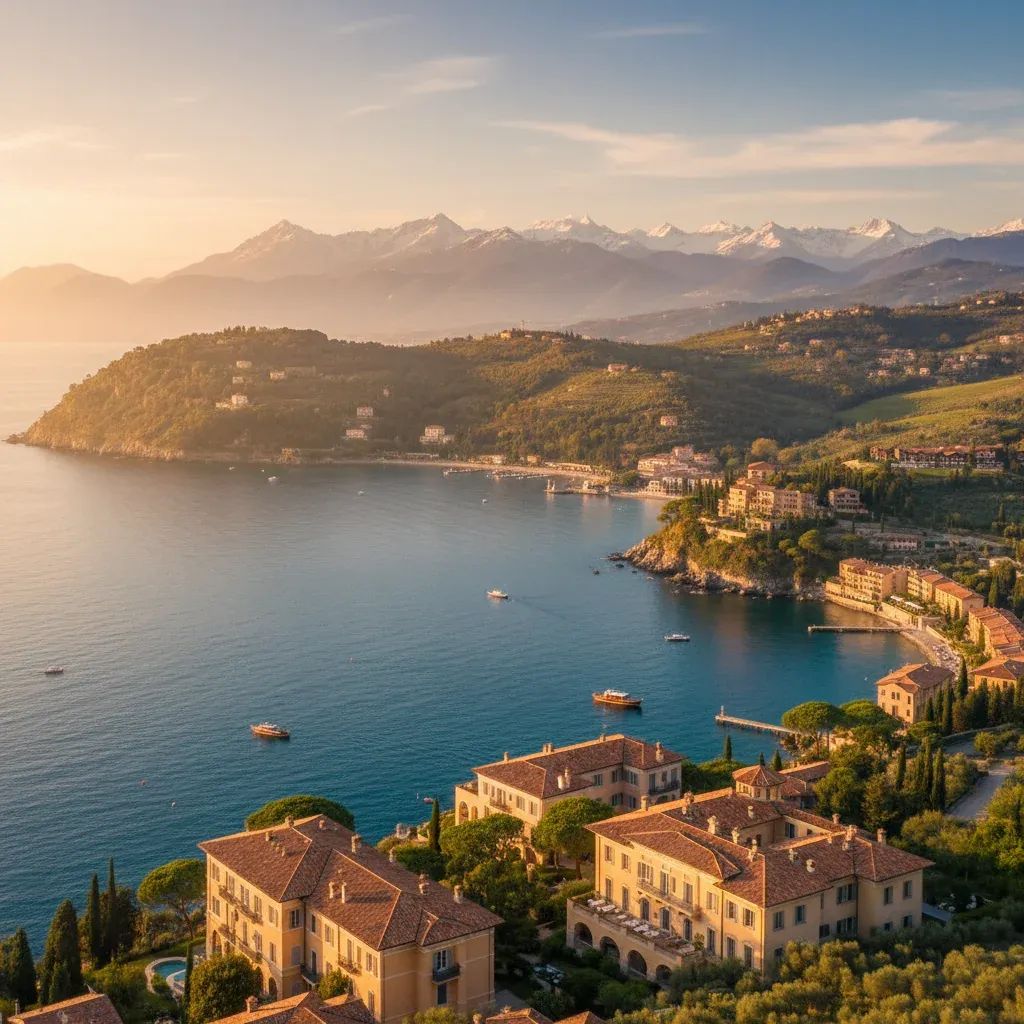
The Italy luxury hospitality sector has secured its position as the most attractive investment destination in Europe, with roughly 60% of global investors identifying the country as their top target for high-end hotel development through 2029. This €8 billion annual market is reshaping not just Rome and Milan, but also mountain towns, regenerated medieval villages, and coastal enclaves that were overlooked a decade ago.
Why This Matters:
• Investment surge: Over 170 new five-star properties are slated to open by 2028, adding roughly 9,600 rooms to Italy's luxury inventory.
• Price trajectory: Average daily rates in luxury hotels are forecast to climb 21% by 2027, reaching €970 per night as occupancy rates rise to 75%.
• Geographic spread: Secondary markets like Taormina, Forte dei Marmi, and Trieste are outpacing traditional capitals in new openings, offering alternatives to Venice and Florence.
• Sustainability mandate: More than 21% of capital expenditure in repositioning projects now targets ESG initiatives, with certified properties seeing 22% growth in bookings year-over-year.
The Numbers Behind the Boom
Italy's luxury hotel sector generated just over €8 billion in 2025, accounting for roughly 21% of the country's total hospitality revenue despite representing a fraction of total room inventory. The country now operates 763 five-star establishments—triple the count from the 1990s—and foreign visitors account for 76% to 77% of all guests checking into these properties. Spending by international travelers has nearly doubled in the past 25 years, surpassing €54 billion in 2024.
According to data presented by Deloitte at the "Luxury Hospitality Reloaded" forum in Milan, arrivals at luxury properties rose 7% last year, while overnight stays jumped 9%. The United States remains the single largest source market, though European travelers collectively represent the dominant segment. Italy ranks as the third-largest luxury hotel market globally, trailing only the U.S. and one other jurisdiction, and is projected to claim the second spot by 2028.
Angela D'Amico, Deloitte's Real Estate Sector Leader for Italy, attributes the surge to an "unmatched cultural and landscape patrimony" combined with a reputation for culinary excellence that resonates with affluent travelers seeking authenticity. Investors cite superior yields compared to other hospitality segments, along with robust international demand, as primary drivers.
Where the New Money Is Going
While Rome, Milan, Venice, and Florence continue to attract flagship openings, the geographic diversification of luxury supply is the story investors are watching closely. Taormina in Sicily is set to add six new five-star hotels in the coming years, overtaking Capri as the premier luxury hub in southern Italy. Forte dei Marmi on the Tuscan coast will see its luxury inventory triple from 6 to 18 properties.
Mountain destinations are also in the crosshairs. Cortina d'Ampezzo in the Dolomites—site of the 2026 Winter Olympics—is expanding its year-round luxury offer with new chalets and gourmet venues. The Langhe and Roero wine regions in Piedmont are drawing boutique conversions of historic estates, catering to oenophiles willing to pay premium rates for Barolo tastings and white truffle hunts.
Lesser-known locales are emerging as alternatives to overtouristed hotspots. Trieste, a port city blending Italian, Austrian, and Slovenian heritage, is attracting investment for its belle époque architecture and proximity to Central European markets. Genova, once overlooked, is leveraging its restored historic center—one of Europe's largest—and its gateway position to Portofino. In Umbria, Montefalco is positioning itself as a quieter, more affordable Tuscany for travelers focused on Sagrantino wine and medieval towns.
Puglia and Sicily are seeing waves of masserie conversions—traditional fortified farmhouses reimagined as intimate luxury resorts. Campomarino di Maruggio in Puglia offers dune-backed beaches without Salento's summer crowds, while Sardinia's Chia appeals to those seeking Caribbean-like water without the Costa Smeralda price tag. The Riviera del Conero in Marche and Porto Ercole in Argentario round out a growing roster of coastal alternatives.
Lombardy, Lazio, and Sicily lead the pipeline by region, but lakeside areas—especially Lake Como and Lake Orta—are expanding luxury inventory to capture year-round demand beyond the traditional summer season.
What This Means for Residents
For Italians, the luxury hotel expansion translates into job creation in high-skill hospitality roles, from sommelier positions to heritage tour guiding and artisanal partnerships. Operators are prioritizing local sourcing for food and beverage programs, directing revenue toward regional producers of wine, olive oil, cheese, and charcuterie. More than 70% of operators and investors plan to increase F&B spend, anchoring supply chains in Italian territories.
However, the shift also raises property value pressures in emerging markets. Towns like Forte dei Marmi and Taormina are experiencing residential price inflation as developers acquire villas and estates for conversion. Residents in historic centers may face gentrification dynamics as boutique hotels displace long-term rental stock.
On the environmental front, the sector's sustainability pivot is creating demand for local green-tech suppliers. Hotels are installing photovoltaic arrays, geothermal heat pumps, and rainwater capture systems, often in collaboration with Italian engineering firms. Yet the costs of retrofitting heritage buildings to meet LEED or EU Ecolabel standards remain a barrier, particularly for smaller independent operators.
Events like the Giubileo in Rome (2025) and the Milano-Cortina Winter Olympics (2026) are amplifying visitor flows, but infrastructure strain—especially in rail and road access to secondary destinations—remains a concern for both residents and industry stakeholders.
The Sustainability Question
Luxury hospitality in Italy is undergoing a green overhaul, driven by guest expectations and investor mandates. Properties with ESG certifications recorded a 22% growth in bookings between 2024 and 2025, and certified assets can command a 6% to 10% valuation premium due to energy efficiency improvements.
Capital allocated to ESG initiatives in luxury repositioning projects has crossed the 21% threshold. Hotels are adopting farm-to-table dining models, eliminating single-use plastics, partnering with apps like Too Good To Go to reduce food waste, and sourcing furniture and finishes from recycled or locally harvested materials. Water conservation and zero-kilometer supply chains are becoming standard operating procedures.
Yet challenges persist. Historic building codes complicate deep retrofits, and access to green financing remains uneven. Smaller operators struggle to afford certifications like GreenKey, ISO 14001, or Biosphere, leaving them at a competitive disadvantage in a market where sustainability is no longer optional but a "passport of credibility."
Some properties are exploring digital sustainability, optimizing website energy consumption and server efficiency. Others are investing in on-site renewable generation, aiming for net-zero operation within five years.
What Travelers Are Paying For
The modern luxury guest in Italy is seeking hyper-personalization and cultural immersion over generic opulence. Itineraries now include private workshops with artisans in Montefalco ceramics studios, helicopter transfers to Dolomite wine cellars, or after-hours access to Vatican archives. Technology is expected to be "invisible"—seamlessly anticipating needs without overt gadgetry.
Celebratory travel—marking anniversaries, milestones, or family reunions—is the leading booking motive, with multi-generational trips gaining traction. Italian luxury villas are seeing a surge in domestic bookings as affluent Italians opt for controlled, exclusive environments with bespoke concierge services.
Shopping tourism is also accelerating. Foreign visitors are extending stays to purchase high-end Italian fashion and design goods, blending retail with leisure. The food and wine circuit remains the backbone of the luxury value proposition, with over 70% of operators expanding tasting menus, chef's tables, and vineyard partnerships.
The Investment Outlook
Investor sentiment is bullish. Average daily rates are projected to climb from €780 in 2025 to €970 in 2027, a 24% jump that outpaces inflation and reflects capacity constraints in prime markets. Occupancy rates are expected to rise from 71% to 75% over the same period, tightening supply and supporting pricing power.
The pipeline of 104 new luxury hotels scheduled between 2026 and 2029 will concentrate in Rome, Milan, and Venice, but also disperse across Arzachena, Cortina, and lakeside towns. Developers are betting that Italy's cultural capital—combined with its culinary reputation and landscape diversity—will sustain double-digit growth even as other European markets mature.
Access to capital remains a bottleneck, particularly for independent developers. Large international groups and family offices dominate the investment landscape, often partnering with Italian heritage foundations or municipal authorities to navigate regulatory complexity and secure conversion permits for historic properties.
The Competitive Landscape
Italy's 60% share of European luxury hotel investment dwarfs rivals. Greece captures 11% of investor interest, Portugal 10%, and Spain trails further behind. The gap reflects Italy's unmatched density of UNESCO World Heritage sites, its dominance in global gastronomy rankings, and the brand equity of names like Amalfi, Tuscany, and Lake Como.
Yet competition is intensifying. Greece's island resorts are gaining ground with wellness-focused concepts, while Portugal's Algarve and Lisbon are attracting younger luxury travelers with lower entry prices. Italy's challenge is to balance exclusivity with accessibility, ensuring that secondary markets remain affordable for domestic tourists while commanding premium rates from international visitors.
The sector's evolution over the next three years will determine whether Italy can translate its current momentum into long-term leadership or whether rising costs and infrastructure gaps will blunt its competitive edge. For now, the data suggest the former: Italy remains Europe's undisputed luxury hospitality champion, with a pipeline and pricing trajectory that few rivals can match.


