
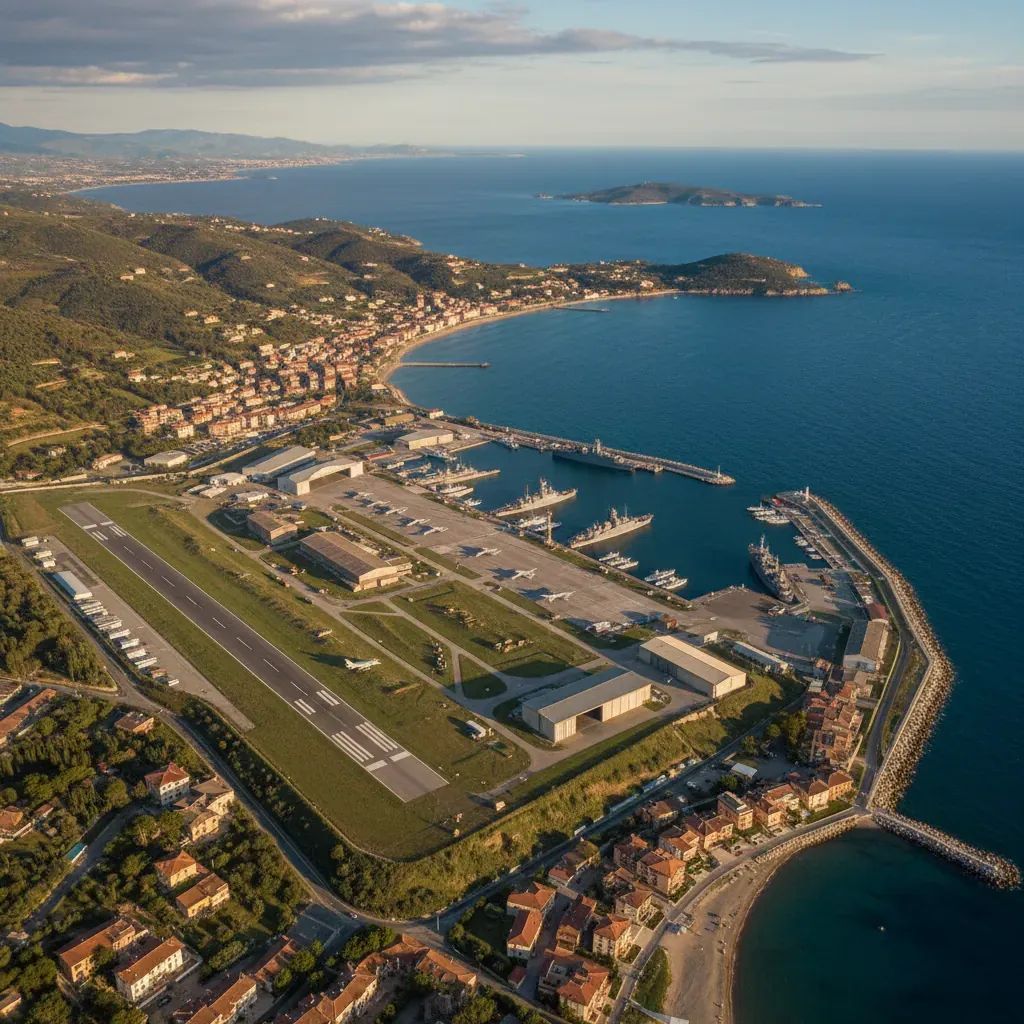
The Pentagon is pulling at least 5,000 soldiers from Germany within the next 6 to 12 months, according to an order issued by President Donald Trump—and the cuts may be only the beginning. Trump has explicitly threatened troop reductions in Italy and Spain, citing their opposition to recent U.S. military operations in Iran. For Italy residents, the implications are immediate and multifaceted.
Italy Under Direct Threat
Italy hosts approximately 12,000 to 13,000 U.S. troops, concentrated at key installations such as Naval Air Station Sigonella in Sicily and Aviano Air Base in the Friuli-Venezia Giulia region. Both facilities serve as forward operating posts for Mediterranean and North African operations. Trump has explicitly floated the possibility of significant troop reductions in Italy, placing thousands of jobs and regional security architecture in jeopardy.
The economic stakes are substantial. American bases generate considerable income through civilian employment, procurement of goods and services, and off-base spending by service members and their families. A drawdown would ripple through restaurants, housing markets, retail sectors, and construction companies in towns like Aviano and areas surrounding Sigonella. Local contractors, supply chain businesses, and hospitality industries depend heavily on this spending. Studies estimate that each U.S. military job supports approximately 1.5 additional positions in the surrounding community—meaning a reduction of several thousand troops could eliminate 5,000 to 8,000 jobs across Sicily and Friuli-Venezia Giulia.
Communities like Aviano, home to roughly 4,500 U.S. military personnel and their families, face particularly acute risks. The base represents approximately 15-20% of the local employment base, according to municipal estimates. Similarly, Sigonella's presence anchors the economies of Syracuse and surrounding Sicilian towns. Local business associations in both regions have begun preparing contingency plans, though officials remain cautious about public statements that might antagonize Washington.
Italy's Strategic Position and Response
Italian policymakers face a complex calculus. Rome has historically balanced Atlanticist loyalty with a pragmatic approach to Mediterranean security and Middle Eastern diplomacy. The Italian government has maintained relatively positive relations with the Trump administration, yet Foreign Minister Antonio Tajani has not publicly commented on the threatened withdrawal—a telling silence suggesting internal government divisions on how to respond.
Italy's defense spending currently stands at approximately 1.6% of GDP, below NATO's 2% target but higher than most Mediterranean allies. Expanding military budgets—already strained by EU fiscal rules and post-pandemic recovery costs—would force difficult choices. Increased defense spending could compete directly with social welfare programs, infrastructure projects, and healthcare investments. For a country managing complex economic pressures, this represents a genuine fiscal dilemma.
Beyond economics, a reduced American footprint raises fundamental questions about Italy's strategic role in NATO and Mediterranean security. Italy's position is unique: it borders the Mediterranean theater where U.S. and NATO operations in Libya, the Sahel, and the Eastern Mediterranean depend on Italian bases. A diminished American presence could push Italy toward greater defense autonomy, but it would simultaneously expose the country to heightened regional instability. Italian security analysts worry that without robust U.S. military infrastructure, Italy's ability to project power in Mediterranean crises could be severely compromised.
Local Economic Impact Assessment
The withdrawal would create immediate disruption in multiple communities. In Aviano, approximately 2,300 Italian civilians work directly at the base, alongside U.S. military and contracted personnel. Sigonella employs roughly 1,800 local civilians. These are stable, well-paying positions—significantly above average Italian wages for comparable work. Support sectors including transportation, construction, real estate, and hospitality employ thousands more indirectly.
Housing markets near both bases would face downward pressure. American military families typically rent or purchase homes in base communities, driving local property values and rental rates above regional averages. A significant troop withdrawal could depress housing prices by 10-15%, according to base economic impact studies, potentially creating financial distress for Italian residents who purchased near bases based on inflated market conditions.
Procurement represents another dimension. U.S. military installations purchase food, fuel, maintenance services, and supplies from regional vendors. Reducing troop levels would decrease this spending proportionally. The combined annual procurement and service contracts at Sigonella and Aviano are estimated at €80-100 million, supporting hundreds of Italian businesses and suppliers.
NATO's Broader Calculus
NATO spokesperson Allison Hart confirmed that the alliance is working with Washington to understand the full scope of the troop adjustment. She framed the decision as a catalyst for increased European defense investment, echoing longstanding American complaints that allies fail to meet the 2% of GDP defense spending target. The withdrawal would return U.S. troop levels in Europe to roughly the pre-Ukraine war baseline, reversing recent reinforcements sent to reassure Eastern European members following Russia's 2022 invasion.
Poland has voiced alarm, with officials worrying that the drawdown signals a "progressive disintegration" of Atlantic alliance cohesion. Warsaw has long advocated for permanent U.S. military presence on its soil, viewing American troops as a deterrent against Russian aggression. A weakened U.S. commitment in Mediterranean bases could undermine that deterrent credibility, even if formal treaty obligations under Article 5 remain intact.
Meanwhile, the European Union is accelerating discussions around more integrated defense structures. Proposals for deeper European defense cooperation—long dismissed as aspirational—are gaining traction in Brussels, Paris, and Berlin. The current moment may provide political momentum to translate strategic autonomy into concrete joint procurement programs and integrated command structures.
Strategic Context: Germany and Russia
The Pentagon has signaled that the actual reduction will be "significantly larger" than the baseline figure. Germany currently hosts roughly 36,000 to 39,000 U.S. personnel, making it the largest American military hub in Europe. Key installations include U.S. European Command (EUCOM) and U.S. Africa Command (AFRICOM) in Stuttgart, alongside Ramstein Air Base, a critical logistics node for operations spanning Europe, Africa, and the Middle East. The withdrawal of 5,000 troops from Germany would reduce that garrison, though some facilities may escape cuts.
German Defense Minister Boris Pistorius called the announcement "predictable," urging calm while acknowledging that Europe must shoulder more responsibility for its own security. Yet beneath official equanimity lies genuine concern. Some German officials privately describe the decision as a "wake-up call," warning that deeper drawdowns could weaken NATO's eastern flank and embolden Russia.
On the geopolitical front, Russia stands to gain from visible U.S. retreat. Moscow has long sought to fracture NATO cohesion and diminish American influence in Europe. Even a partial U.S. withdrawal would be interpreted in the Kremlin as validation of strategic patience and a signal that Washington's commitment to collective defense is conditional. This perception could embolden Russian assertiveness in the Baltics, the Black Sea, and the Arctic.
What Comes Next for Italy
For Italy residents, the immediate outlook requires attention to three dimensions: economic preparation, political advocacy, and strategic positioning. Communities dependent on base spending should begin diversification planning. Italian officials must engage directly with the Trump administration to clarify intentions and potentially negotiate a scaled response. Rome should simultaneously accelerate discussions with European partners about collective defense initiatives that might offset reduced American presence.
Trump's decision to scale back the American military presence in Italy represents a calculated gamble testing whether European allies can be pressured into greater self-reliance. For residents of Italy, the stakes are tangible: potential job losses in base communities, fiscal pressure to increase defense spending, and strategic uncertainty about the country's role in a reconfigured security landscape. How Rome navigates these crosscurrents will shape not only Italy's defense posture but also its place in a European order no longer anchored by unquestioned American guarantees.


