
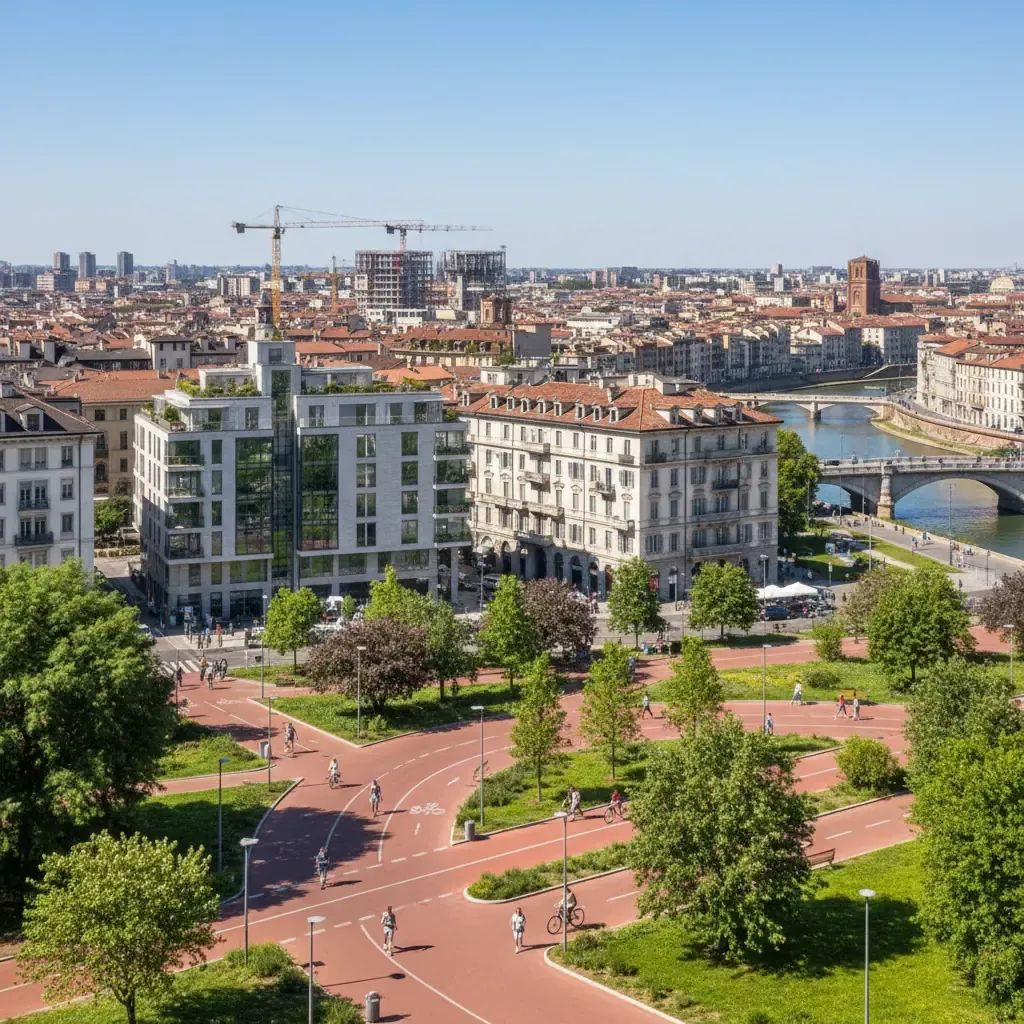
The Turin City Council has greenlit a preliminary urban vision that could reshape how residents live, work, and move through Italy's fourth-largest city over the next decade—marking the first comprehensive overhaul of the municipality's spatial planning framework in more than 30 years.
Why This Matters
• Timeline shift: The new Master Plan (Piano Regolatore Generale) passed with 24 votes in favor and 4 against on March 16, replacing guidelines operational since 1995.
• Regeneration over expansion: The plan explicitly limits new construction on undeveloped land, prioritizing densification and reuse of existing buildings and former industrial sites.
• 15-minute city model: Residents across all 34 recognized neighborhoods should be able to reach schools, parks, markets, and medical services within a quarter-hour by foot, bike, or public transit.
• Next steps: Public comment period opens now; final approval targeted for early 2027, before the current municipal term expires.
What This Means for Residents
For anyone living in or considering a move to Turin, the plan translates into a strategic shift toward sustainable urban living. The Italy Ministry of Infrastructure and Transport has allocated funding from the National Recovery and Resilience Plan (PNRR) toward projects embedded in the Master Plan.
The plan prioritizes transit-oriented development, with infrastructure investments designed to reduce car dependence and improve connections between neighborhoods and employment hubs. Housing affordability is a key focus, with plans to convert disused sites—former barracks, railway yards, and industrial properties—into student dormitories, senior residences, and mixed-income housing across multiple neighborhoods.
Paolo Mazzoleni, the municipal councilor for urban planning, framed the document as more than a zoning map: "We are proposing to the Council and to the city an idea for its future—one that does not simply safeguard what it has inherited, but tries to renew it."
Three Strategic Pillars
The plan rests on three thematic foundations, each subdivided into multiple operational domains:
Innovation Economy: Turin positions itself to attract advanced manufacturing, aerospace research, and tech startups through flexible zoning that permits hybrid industrial-office uses. Existing innovation campuses and redeveloped industrial sites are designed to anchor economic clusters.
Welfare and Proximity: Beyond transit, this pillar targets equitable service distribution. Each of the 34 neighborhoods receives attention for public spaces, green corridors, and community facilities. The concept explicitly aims to strengthen connections across neighborhoods and reduce historic center-periphery divisions.
Urban Ecosystem and Climate Resilience: The plan mandates soil-permeability standards, expands green and blue infrastructure (parks, riverbanks, bioswales), and integrates heat-island mitigation into building codes. Environmental protections and climate adaptation are core to the framework.
Consultation and Stakeholder Input
Mazzoleni emphasized that the plan emerged from extensive consultation, noting that the development process included broad engagement with citizens and neighborhood organizations. He urged stakeholders to review the actual plan text and provide informed feedback during the public comment period.
Next Steps and Timeline
With preliminary approval secured, the draft now enters a mandatory public comment window. Citizens, neighborhood associations, and environmental groups can submit formal observations. Regional and provincial authorities will also weigh in before the Council reconvenes for a final vote.
City officials have set an internal deadline of early 2027—before the current administration's term ends—to complete the approval process. Missing that window would reset the legislative clock and potentially affect allocated funding timelines.
The plan represents a strategic commitment to Turin's transition from industrial heritage toward sustainable urban development. Whether the "15-minute city" concept becomes lived reality will depend on implementation, funding allocation, and the city's ability to balance growth with livability across all neighborhoods.


