
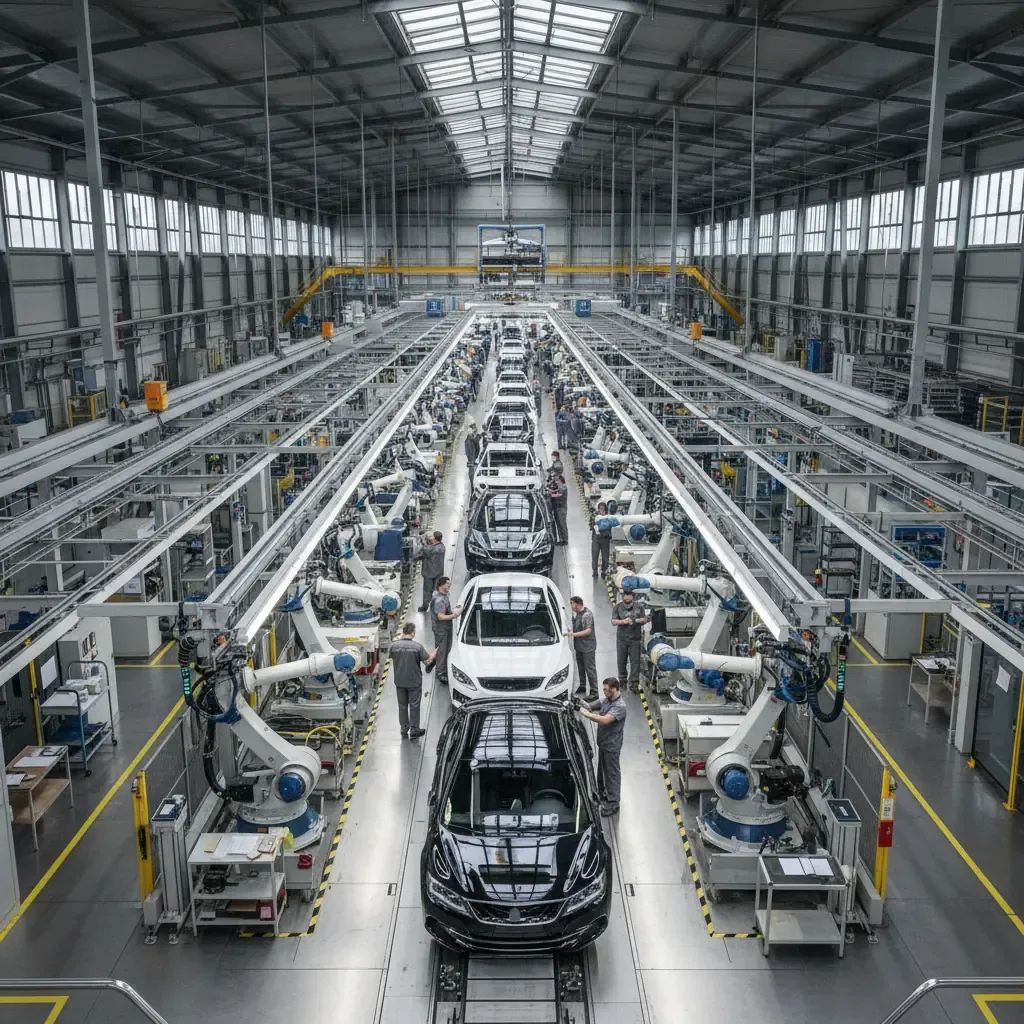
The European Commission has signaled it will deploy "all available options" to protect its economic interests after President Donald Trump announced he will raise tariffs on EU-made automobiles and trucks to 25%, accusing Brussels of failing to honor a transatlantic trade deal struck just nine months ago.
Why This Matters:
• Tariff hike begins next week: The U.S. will impose a 25% levy on European-made vehicles exported to the American market, up from the 15% baseline agreed in an accord framework established in August 2025.
• Important for Italy residents: These tariffs apply specifically to EU vehicles sold in the US market and do not affect car prices for consumers purchasing vehicles in Italy. However, the tariffs will impact Italian manufacturers' export competitiveness and the jobs dependent on automotive exports.
• Retaliation on the table: The European Commission has reserved the right to impose counter-tariffs on American goods worth tens of billions of euros.
• Manufacturing shift pressure: Trump's stated goal is to force BMW, Mercedes-Benz, and Volkswagen to relocate production to U.S. soil or face punitive costs.
Impact on Italian Automotive Exports
Italy's automotive sector faces significant pressure from the new U.S. tariff regime. Italian luxury brands such as Maserati and Alfa Romeo, which export sporty sedans and crossovers from plants in Turin and Cassino, will feel immediate effects as a jump from 15% to 25% translates to roughly €2,500 to €5,000 in additional cost per vehicle, depending on the model.
Beyond finished vehicles, Italian manufacturers exporting auto components—such as seats, electronics, engines, and drivetrain systems—to U.S. assembly plants operated by European manufacturers face knock-on costs. If finished vehicles become less competitive due to tariffs, demand for imported components will decline, potentially affecting jobs in Italy's automotive supply chain, particularly in regions like Piedmont and Campania.
The Italian government, which holds a rotating seat on the EU Trade Council, has urged both restraint and "firm and united" action if Washington proceeds. Rome has a particular interest in safeguarding luxury automotive exports and the jobs they sustain across the country's industrial heartland.
Background: Trade Relations and the August 2025 Framework
In August 2025, Washington and Brussels announced a Framework Agreement on Reciprocal, Fair, and Balanced Trade, a compromise intended to defuse escalating trade hostilities. The accord established specific tariff caps on European goods, including automobiles. The European Union committed to expanding market access for American products in exchange for tariff predictability.
The European Parliament has adopted implementing legislation following standard legislative procedures. Commission officials insist they have kept their American counterparts continuously informed and have fulfilled every commitment under the joint declaration.
Yet Trump's announcement on May 1 suggests a fundamental breakdown. He claims the EU has dragged its feet on shifting auto production to the United States and has not honored the spirit of mutual concessions. The White House has made clear that only vehicles manufactured at U.S.-based plants will escape the new levy.
What This Means for European Automakers
The German automotive sector, which accounts for the largest share of EU car exports to the United States, faces steep exposure. BMW, Mercedes-Benz, and Volkswagen all operate American assembly lines, but a substantial portion of their premium models—particularly sedans and SUVs—are still shipped from plants in Bavaria, Baden-Württemberg, and Lower Saxony.
A jump from 15% to 25% translates to roughly €2,500 to €5,000 in additional cost per vehicle, depending on the model. Automakers can either absorb the hit to margins or pass it on to U.S. consumers, risking a drop in sales. Analysts project EU-to-U.S. auto exports could fall by more than 4% this year, compounding a similar decline in 2025.
France's Stellantis group, which produces Peugeot and Citroën vehicles for niche U.S. markets, faces parallel pressure.
Brussels Prepares Counter-Measures
A European Commission spokesperson confirmed that Brussels is reviewing a portfolio of retaliation options. Historical precedent offers a roadmap: when the U.S. imposed steel and aluminum tariffs in 2018, the EU responded with targeted levies on American bourbon, motorcycles, orange juice, and soybeans—products chosen for maximum political impact in swing states.
Under consideration, based on internal Commission discussions:
• Agricultural products: Historical precedent suggests poultry, pork, tomatoes, citrus fruit, and processed meats could face retaliatory tariffs of up to 25%.
• Industrial and consumer goods: PVC, silicone polymers, cleaning products, and bathroom fixtures have been mentioned in policy discussions.
• Potential escalation: Though cars and trucks were sensitive categories in past negotiations, some officials have floated the idea of retaliatory tariffs on U.S.-made vehicles and components if the White House does not reverse course.
It is important to note that specific tariff lists and target values remain under discussion and have not been formally confirmed by the European Commission.
The total value of such a package could reach €21 billion in a limited scenario or exceed €70 billion if Brussels opts for a comprehensive response.
Bernd Lange, chair of the European Parliament's Committee on International Trade, called the United States an "unreliable partner" and labeled Trump's tariff plan "unacceptable." His remarks reflect growing frustration in Brussels and national capitals, where officials had hoped the 2025 framework would usher in a period of stability.
The Broader Trade Context
This tariff escalation does not occur in isolation. In January 2026, the White House announced baseline tariffs of 10% on goods from eight European countries, escalating to 25% by June, ostensibly linked to a diplomatic dispute. Meanwhile, 50% tariffs on steel and aluminum remain in place under Section 232 national security provisions, despite EU complaints about expanded scope.
Economic modeling by Brussels forecasts that cumulative U.S. tariff actions will shave more than 4% off EU-to-U.S. export volumes in both 2025 and 2026, eroding Europe's competitive position as other markets—such as Mexico and Canada—benefit from preferential treatment under separate agreements.
Legal and Diplomatic Avenues
The European Commission maintains that it prefers negotiated solutions and has historically suspended retaliatory measures for months at a time to keep dialogue channels open. Officials stress that the World Trade Organization (WTO) dispute-settlement mechanism remains an option, though the appellate body has been paralyzed since 2019, limiting practical recourse.
Brussels could also invoke the Anti-Coercion Instrument (ACI), a relatively new regulatory tool designed to counter economic blackmail. However, legal experts note the ACI was crafted for extraordinary scenarios—such as politically motivated embargoes—and may not fit neatly in a tariff dispute rooted in alleged non-compliance with a bilateral framework.
For now, the European Commission has kept all options on the table, signaling that any U.S. measures "not in conformity with the joint declaration" will trigger a proportionate response.
What Residents and Businesses Should Watch
Timeline: Trump indicated the 25% tariff will take effect within a week of the May 1 announcement, likely around May 7–9, 2026.
US market impact: If you are purchasing a European vehicle in the U.S., expect immediate price adjustments or reduced inventory as dealers recalibrate.
Italian export effects: Italian automotive manufacturers and suppliers should monitor demand signals from U.S. importers and be prepared for potential production adjustments.
Supply-chain effects: Italian manufacturers exporting auto components to U.S. assembly plants may face knock-on costs if finished vehicles become less competitive.
Retaliatory goods: If Brussels enacts counter-tariffs, products including American agricultural goods and technology products could become more expensive in Italy and across the EU within weeks.
The Political Calculus
Trump's decision appears calibrated to maximize leverage ahead of midterm political cycles in the United States, while also pressuring European governments to encourage automakers to expand U.S. production. From Brussels' perspective, any concession risks setting a precedent that unilateral tariff threats can override negotiated agreements.
Both the EU and individual member states, including Italy, have a stake in the outcome. Rome has emphasized the need for "firm and united" action while safeguarding Italy's strategic interests in luxury automotive exports and maintaining stability in transatlantic energy contracts, given Italy's reliance on U.S. liquefied natural gas to diversify away from Russian supplies.
Outlook: Fragile Détente or Full Trade War?
The coming days will determine whether this is a negotiating tactic or the opening salvo of a broader commercial rupture. The European Commission has scheduled emergency consultations with member-state trade ministers and is coordinating with the European Parliament to expedite any legislative measures needed for retaliation.
Both sides have much to lose. The U.S. risks higher inflation and consumer backlash if car prices spike; Europe risks export-driven job losses and further strain on an already sluggish manufacturing sector. Yet the political incentives for brinkmanship remain strong, leaving businesses and residents on both sides of the Atlantic bracing for prolonged uncertainty.


