
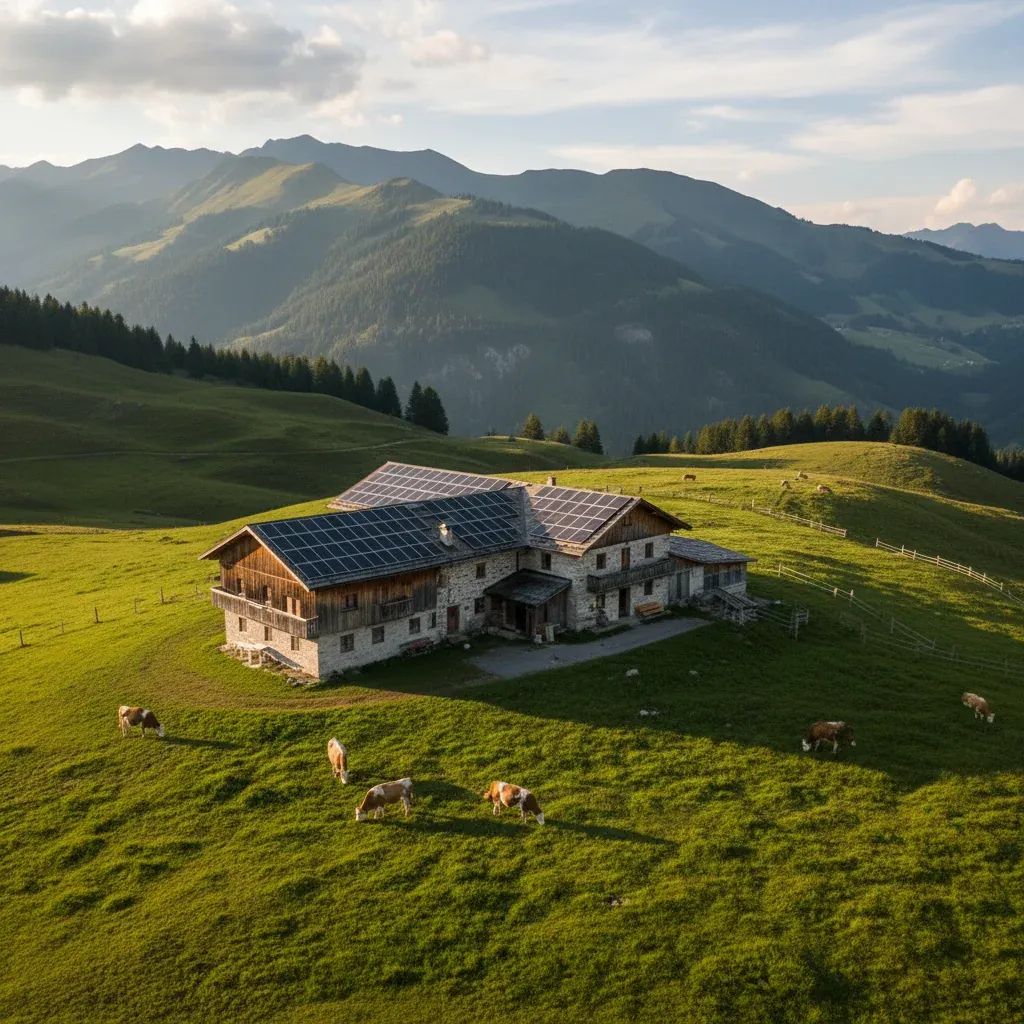
The Trentino dairy sector has secured a major capital injection aimed at modernizing production infrastructure, slashing carbon emissions, and strengthening the regional cheese industry's position in both domestic and export markets. A consortium representing 14 Trentino-based cheese dairies will receive a total financing package exceeding €43 M, blending commercial loans, government grants, and private investment to overhaul facilities and equipment dedicated to producing Trentingrana, a prized alpine cheese.
What This Means for Residents and Local Communities
For Trentino farmers and dairy cooperative members, this investment opens doors to affordable financing for upgrades that would otherwise strain their budgets. The €19 M in non-repayable grants—essentially subsidies that don't need to be paid back—covers roughly 44% of the total project cost, making energy-saving and efficiency improvements much more financially feasible.
For local suppliers and workers—equipment makers, construction crews, renewable-energy technicians—the rollout represents sustained job opportunities over the coming years. Equipment installation, facility upgrades, and energy infrastructure work will keep local businesses busy.
For consumers, particularly those seeking locally-sourced, sustainably-made cheese, this investment signals a genuine shift toward raw-milk Trentingrana aged in clean-energy facilities. The producers are marketing their product as an authentic expression of alpine terroir—the distinctive flavors coming from mountain pasture grasses and strict non-GMO feed standards.
Why This Matters:
• Energy efficiency mandate: Funds earmarked for solar panels, power-generation units, and equipment to reduce carbon emissions as dairies face rising energy costs.
• Export momentum: Italy ranks as the second-largest global exporter of cheese by value, and Trentino producers aim to ride that wave with improved capacity and sustainability credentials.
• Supply chain transparency: The Italian Ministry of Agriculture (Masaf) uses Supply Chain Contracts—agreements that bind producers, processors, and distributors around fair pricing, sustainability targets, and investment plans—to stabilize milk prices and reward producers who invest in sustainability.
How the Money Works: Public Grants Plus Commercial Loans
The financing package combines three streams of capital to make the project affordable:
• €16 M in commercial loans from major Italian lenders, including the state-backed development bank and regional cooperative banks. These operate like standard business loans, with interest rates below typical market rates due to government support.
• €19 M in non-repayable grants from the Italian Ministry of Agriculture (Masaf), sourced from a national agricultural development program called the Supply Chain and District Contract initiative. This money doesn't need to be repaid—it's a subsidy.
• €8 M in equity contributions from consortium members and affiliated companies—essentially, the dairies themselves are putting their own money into the project.
A regional cooperative bank served as both the lead applicant for the government grant program and the primary organizer of the commercial lending. The bank also extended an additional €3 M working-capital credit line to the consortium's main operating entity, secured by aging cheese wheels. This short-term funding helps bridge the 18- to 24-month period during which cheese ages and ties up cash but cannot yet be sold.
Who Gets Funded and What Gets Built
Beyond the primary consortium leader, the supply chain contract includes 24 additional beneficiaries—ranging from smaller dairy cooperatives to animal-feed suppliers and logistics firms embedded in the Trentino cheese ecosystem. The project carries the title "Trentingrana: The Flavor of Quality and Sustainability," and was developed in collaboration with Confcooperative, a national federation representing cooperative enterprises.
Investment priorities include:
• New cheesemaking vats, cutting tables, and brine pools to replace aging equipment and boost production capacity.
• Energy-saving installations: Solar panels, power-generation plants, and electric-vehicle charging stations at production sites.
• Emission-reduction measures: Equipment to capture and process whey and other by-products, cutting methane and CO₂ release from waste streams.
• Cattle breeding programs selecting for cattle breeds resilient to climate stress, with emphasis on traditional Trentino cattle varieties suited to alpine grazing.
The emphasis on energy self-sufficiency reflects both regulatory requirements and practical economics. Energy bills for dairies spiked dramatically during the 2022–2023 energy crisis, and Trentino producers have since prioritized solar and renewable-energy installations to insulate themselves from volatile energy prices.
Policy Context: How Italy Funds Agricultural Modernization
Italy's Supply Chain Contracts are multi-year agreements designed to link farmers, processors, and retailers around shared commitments: fair price-setting mechanisms, sustainability targets, and coordinated investment plans. The current funding cycle, managed by the Italian Ministry of Agriculture (Masaf), prioritizes projects that reduce greenhouse-gas emissions, cut pesticide use, and improve animal-welfare standards. Much of this financing comes from PNRR—Italy's €200+ billion allocation from the European Union's pandemic recovery fund—administered through ISMEA, a state agricultural agency.
As of mid-2025, ISMEA had approved 51 supply chain contracts that mobilized over €1 billion in public capital. The Trentingrana deal ranks among the most recent and largest targeting dairy production, a sector that accounts for 14% of Italian household food spending and generated €21.8 billion in processing revenue last year—up 33% over five years.
Technical Innovations: Underground Aging and Climate-Smart Breeding
Among emerging techniques the consortium is exploring is hypogeum maturation—aging cheese wheels in underground caverns where stable humidity and cool temperatures naturally reduce moisture loss and energy consumption. Several Trentino cooperatives have begun pilot trials in natural caves and former mining tunnels, attempting to recreate conditions historically used in alpine cheesemaking. Early results show lower shrinkage during aging and a subtle mineral character imparted by limestone surroundings.
The consortium is also investing in selective cattle breeding focused on dairy cows that produce high-protein milk while generating lower methane emissions per liter. This involves crossbreeding Rendena and Grigio Alpina cattle—traditional Trentino breeds—with high-efficiency dairy genetics, then screening offspring for climate resilience traits. The goal is a herd that maintains milk quality while reducing the carbon footprint of rumen fermentation and manure decomposition.
Export Growth and Global Demand
Italy's cheese sector has experienced robust export expansion, with shipments reaching €5.4 billion in 2024—a 9.2% year-on-year increase—and climbing another 15.7% in the first half of 2025. Italy now trails only France globally in cheese-export value, and Trentino producers are positioning themselves to capture growing demand in premium markets, particularly Germany, Austria, and North America.
However, headwinds persist. Wholesale milk prices declined during late 2025 as European dairy production surged, squeezing profit margins for both farmers and cheese makers. The Italian Ministry of Agriculture (Masaf) has proposed an emergency support package at the European Union level that would offer compensation for voluntary production reductions and fund private storage of surplus cheese and milk to help stabilize prices. Whether the EU approves remains uncertain, but Italian producers are actively lobbying for intervention.
Structural Challenges: Scale, Cooperation, and Sustainability Compliance
Despite this capital infusion, Trentino dairies face structural hurdles. The region's cooperative ownership model—valued for keeping small farms viable—means production remains fragmented compared to large industrial operations in Lombardy or Emilia-Romagna. Analysts note that average herd sizes in Trentino lag European benchmarks, limiting cost advantages in bulk feed purchasing, veterinary services, and transportation.
The Trentingrana consortium was created precisely to overcome this disadvantage by pooling marketing efforts, shared aging facilities, and unified quality standards across 14 members. Yet consolidation remains challenging: cooperative governance rules mandate one-member-one-vote decision-making, making it difficult to impose efficiency improvements or retire underperforming facilities.
Additionally, the push for sustainability certification adds compliance expenses. Meeting the contract's emission-reduction targets requires ongoing tracking of energy consumption, waste streams, and animal-welfare practices—capabilities that smaller dairies may need external consulting expertise to develop.
Broader Lessons for Italy's Agricultural Financing Approach
The Trentingrana project exemplifies a financing model Italy is expanding across multiple food and agriculture sectors: combining subsidized public grants with commercial loans from state-owned or cooperative lenders. This approach channels European recovery funds into private capital and business decisions while attaching environmental and social conditions—requiring participants to meet climate, transparency, and fairness standards.
Critics argue the model favors established cooperatives with sophisticated staff capable of navigating complex grant applications, potentially excluding smaller or newer operations. Supporters argue that supply chain contracts impose necessary discipline on fragmented sectors, requiring participants to adopt transparent pricing standards, traceable sourcing protocols, and shared investment roadmaps that ultimately benefit consumers and communities.
For now, the Trentino cheese sector appears positioned to harness both the capital investment and policy support needed to modernize infrastructure and meet rising consumer demand for authentic, low-carbon food production. Whether these investments translate into sustained profitability will ultimately depend on global commodity market volatility, regulatory consistency, and the industry's ability to command premium pricing in an increasingly competitive worldwide cheese market.


