
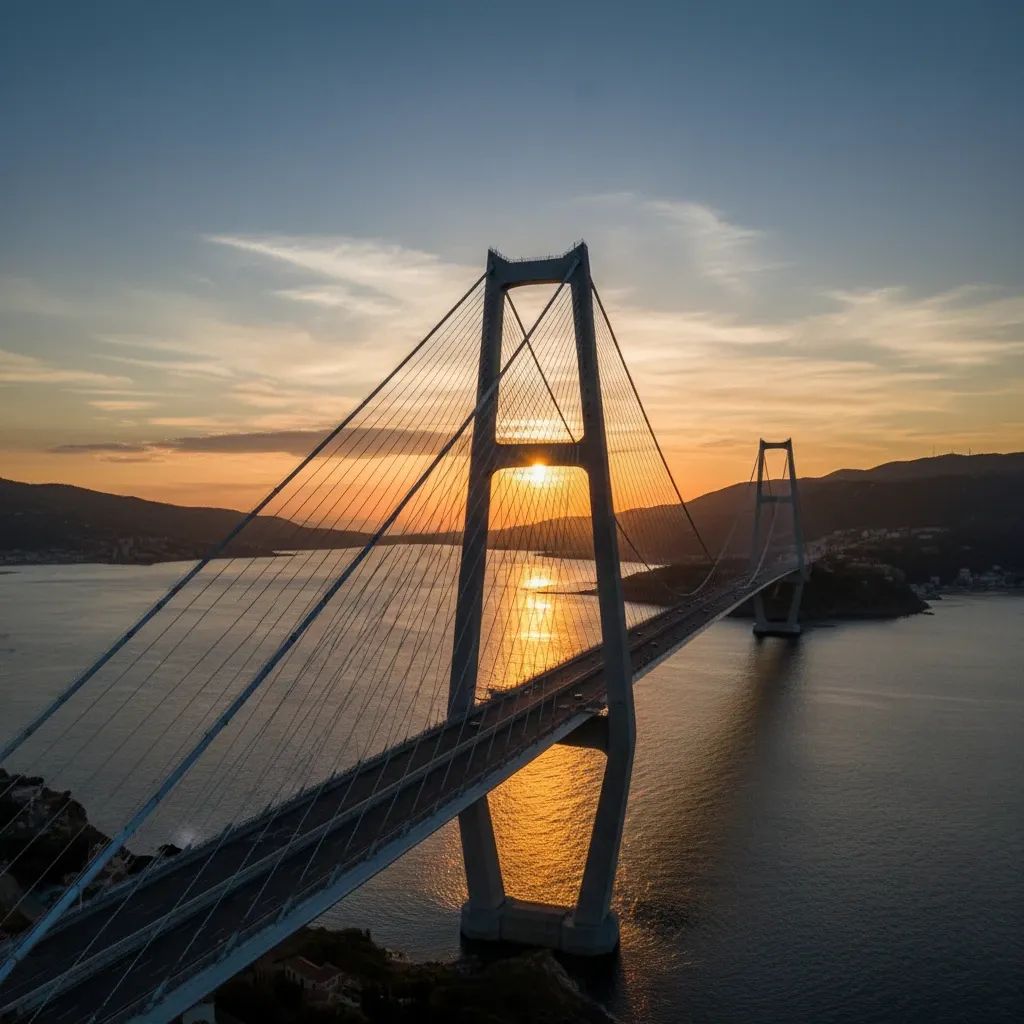
For over 50 years, residents of Sicily and Calabria have waited for a fixed link across the Messina Strait. Currently, ferries handle millions of passengers and vehicles annually, with crossing times averaging 30-50 minutes depending on sea conditions. If construction begins as planned in late 2026, a bridge could reduce this to roughly 10 minutes—transforming daily commutes, commerce, and regional integration. The €10.5B project would reshape travel, property values, and economic opportunity across southern Italy. But first, approval timelines and anti-corruption safeguards must hold.
The Stretto di Messina company is targeting construction launch in the final quarter of 2026, following approval procedures expected to wrap up by summer. CEO Pietro Ciucci delivered this timeline during a March 26 Senate Environment Committee hearing, marking concrete progress on a project that has oscillated between political ambition and bureaucratic gridlock for decades. The announcement hinges on completing regulatory approvals within five months—a schedule that, if met, would represent the most tangible progress in over a decade.
Why This Matters for Your Daily Life
• Travel transformation: Ferry crossing times of 30-50 minutes would drop to approximately 10 minutes once the bridge opens. Current ferry capacity: 7 million passengers and 2 million vehicles annually.
• Economic ripple effects: Property markets in Messina and Reggio Calabria are already anticipating connectivity gains. Developers expect increased investment and job creation during the multi-year construction phase.
• Construction employment: The project is projected to create thousands of jobs during the build phase, primarily in construction, engineering, and support services across Calabria and Sicily.
• Toll structure: While specific toll amounts have not yet been announced, budget documents indicate operational costs will be recovered through user fees—likely affecting commuter patterns and regional commerce.
• Timeline locked: Approval by summer 2026, construction starting Q4 2026.
• Cost escalation: The general contractor fee has ballooned from €3.9B (2006) to €10.5B today, primarily through price indexing.
• Organized crime risk: Italy's anti-corruption authority warns the project will "attract appetites of organized crime" and demands reinforced oversight.
Budget Inflation Defended as Indexing, Not Scope Creep
The bridge's price tag has become a flashpoint. Ciucci defended the near-tripling of costs—from €3.9B in 2006 to €6.7B in 2011, and now €10.5B—by attributing the surge "almost exclusively" to contractual price indexing clauses rather than project modifications. This explanation attempts to sidestep European Union procurement rules, specifically Article 72 of the EU Procurement Directive, which governs when contract amendments require fresh tendering.
According to the CEO, the only actual design changes involve the railway alignment and three stations, adjustments requested by the Messina municipal administration and incorporated into the 2011 final design. Even these modifications would remain within the 50% threshold stipulated by EU regulations for permissible contract variations without triggering a new procurement process.
The distinction matters legally and financially. If authorities classify the cost increase as legitimate indexing rather than substantial contract alteration, the project can proceed without the delays of a fresh international tender. However, skeptics note that a 169% cost jump over two decades invites scrutiny over whether design evolution has been understated.
Anti-Corruption Authority Flags Mafia Infiltration Risk
Giuseppe Busìa, president of Italy's National Anti-Corruption Authority (ANAC), issued a stark warning: the bridge will inevitably "attract the appetites of organized crime." His testimony underscored what analysts have long highlighted—that mega-infrastructure projects in southern Italy present opportunities for mafia infiltration, particularly through subcontracting networks and material supply chains.
Busìa called for "reinforced and precise controls" and urged lawmakers to impose strict limits on subcontracting, a mechanism frequently exploited by criminal syndicates to siphon public funds. His comments reflect ANAC's broader mandate to insulate large public works from the 'Ndrangheta, Cosa Nostra, and other organized groups with deep roots in Calabria and Sicily.
The authority's position adds complexity to project execution. Enhanced oversight could slow timelines and increase compliance costs, yet the alternative—a repeat of past infrastructure scandals—would be politically and economically catastrophic.
Environmental Assessment and Local Opposition
Environmental groups continue to challenge the bridge's design, citing concerns about seismic resilience in a zone prone to earthquakes and potential impact on sensitive marine ecosystems in the strait. The environmental assessment process is ongoing, with public consultation phases scheduled through 2025. Local opponents argue the €10.5B investment—equivalent to roughly 1.5% of Italy's annual GDP—could be better allocated to railway and road infrastructure that remains substandard across the Mezzogiorno.
These environmental and regional concerns will shape the final approval process and could introduce delays beyond the stated summer 2026 timeline.
What Happens Next
The next six months are critical. If the government meets its timeline for summer 2026 approval and late-2026 construction start, it would mark a decisive break from decades of false starts. Residents in Messina and Reggio Calabria will be watching whether this iteration finally materializes or joins the long list of grand infrastructure ambitions that never left the drawing board.
For commuters currently relying on ferries, property owners anticipating value appreciation, and workers seeking construction-phase employment, the bridge represents a genuine turning point—or another delayed promise in a region accustomed to both. The Messina Strait Bridge will transition from political symbol to construction site only if bureaucratic, environmental, and anti-corruption safeguards align with delivery timelines over the coming months.


