
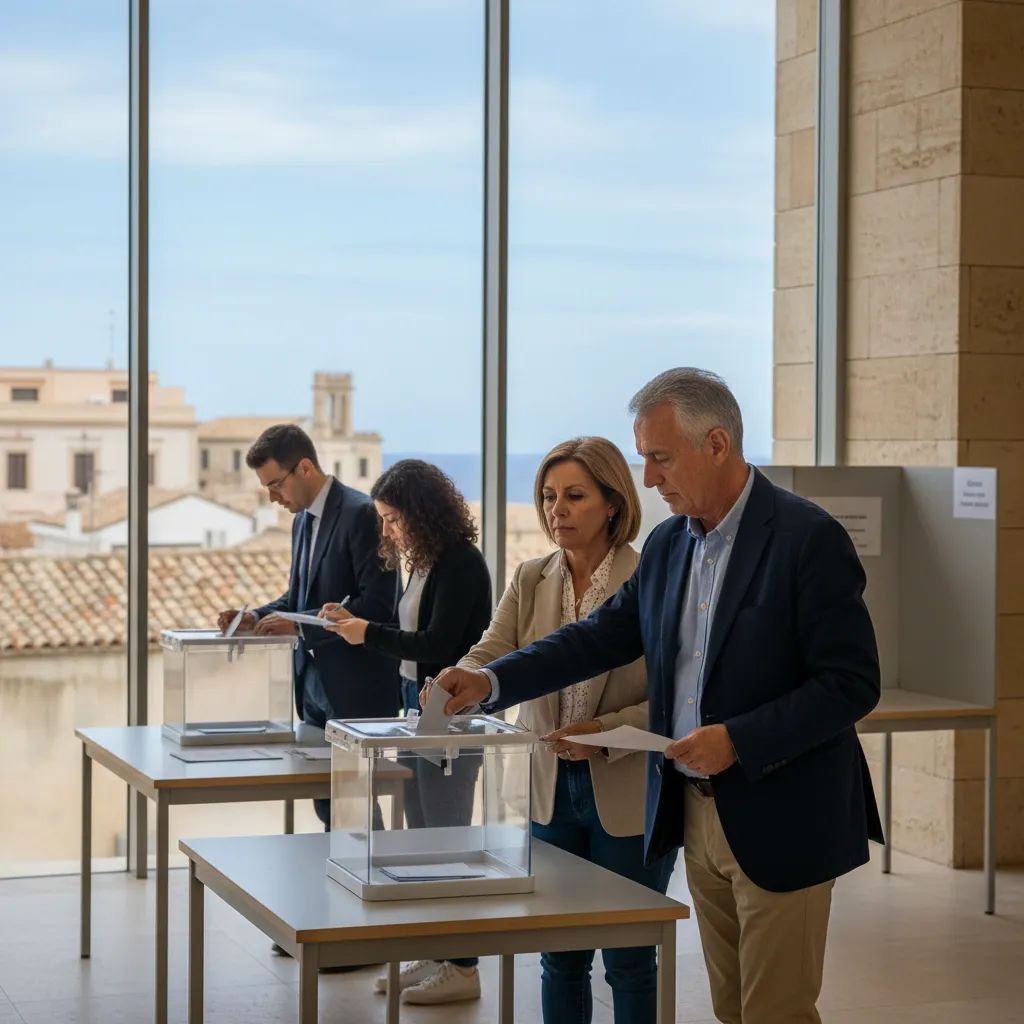
The Sardinian Regional Government has set the stage for a critical round of municipal elections across the island, with 149 towns and cities heading to the polls on June 7 and 8. The deadline for candidate registration closed at noon today, marking the final step before voters in nearly one-fifth of Sardinia's municipalities decide who will lead their communities for the next term.
Why This Matters
• Four major cities face potential runoff elections on June 21-22, including Quartu Sant'Elena, Sardinia's third-largest city
• Sardinia exercises autonomous authority over local election timing under its special statute, choosing dates independent of mainland Italy's schedule
• Political momentum test: The results will gauge whether center-right or center-left coalitions maintain dominance in Italy's autonomous island region
Autonomous Scheduling Power at Work
Sardinia's decision to hold these elections in early June reflects the unique constitutional arrangement granted to the region. Under the Statuto Autonomo, the island government maintains exclusive jurisdiction over local entity matters, allowing it to set election calendars independently from Rome's typical scheduling. This autonomy, shared only with a handful of Italian special statute regions, means Sardinian municipalities operate on their own electoral rhythm.
The timing places these contests roughly one month ahead, creating a distinct campaign season that unfolds separately from any potential national or regional coordination.
Geographic Distribution Reveals Island-Wide Renewal
The electoral map stretches across every corner of the island. The Metropolitan City of Cagliari leads with 27 municipalities voting, matched equally by the Metropolitan City of Sassari in the north. The Province of Oristano contributes 38 communes, the highest concentration outside the metropolitan areas, while Nuoro Province adds 20 municipalities to the mix.
Smaller provincial subdivisions round out the picture: Gallura Nord-Est Sardegna brings 13 towns, Medio Campidano contributes 11, Ogliastra adds 7, and the Sulcis Iglesiente region accounts for 6 municipalities. This geographic spread means voters from coastal resort towns to interior agricultural communities will simultaneously reshape local governance across the island.
Four Cities Face Potential Second Round
While most of Sardinia's 149 voting municipalities will settle their races in a single round, four larger centers have triggered the runoff provision. Two municipalities exceed the 15,000-resident threshold that mandates a potential second ballot: Quartu Sant'Elena, home to roughly 70,000 people in the Cagliari metropolitan area, and Sestu, another substantial Cagliari suburb.
Two provincial capitals complete the runoff-eligible quartet: Tempio Pausania in the northern Gallura region and Sanluri in Medio Campidano. If no candidate secures an outright majority in the first round, these four cities will return to polling stations on June 21-22 for head-to-head runoffs between the top two finishers.
Quartu Sant'Elena: The Marquee Contest
The most closely watched race unfolds in Quartu Sant'Elena, where a three-way battle tests the strength of competing political models. Graziano Milia, the outgoing mayor, seeks another term backed by nine civic lists that deliberately exclude traditional party symbols. Milia brings substantial experience to the campaign, having previously served as mayor from 1993 to 2001 before returning to lead the city over the past five years.
His main challenger, Marco Porcu, represents a consolidated center-right coalition that reportedly fields between six and twelve lists depending on how various civic formations are counted. The coalition's core includes Fratelli d'Italia, Forza Italia, Lega, Riformatori, and Sardegna al Centro 2020, supplemented by Porcu's personal civic list. Additional formations like Sardegna Forte, Movimento per Quartu, and civic groups named "Terra e Tradizione" round out his support structure. An attorney by profession, Porcu previously served as regional Environment Minister in the Solinas administration, giving him executive experience and regional visibility.
The wild card candidacy belongs to Roberto Matta, a businessman running on the "Turismo e Progresso" civic platform. His outsider status positions him to potentially capture voters dissatisfied with both established political camps, though he faces the challenge of competing against two well-resourced coalitions with deeper organizational networks.
What This Means for Residents
For Sardinians living in the 149 affected municipalities, these elections determine who controls local budgets, urban planning decisions, and service delivery for the next administrative cycle. Mayors and councils wield considerable authority over waste management contracts, building permits, tourism development strategies, and the distribution of regional and European funding for infrastructure projects.
In Quartu Sant'Elena specifically, the outcome shapes how Sardinia's third-largest city manages its delicate balance between suburban growth pressure from nearby Cagliari and the preservation of coastal and agricultural identity. The winner inherits responsibility for ongoing debates about beach access regulation, commercial development in historic zones, and coordination with metropolitan transportation planning.
For the smaller municipalities scattered across Ogliastra, Gallura, and the interior provinces, these elections often hinge on hyper-local issues: road maintenance, school consolidation, elder care services, and the eternal struggle to stem population decline by attracting young families and economic investment.
Verification Process Underway
Today's noon deadline triggered the next administrative phase. Electoral commissions in each municipality will spend the coming days reviewing submitted documentation to verify that mayoral aspirants and council candidates meet legal requirements for ballot placement. This vetting process examines residency qualifications, petition signatures, financial disclosures, and proper list formation according to Sardinian electoral law.
Official candidate lists should emerge within days, giving campaigns roughly four weeks to make their final appeals to voters before polling stations open on the morning of Sunday, June 7. Voting will continue through Monday, June 8, following Italy's traditional two-day municipal election format designed to maximize participation despite work schedules.
The stakes extend beyond municipal boundaries. These 149 contests collectively serve as a political temperature check for Sardinia's autonomous government, revealing whether voters endorse or reject the policy directions taken by regional leadership. Campaign strategists in both Rome and Cagliari will parse the results for clues about coalition strength, voter enthusiasm, and emerging local priorities that could ripple into regional and national politics.


