
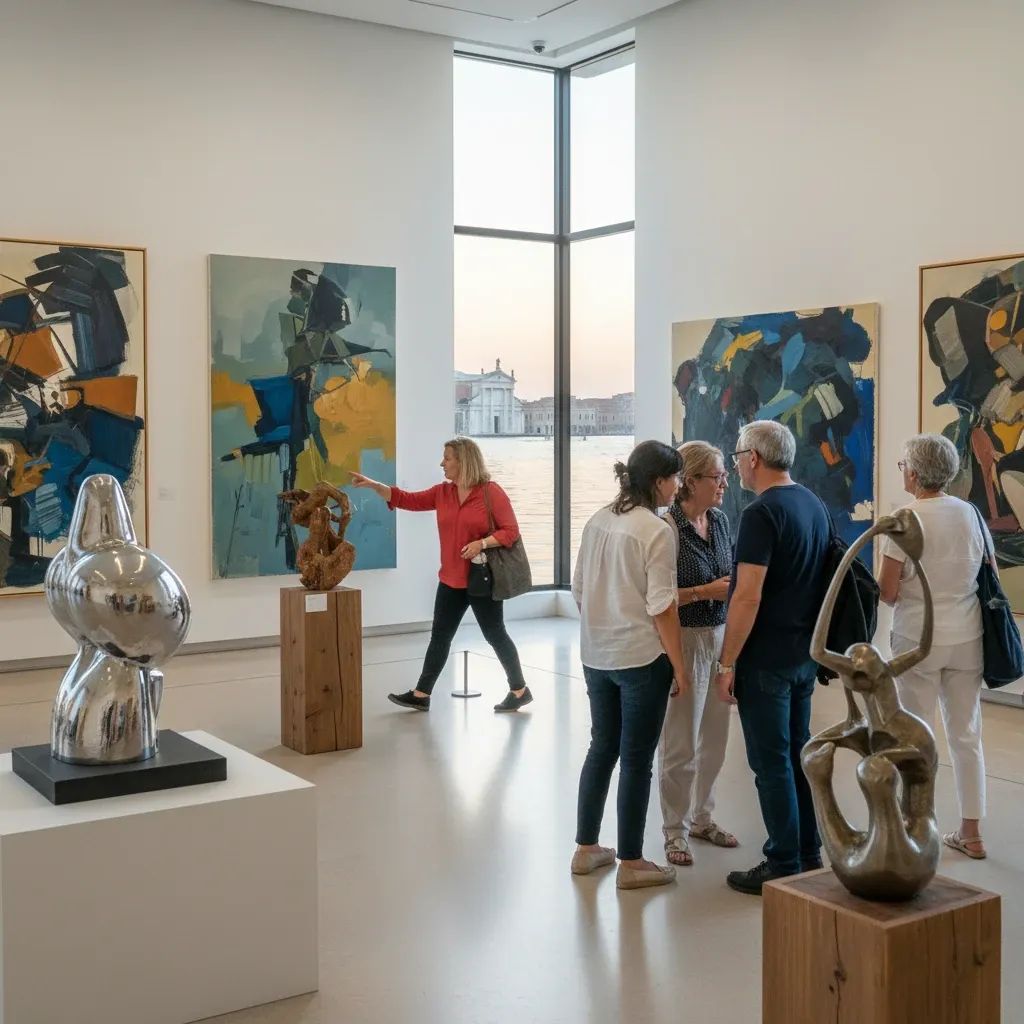
The Russian Pavilion at Venice's Giardini will open its doors for an invitation-only performance from May 5-8, before closing to the public when the Biennale officially welcomes visitors on May 9. The ceremony takes place on May 6 at 5 PM featuring The Tree is Rooted in the Sky, a multimedia event with Russian contemporary ensembles—Toloka, Intrada, and the experimental collective Phurpa—alongside international performers including Brazilian producer Jlz, Argentine audiovisual artist Jaijiu, and Malian sound artist DJ Diaki.
The Arrangement
The Russian Pavilion maintains a permanent structure at the Giardini dating back decades. The Foundation confirmed that Russia, as a state recognized by the Italian Republic with existing infrastructure at the venue, exercised its right to autonomous participation. After May 8, the pavilion will close to general visitors for the duration of the Biennale, which runs through November 22.
Who Can Attend
Only journalists, invited guests, and industry professionals will witness the live performance during May 5-8. Visitors entering the Biennale from May 9 onward will not have access to the interior of the Russian Pavilion.
The 2026 Biennale Context
The 61st International Art Exhibition, titled In Minor Keys and curated by the late Koyo Kouoh, centers themes of collective resistance and healing. Invited participants include established and emerging figures—Pio Abad, Akinbode Akinbiyi, Laurie Anderson, Sammy Baloji, Tsedaye Makonnen, Wangechi Mutu—whose work engages memory, resistance, and collective healing across 110 invited participants.
For Residents and Visitors
Anyone planning to visit the Biennale between May 9 and November 22 should know the Russian Pavilion will be physically inaccessible to the general public. Those interested in documenting the May 5-8 performances may contact the Biennale Foundation directly for accreditation information.
For cultural workers, artists, and curators living in Italy, the 2026 Biennale reflects the complex landscape of contemporary international exhibitions navigating multiple stakeholder interests and institutional priorities.
The Performance Title
The Tree is Rooted in the Sky arrives with evocative symbolism—a title suggesting suspension and paradox, fitting for an artistic intervention that exists within the broader context of the exhibition's themes of resistance and collective experience.


