
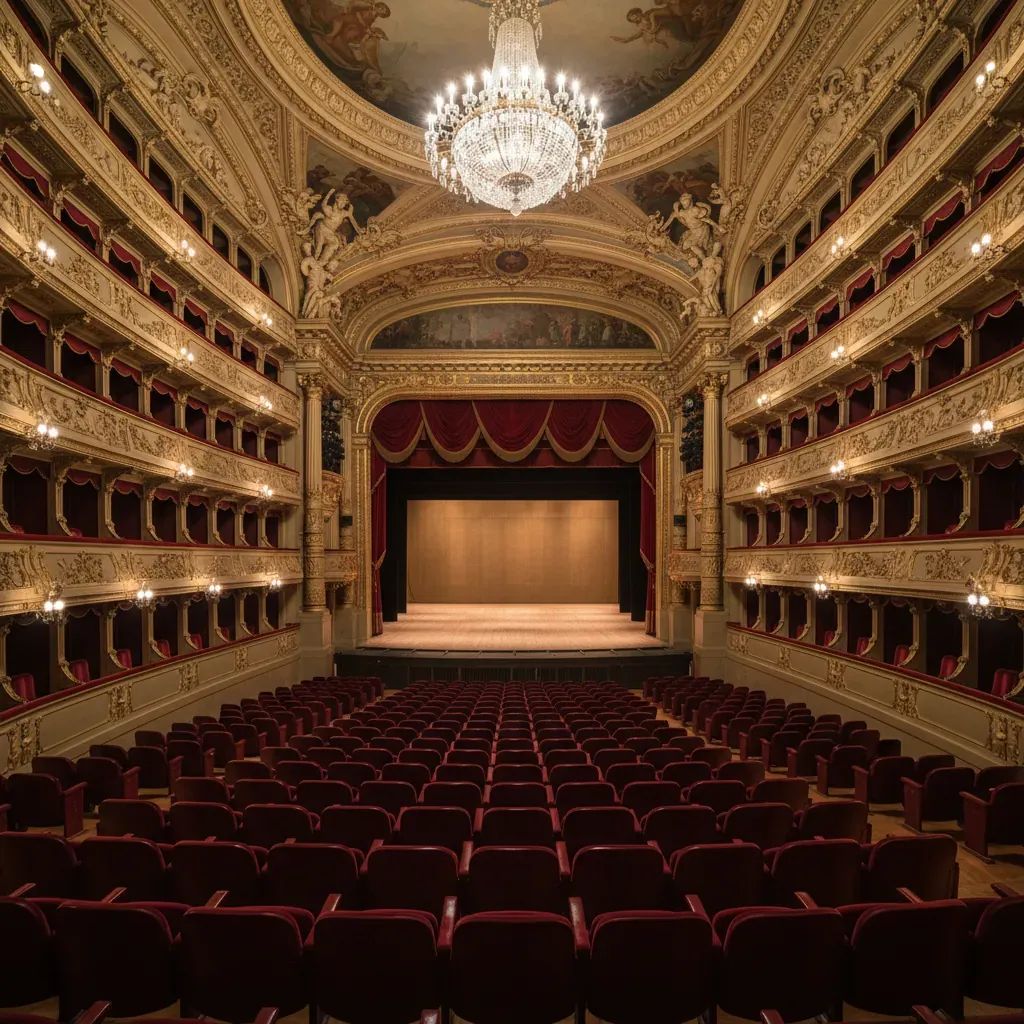
Italy's President Sergio Mattarella joined dignitaries and cultural figures at Milan's Teatro alla Scala on May 11, 2026, for a concert marking 80 years since the opera house reopened following its wartime destruction. The event commemorated one of the most symbolic moments in Italian post-war reconstruction: the May 11, 1946 reopening concert conducted by Arturo Toscanini, barely three years after Allied bombs tore through the building's roof and galleries.
The Teatro alla Scala suffered catastrophic damage during a Royal Air Force bombing raid on the night of August 15-16, 1943. The assault collapsed the roof, destroyed upper galleries, and left rubble piled to the second tier of boxes. Yet architect Luigi Lorenzo Secchi began cataloging fragments and planning restoration the very next day. Backed by liberation-era Mayor Antonio Greppi and industrialist Antonio Ghiringhelli—who advanced 60 M lire from his own pocket when government funds stalled—workers completed the seemingly impossible task in under three years.
The May 11, 1946 reopening wasn't merely a construction milestone. It represented a national act of faith in culture as the bedrock of democratic renewal, occurring less than a month before Italy's first post-fascist referendum and constituent assembly elections. Toscanini, who had refused to conduct under Mussolini and fundraised for the Scala's restoration from American exile, returned to lead an emotionally charged program. The concert also marked the return of Vittore Veneziani, the chorus master expelled in 1938 under racial laws, and introduced soprano Renata Tebaldi to the world stage. Yesterday's anniversary concert demonstrated that Italy remains committed to rebuilding through culture, and that presidential attendance underscores the enduring link between Italian identity and its cultural institutions—a continuity that has shaped the nation's post-war recovery.
Experiencing the Scala's 80th Anniversary
For Milan residents and visitors, two accessible opportunities to engage with this cultural celebration are available. A public dress rehearsal for the new Nabucodonosor production is scheduled for May 9 from 13:30 to 16:00 through the "Milano per la Scala" program, offering more accessible entry than standard ticket pricing. The production itself runs May 16 through June 9, featuring world-class performers including Anna Netrebko, bass Michele Pertusi, and tenor Francesco Meli. Additionally, the concurrent photo exhibition "La Scala Rinasce – La Ricostruzione del Teatro, della Città, del Paese" in the Toscanini foyer documents the reconstruction through archival images, providing historical context to the anniversary at no additional cost to theater visitors.
Echoes of Toscanini's Return
Yesterday's anniversary concert, led by the Scala's music director Riccardo Chailly, deliberately mirrored the 1946 program structure. The orchestra and chorus performed excerpts from Verdi's Nabucodonosor—including the overture, "Gli arredi festivi," "Sperate o figli...D'Egitto là sui lidi," and the iconic "Va', pensiero"—featuring bass Michele Pertusi and tenor Francesco Meli. The selections served double duty: honoring historical continuity while offering a preview of the new production premiering May 16, directed by Alessandro Talevi with alternating leads Luca Salsi and Dmitri Platanias as Nabucodonosor and Anna Netrebko as Abigaille.
In a gesture replicating Toscanini's choice eight decades prior, guests from Casa Verdi occupied the central royal box. This retirement home for musicians, founded by Giuseppe Verdi in 1899 and opened posthumously in 1902, remains funded by royalties from the composer's works. Verdi called it his "most beautiful opera," insisting residents be termed "ospiti" (guests) rather than inmates. The foundation now houses both elderly musicians and merit-based student scholars, hosting over 1,000 artists across its history.
Political and Civic Significance
Mattarella sat in the orchestra section rather than the royal box, receiving sustained applause and shouts of "bravo" as he entered. The audience had already risen moments earlier for Senator for Life Liliana Segre, a Holocaust survivor and moral voice in Italian public life. Milan Mayor Giuseppe Sala, along with Senate President Ignazio La Russa and Lombardy Governor Attilio Fontana, represented Italy's institutional leadership.
Sala used his pre-concert address to frame the occasion in explicitly democratic terms. "The institutions present in this hall have precise responsibilities," he stated, referencing Milan, Italy, and Europe. "But also the responsibility to defend democracy, the system of rights and duties, rules and guarantees that defines our civil coexistence and safeguards the identity of the republican Constitution."
Sala invoked Verdi's adage—"Torniamo all'antico: sarà un successo" (Return to the old ways: it will be a success)—to argue that progress isn't rupture but "fidelity to the best part of ourselves." He framed democracy as a continuous renewal process requiring vigilance, a message resonating in an era of populist pressures across Europe.
What This Means for Residents
For those living in Italy, particularly in Lombardy, the Scala anniversary underscores the government's prioritization of cultural institutions as pillars of national identity. The event signals continued state investment in preserving Italy's artistic heritage, which drives both tourism revenue and soft power internationally. The presidential attendance—and Mattarella's likely return for the December 7 season opener featuring Otello—reinforces culture's role as a unifying force above partisan politics.
The Acoustic Miracle
One of Secchi's most daunting challenges in 1946 was restoring the Scala's legendary acoustics amid post-war material shortages. He sourced larch beams from near the Leonardo da Vinci monument in Piazza della Scala, improvising solutions that somehow preserved the hall's sonic properties. That same precision sound—unchanged through decades—carried Pertusi's bass and Meli's tenor through yesterday's performance, earning a prolonged standing ovation that included Mattarella himself.
After the audience departed, Mattarella met briefly with Chailly, the soloists, and Superintendent Fortunato Ortombina in the foyer. "He said 'magnifico,'" Ortombina reported, expressing optimism that the president would return for the December gala. Ortombina had earlier presented Mattarella with two volumes on the theater's history and a summary of the anniversary exhibition.
The evening closed with a request for audiences to remain seated while the president exited—a protocol reversal from typical opera galas, where the hall empties en masse. The gesture reinforced the ceremonial gravity of an occasion that transcended entertainment, serving instead as collective memory work for a nation still defining itself through cultural continuity.
As Milan prepares for the Nabucodonosor premiere and the autumn season ahead, the Scala's double identity—as both working theater and national shrine—remains intact. The institution that Verdi helped define, that Toscanini resurrected from rubble, and that Italy's political class still treats as civic sacrament continues to anchor Milanese identity while broadcasting Italian excellence globally. For residents navigating contemporary uncertainties, the Scala's persistence offers both reassurance and challenge: the obligation to remain, in Sala's words, "firm on the right side" of history.


