
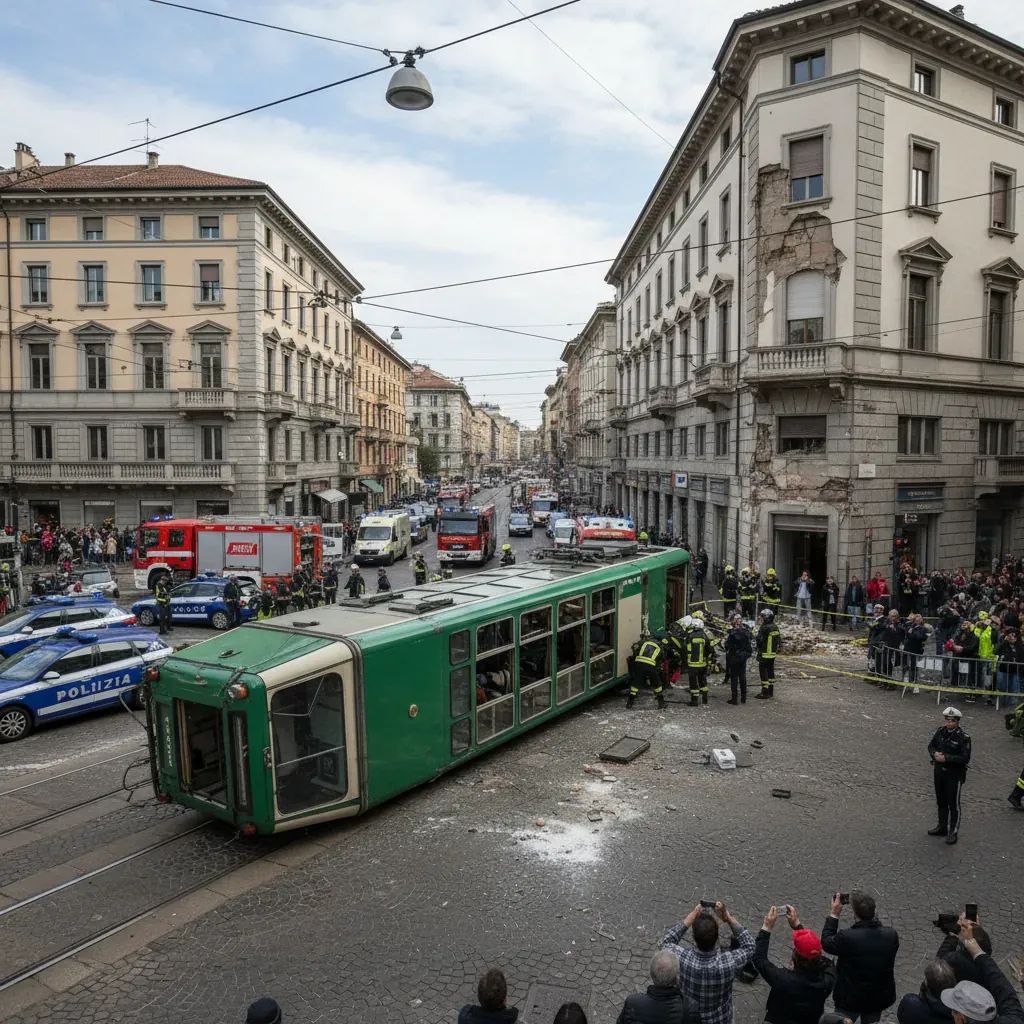
Italy's capital experienced a jarring morning commute disruption after two trams collided on Via Prenestina, sending 10 passengers to hospital with what authorities are describing as minor injuries. The rear-end collision, which occurred shortly before 8:00 AM at the intersection with Via Erasmo Gattamelata, forced the temporary shutdown of a major tram artery and raised fresh questions about the safety of Rome's public transport infrastructure just weeks after a similar incident on another line.
Why This Matters:
• Service disruption: Tram operations on Via Prenestina were suspended until 9:30 AM, affecting morning commuters on lines 5 and 19
• Second incident this month: This marks the second tram collision in Rome within 12 days, following an incident on 4 March on another tram line
• Infrastructure scrutiny: Investigators are examining track conditions, signaling equipment, and safety protocols in the wake of repeated incidents
The Collision and Emergency Response
The impact occurred on one of Rome's busiest tramway corridors, a stretch of Via Prenestina that carries dense morning traffic toward the city center. Officers from the Rome Municipal Police secured the scene and diverted both vehicular and pedestrian traffic while emergency medical personnel administered first aid to injured passengers.
All 10 individuals transported to area hospitals sustained what medical authorities classified as non-serious injuries—primarily minor bruising, whiplash-type symptoms, and shock. None required admission for extended treatment, though standard protocol mandates observation for passengers involved in public transport accidents.
The crash site remained cordoned off for approximately 90 minutes while investigators documented the scene, photographed the damaged tram cars, and began preliminary interviews with both drivers and witnesses. Wreckage removal and track inspection delayed the resumption of normal service until mid-morning.
Investigation Focuses on Safety Systems
Rome Municipal Police have launched a formal inquiry into the collision dynamics, with investigators examining three primary areas of concern: the operational status of signaling systems along that section of track, the condition of the rail infrastructure itself, and whether human error played a role in the failure to maintain safe following distance.
Forensic analysis will focus on safety mechanisms designed to prevent such collisions. Older rolling stock relies on manual driving protocols and traditional fail-safe technologies, raising questions about whether safety systems functioned as intended during the incident.
Pattern of Incidents Raises Alarm
This marks the second tram-related accident in Rome in less than two weeks. On 4 March, a separate incident occurred on another tram line, which also triggered an investigation into possible signaling failures or operational issues.
The early-year pattern underscores persistent reliability and safety concerns within the capital's public transport system, particularly given the heavy reliance on aging infrastructure in certain corridors.
What This Means for Commuters and Residents
For the residents who rely on Rome's tram network, these incidents underscore persistent reliability and safety concerns. The tram system functions as a critical link between residential neighborhoods and metro hubs, particularly in eastern districts like Prenestino where metro coverage is sparse.
Short-term disruptions like this morning's closure create cascading delays across the broader public transport network. When tram service halts, substitute buses are deployed, but these lack the capacity and speed of rail vehicles, often resulting in overcrowding and extended travel times during peak hours.
Residents in the Prenestino-Labicano district, where the collision occurred, have long voiced concerns over what they describe as maintenance challenges and equipment limitations on heavily trafficked routes. Community associations have pressed city administrators to prioritize transport safety and infrastructure improvements.
Moving Forward: Safety and Infrastructure
Rome's municipal government has acknowledged the need for modernization of the tram system and public transport infrastructure improvements. Any substantive upgrades will require coordination between municipal authorities, transport operators, and regulatory bodies overseeing public safety standards.
The investigation into this morning's collision will provide critical insights into what safety measures are working and where additional improvements are needed. As investigators work to determine the precise cause, the incident serves as a reminder that transport infrastructure maintenance and safety protocols are fundamental to public confidence and urban functionality for those who call Italy's capital home.


