
Why This Matters
• A rocket struck the Italian military installation in Shama on May 7, causing no injuries but marking the third direct incident targeting Italian forces within two months — signaling escalating security risks that challenge Italy's peacekeeping operations in Lebanon.
• Italian Defense Minister Guido Crosetto immediately engaged highest-level defense officials to assess the incident, reflecting the seriousness with which Rome treats the deteriorating security environment.
• The attribution gap complicates Italy's response — without determining whether the rocket originated from Israeli, Hezbollah, or other sources, Rome cannot credibly protest to any specific actor, complicating its neutral mediator role.
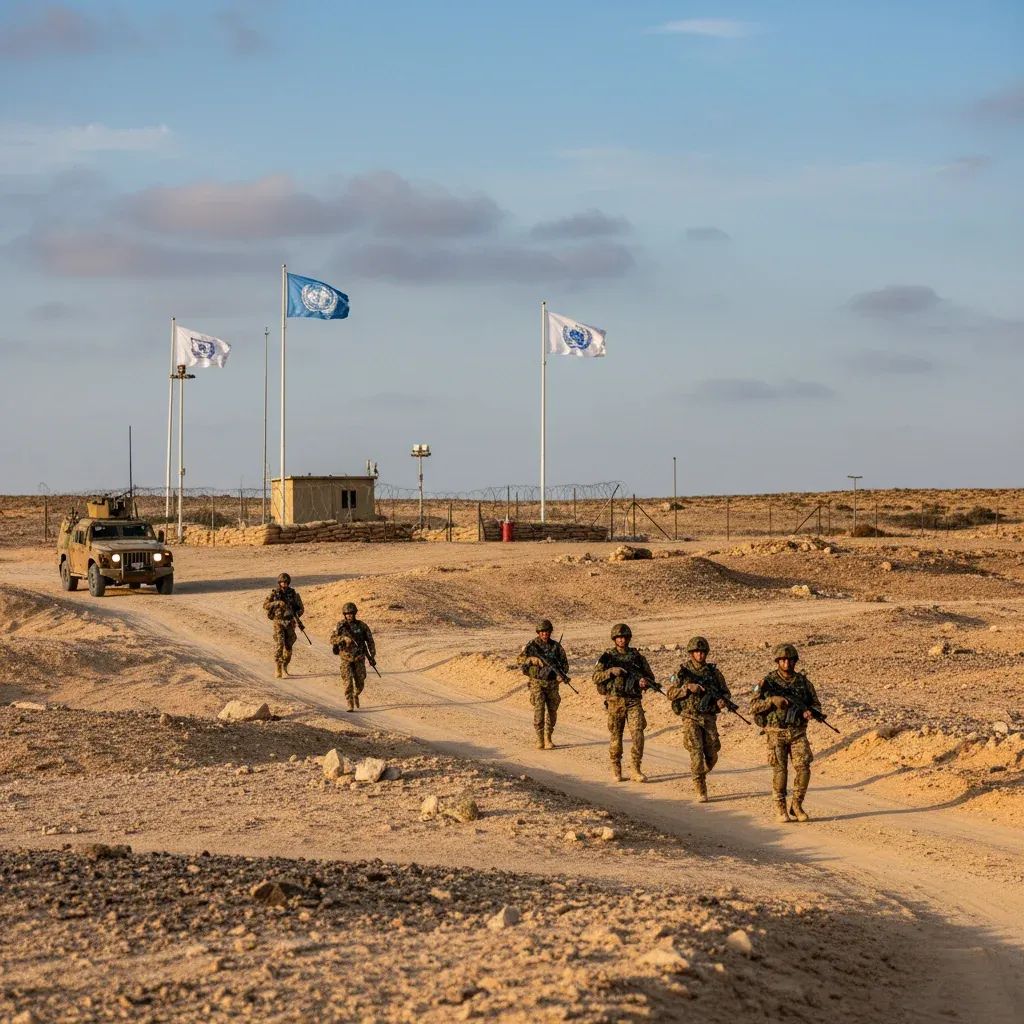
An unidentified projectile penetrated the perimeter of the Italian military base in Shama, Lebanon on Thursday morning, striking a military vehicle but sparing all personnel. The base, which anchors the Italian contingent's presence within UNIFIL's Western Sector, immediately triggered a security review involving the country's highest defense officials. While the incident produced no casualties and only minor material damage, it underscores mounting security concerns for Italian peacekeepers operating in an increasingly volatile region.
Italy's Ministry of Defense confirmed the strike within hours. Defense Minister Guido Crosetto initiated a cascade of communications with the Chief of Defense Staff, the commander of Italy's Joint Operations Command, and field leadership. The immediacy of this response—escalating beyond standard military reporting protocols—signals institutional concern. Rome is treating this incident within the context of repeated security incidents targeting Italian forces.
Recent Security Pattern in Southern Lebanon
This marks the third security incident directly affecting Italian UNIFIL positions in recent weeks. Each incident—though varying in severity and circumstances—reflects the challenging operational environment in southern Lebanon where international peacekeepers operate between active conflict zones.
The broader regional context amplifies concern. Southern Lebanon remains a contested border area where Israeli operations, Hezbollah activities, and other armed groups maintain active military engagement. UN monitoring mechanisms document continuous tensions across the Lebanese-Israeli border. A military base housing foreign peacekeepers sits directly within this volatile zone, exposed to spillover effects from regional hostilities.
Understanding UNIFIL's Decades-Long Italian Commitment
To grasp why Rome prioritizes Lebanon deployment, consider the historical arc. Italy has deployed forces to Lebanon through UNIFIL continuously since 1979—longer than most member states. The Italian contingent has maintained uninterrupted presence through nearly five decades of regional upheaval. When conflict erupted between Israel and Hezbollah in 2006, Italy became instrumental in reshaping UNIFIL's mandate through UN Security Council Resolution 1701, which strengthened the mission's authority and resources.
Italy subsequently became UNIFIL's leading European contributor, at times deploying more personnel than all other European nations combined. That commitment reflected genuine strategic calculation: Rome believed that Lebanon's stability directly influences Mediterranean security and broader European interests. Italian troops monitor ceasefires, coordinate humanitarian corridors, and maintain an international presence precisely to prevent hostile power vacuums from forming.
The Attribution Challenge
Determining responsibility for Thursday's rocket proves diplomatically significant. Until investigators determine whether the projectile originated from Israeli operations, Hezbollah, or other armed groups operating in the border zone, Italy faces diplomatic complexity: the government cannot credibly protest without identifying the responsible party. This ambiguity weakens Italy's ability to demand accountability or extract political concessions.
Rome has historically maintained a balanced approach to both Israeli and non-state actors. Previous incidents have prompted condemnations of both Israeli military operations and militant attacks targeting peacekeepers. This even-handed stance reflects Rome's mandate as a neutral arbiter—peacekeeping requires appearing impartial to all sides, even when both sides occasionally create operational hazards for international forces.
What This Escalation Means for Residents and Policy
For Italians monitoring this situation, the fundamental question hinges on whether the government can justify maintaining peacekeeping forces in an environment with increasing physical exposure and uncertain operational benefits. National security decisions ultimately reach voters who must accept both the strategic benefits and concrete costs.
Operationally, the Italian Ministry of Defense now faces immediate considerations. Reinforcing the Shama position with enhanced security measures demands capital expenditure. Reducing personnel to minimize exposure undermines the peacekeeping mission's credibility and operational scope. Maintaining current deployments while accepting elevated risk carries its own political calculus: how the government balances strategic continuity against personnel safety.
For expatriate communities and Italian business interests operating in Lebanon, the security deterioration carries direct implications. Italy's military presence has historically provided informal protective advantages—evacuation capacity, security coordination, diplomatic access. If Italian military capabilities diminish, so does that protective buffer.
The December 2026 Deadline Reshaping Strategic Thinking
A critical timeline concentrates Rome's thinking: UNIFIL's mandate expires on December 31, 2026, creating a compressed decision window for Italy's long-term Lebanon strategy.
Italy has already signaled intention to maintain some military presence beyond UNIFIL's formal mandate, exploring frameworks ranging from participating in new international missions to developing training and advisory roles focused on strengthening the Lebanese Armed Forces. The strategic objective is clear: prevent security vacuums while building Lebanese internal capacity.
Yet the calculus is shifting. If security incidents persist, Italy will likely recalibrate its post-UNIFIL commitments. A training and advisory mission carries substantially different risk profiles than deployed peacekeeping units. The government could maintain a reduced military presence—advisors rather than patrol units—without the operational exposure that current incidents represent.
This distinction matters considerably. A smaller footprint would allow Italy to claim strategic continuity while accepting lower physical exposure. The government's political flexibility remains substantial as long as current incidents remain non-lethal.
The Investigation and Its Policy Consequences
Both UNIFIL and the Italian Ministry of Defense have launched investigations into Thursday's incident. The pace and transparency of these investigations will substantially influence Italy's response posture over coming weeks.
If evidence quickly identifies a specific perpetrator, Rome can execute targeted diplomatic responses. If investigations remain inconclusive, Italy faces pressure to adopt more defensive postures: restricting operations, reinforcing defenses, or reassessing continued deployment.
The immediate reality is that Italian personnel at Shama operate under heightened alert status, with movements restricted and protocols tightened. Rome's highest officials now personally coordinate decisions typically delegated to military command. Thursday's absence of casualties represents tactical fortune—projectile timing, base construction, conditions—rather than strategic security. As the December deadline approaches, the distinction between tactical luck and strategic policy will consume increasingly intense focus within Italy's government.


