
Italy-listed tire giant Pirelli has delivered a robust third-quarter performance in 2026, posting a 23.3% surge in net profit to €156.8 M despite currency headwinds and strategic asset divestments—a signal that the Milan-based manufacturer's pivot toward premium products is paying off even as macroeconomic friction persists.
The company's bottom line climbed from €127.2 M in Q3 2025, propelled largely by reduced financing costs and an improving product mix that prioritizes high-margin, technology-driven tires over commodity rubber. For residents and investors watching Italy's industrial bellwethers, the takeaway is clear: Pirelli is betting its future on margins, not volume—and so far, the math is working.
Why This Matters
• Debt trajectory improving: Net financial position stood at -€2,016.7 M on 30 September 2026, down sharply from -€2,622.5 M a year earlier—freeing capital for dividends and tech investments.
• Premium mix driving results: The company's strategic focus on high-value tire segments continues to support profitability and pricing power.
• Revenue dip is optical: Reported sales fell 1.2%, but organic growth clocked +3.5% once you strip out a -4.5% FX drag and the Däckia disposal.
What This Means for Residents and Investors
For Italy-based shareholders, the strong Q3 performance underscores the company's improved financial position through debt reduction. The deleveraging effort represents a direct reward for the premium-focused strategy and operational discipline. That improved financial footing offers confidence in an environment where Italian savers continue hunting for yield beyond anemic bank deposits.
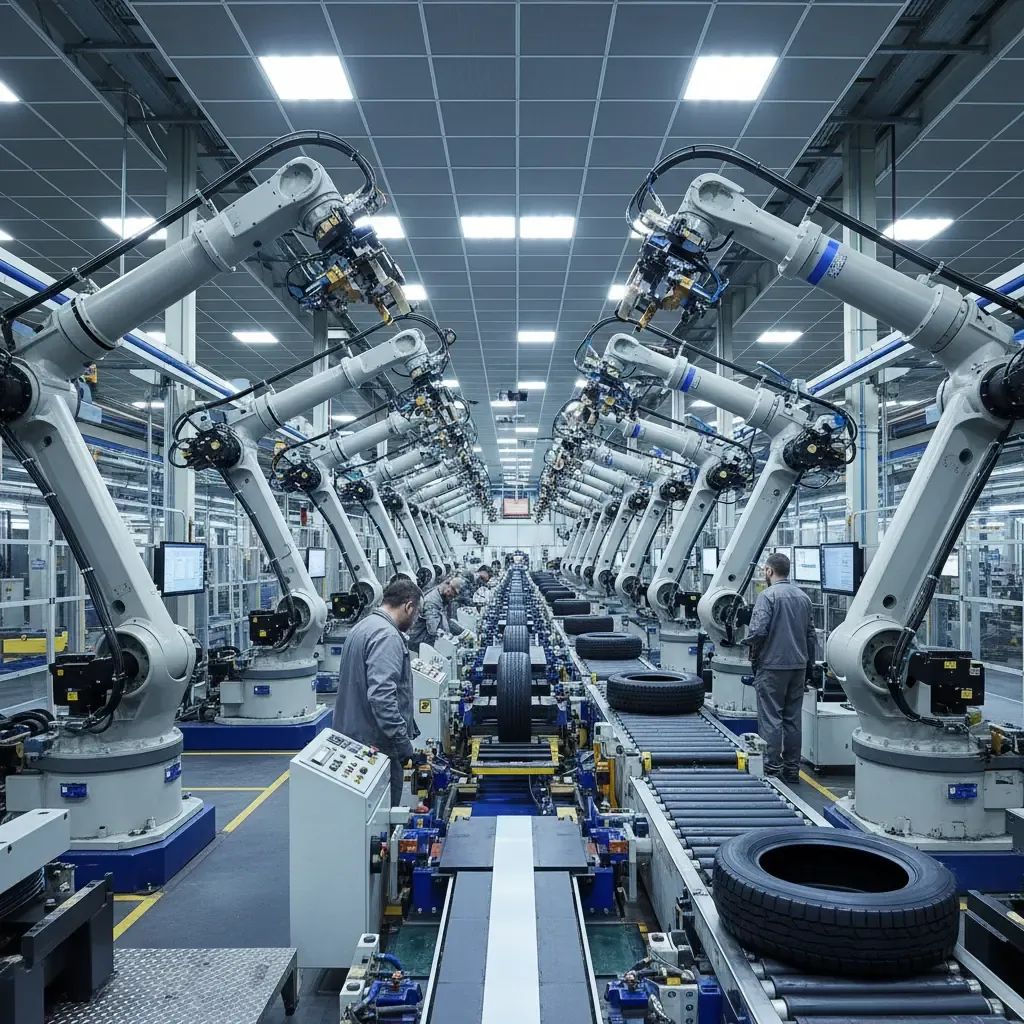
On the industrial side, the company's capital expenditure investments are heavily weighted toward automation and next-generation tire production. Pirelli's focus on advanced tire technologies reinforces the company's technological edge in the global market. For Italy's broader manufacturing ecosystem, this confirms that legacy industries can compete globally when they climb the value chain.
The reduction in net debt—despite seasonal variations typical of working-capital cycles—also insulates Pirelli from near-term interest rate volatility. With the European Central Bank signaling caution on further cuts, lower leverage means less sensitivity to borrowing costs, a defensive posture that matters in uncertain credit markets.
Revenue: Down on Paper, Up Where It Counts
Headline revenue landed at €1,737.2 M, a nominal 1.2% decline versus Q3 2025's €1,758.6 M. But that figure masks a healthy +3.5% organic expansion driven by two factors: volume growth of +1.5% and a +2% price/mix uplift. The shortfall stems almost entirely from adverse currency translation—primarily the weakening of emerging-market currencies against the euro—and the deconsolidation of Däckia, the Nordic retail chain sold to CTS in a strategic partnership.
Däckia's removal from the consolidation perimeter cost Pirelli 0.2 percentage points of reported revenue, but the move is anything but retreat. Under the long-term supply agreement running through 2030, Pirelli remains Däckia's primary tire supplier, capturing distribution economics without the capital and operational burden of retail networks. This is classic asset-light strategy: outsource the storefront, lock in the pipeline, and redeploy capital into higher-return manufacturing and R&D.
Currency translation shaved 4.5 percentage points off the top line, reflecting exposure to Brazil, Argentina, and Turkey—markets where local-currency weakness erodes euro-denominated results. Management has not disclosed specific hedging positions, but the fact that operating profit margins held steady suggests effective pass-through pricing and cost discipline.
Operating Performance: Margins Edge Higher
Adjusted EBIT came in at €277.4 M, fractionally below the prior year's €279.8 M, but the margin improved to 16.0% from 15.9%—a textbook example of doing more with less. Adjusted EBITDA rose 1.4% to €404.4 M, underscoring resilient cash generation at the operational level.
The margin expansion reflects Pirelli's relentless focus on premium tire segments and original equipment for quality automakers. The company's positioning in specialty tires for electric and hybrid vehicles continues to be a key differentiator. Electric-vehicle tires require specialized compounds to handle higher torque and vehicle weight, and Pirelli has positioned itself as a supplier for premium EV platforms—contracts that carry both margin richness and strategic importance.
Cash and Capital Structure: Deleveraging Unlocks Flexibility
Net debt of €2,016.7 M at quarter-end represents a €605.8 M improvement year-over-year (from -€2,622.5 M in Q3 2025). The improvement underscores Pirelli's steady deleveraging trajectory, supported by operational cash flow generation.
The improving balance sheet supports the company's ability to invest in modernization and technology while maintaining financial discipline. Pirelli is threading the needle: maintaining operational strength while funding the automation, digitalization, and capacity expansion necessary to defend leadership in premium tires. For Italian institutional investors—particularly pension funds and insurance companies that prize financial stability—this commitment to balance-sheet improvement is reassuring.
Strategic Context: Italy's Industrial Champion in Transition
Pirelli's Q3 performance is a microcosm of Italy's broader industrial evolution. The company is navigating the dual imperatives of European environmental regulation and global cost competition by staking its future on technology differentiation and premium positioning.
The company's focus on advanced tire technologies—including smart tires embedded with sensors for real-time monitoring—is emblematic of this strategic shift. These developments point toward a future where recurring revenue streams go beyond the one-time tire sale.
For Italy's manufacturing workforce, the transition toward automation represents both opportunity and challenge: it promises productivity gains and competitiveness, but it also implies evolving skill requirements. Pirelli's modernization initiatives are part of the company's broader evolution toward higher-value manufacturing.
The company's ability to sustain margins and financial strength will hinge on how well it executes this transition—and whether the bet on premium positioning holds as global competitors climb the value ladder themselves. For now, Pirelli's Q3 numbers suggest the strategy is delivering results.


