
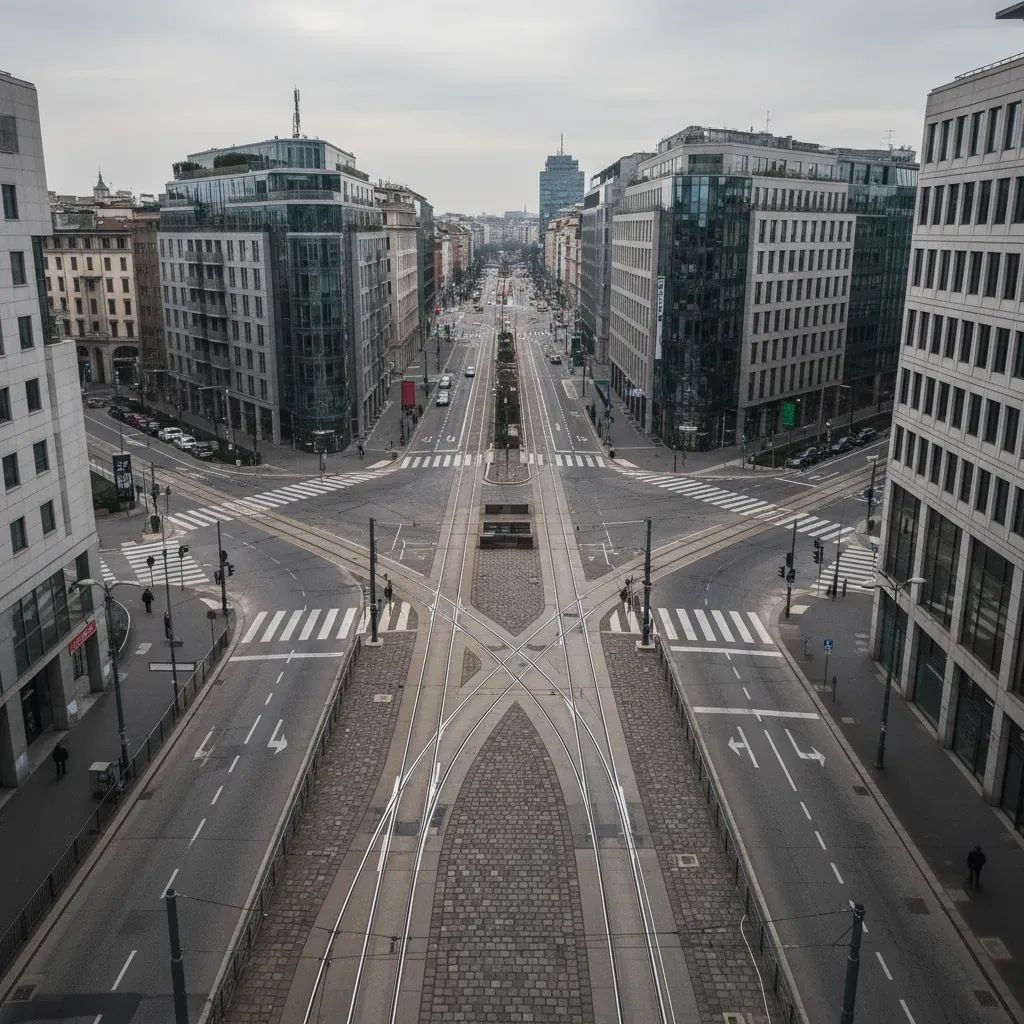
Italy's Azienda Trasporti Milanesi (ATM) has recorded three tram derailments in just 10 days, a spate of incidents that is forcing residents, commuters, and administrators to confront the structural fragility of Milan's aging tram network. The latest accident—on Line 15 near the Fiordaliso shopping center in Rozzano, on the southern edge of Milan—resulted in no injuries but underscored the recurring pattern: locked wheels, foreign objects on tracks, and unclear protocols now threaten a service used by hundreds of thousands daily.
Why This Matters
• Service interruptions: Line 15 is suspended indefinitely near Rozzano; replacement buses are running, adding 15–20 minutes to commute times.
• Safety concerns: The 27 February crash on Line 7 killed 2 people and injured dozens, making this the deadliest tram accident in Milan in recent memory.
• Infrastructure questions: Preliminary findings point to inadequate track maintenance, with some binari reportedly untouched for 15 years.
What Happened in Rozzano
The central carriage of a Line 15 tram jumped the rails this morning in Rozzano, a municipality immediately south of Milan's city limits. The tram had just pulled away from a stop and was traveling at low speed when a wheel on the middle bogie locked, causing the carriage to cant and lose contact with the rail. No passengers were hurt, and the vehicle came to rest without colliding with buildings or other traffic. ATM technicians secured the scene within two hours and began mechanical inspections of the wheel assembly and suspension. Replacement bus service was activated by midday, linking the interrupted section between Rozzano and Milan proper.
Early analysis suggests a mechanical seizure—possibly a brake caliper failure or debris lodged in the wheel hub—rather than track defects. ATM has sequestered the affected tram and announced that it will conduct precautionary checks on similar-vintage rolling stock across the network, though it has not specified a timeline or fleet size.
A Troubling Sequence
This is the third incident in less than two weeks, each with distinct but overlapping causes:
27 February – Line 7, Viale Vittorio Veneto: A Tramlink model derailed at the intersection with Via Lazzaretto, killing two people and injuring dozens. Investigators believe the tram entered a curve at excessive speed after the driver failed to slow for the preceding stop. The switch remained set for the lateral track toward Via Lazzaretto instead of allowing the tram to continue straight. The driver reported feeling unwell moments before the crash, raising questions about the emergency brake and the automatic safety systems that should have intervened. Prosecutors have placed the driver under investigation for culpable railway disaster, manslaughter, and multiple counts of negligent injury. The tram's black box is being analyzed to determine whether speed governors or collision-avoidance systems malfunctioned.
7/8 March – Line 9, Via Galvani/Via Filzi: A "Jumbo Tram" returning empty to the depot derailed on the curve near Milano Centrale railway station. The cause was traced to a large bolt lying on the tracks, which caused the front bogie wheel to hop off the rail. Because the tram carried no passengers and was moving slowly, there were no injuries. ATM crews recovered the bolt and forwarded it to forensic analysis to determine whether it fell from overhead infrastructure, a passing vehicle, or was placed deliberately.
9 March – Line 15, Rozzano: The locked-wheel incident described above, which appears unrelated to track obstructions but points instead to rolling-stock maintenance lapses.
What This Means for Residents
If you rely on Milan's tram network—17 lines serving more than 3.3 million people across 95 municipalities—expect longer commutes and crowded replacement buses in the short term. Line 15 service south of Milan is suspended until further notice; Lines 7 and 9 have resumed but with speed restrictions in sensitive sections. ATM has not published a comprehensive maintenance audit or committed to a deadline for completing fleet-wide inspections, leaving riders uncertain about safety margins on other lines.
For residents near Viale Vittorio Veneto, the 27 February crash site remains cordoned off, and one wing of the building at number 18 is still evacuated pending a structural engineer's report. Insurance claims and civil litigation are expected to follow criminal proceedings, which could take years.
Infrastructure and Oversight
ATM is a wholly owned subsidiary of the Municipality of Milan, responsible for five metro lines, 17 tram routes, four trolleybus lines, 124 bus routes, bike-sharing, and traffic-control systems including Area B and Area C congestion zones. Its mandate includes fleet management, service planning, and passenger safety, with contractual liability for accidents unless it can prove it took all reasonable measures to prevent harm.
Yet evidence is mounting that track maintenance has been deferred for years. Citizens' groups and trade unions allege that some sections of the tram network have not seen rail replacement or ballast work for 15 years or more, though the Municipality announced in February that it would begin resurfacing and track renewal on Via Bramante, Via Torino, and Via Cesare Correnti starting in March. That work is now proceeding under ATM's direct supervision, but the timeline predates the recent accidents and covers only a small fraction of the 180-kilometer network.
Separately, Milan's tram system still includes approximately 16 kilometers of abandoned tracks embedded in roadways, which pose hazards to cyclists and motorcyclists. Only about 2 kilometers have been removed in the past five years, a pace that suggests removal will take decades absent accelerated funding.
Safety Technology: Gaps and Promises
ATM's newest Tramlink vehicles—the model involved in the 27 February disaster—are equipped with anti-collision sensors and a "dead-man" switch that automatically halts the tram if the driver fails to press a pedal or button at regular intervals. Yet those systems evidently did not prevent the fatal crash, raising questions about sensor calibration, software logic, or override procedures.
Older trams, including the "Jumbo" fleet, lack such automation and rely on driver vigilance and manual signaling. ATM has completed a network-wide check-up and says it is subjecting the oldest vehicles to general overhaul, but it has not disclosed inspection criteria, pass-fail rates, or vehicle-by-vehicle results.
On the metro side, the M1 line recently received a new signaling system using advanced automation that can increase train frequency by up to 25% while improving safety. The tram network has been fitted with new radio-controlled switch systems, intended to reduce human error when routing vehicles through junctions, though the technology is not yet deployed across all 17 lines.
Political and Legal Fallout
The Lombardy Regional Council held an emergency session following the 27 February crash, debating profiles of administrative responsibility and economic risk. Regional transport committees are reviewing documentation from ATM and the Municipality to determine whether budget cuts or deferred capital expenditure contributed to the accidents. The outcome may influence future subsidy allocations and could trigger audits of other municipal transport operators in Lombardy.
At the national level, Italy's Ministry of Infrastructure and Transport has introduced new guidelines for railway-tunnel safety (Decree 4 March 2025) and is coordinating a multi-year plan to eliminate accidents at level crossings by building underpasses and overpasses. The National Agency for Railway and Road Infrastructure Safety (ANSFISA) is pressing for structural measures to prevent unauthorized pedestrian access to tracks, though these initiatives focus on heavy rail rather than urban trams.
Milan's Prefect has ordered enhanced surveillance and patrols on regional rail services operated by Trenord and infrastructure managed by Rete Ferroviaria Italiana (RFI), reflecting broader concerns about security and maintenance standards across all modes.
What Comes Next
ATM has pledged to publish findings from its internal review "in the coming weeks," but passengers and advocacy groups are demanding independent audits and transparent timelines for track renewal and fleet upgrades. The city budget for 2026 allocates funds for rolling-stock procurement and signaling improvements, yet critics argue that Milan's tram renaissance—celebrated in recent years for its heritage vehicles and expanded service—has rested on deferred maintenance that is now catching up.
For now, commuters should monitor ATM's real-time service alerts via the official app or website, allow extra travel time on affected routes, and consider alternative modes—metro, bike-sharing, or regional trains—where feasible. Replacement bus capacity is limited during peak hours, and crowding is likely to persist until tram service is fully restored.
The psychological toll is harder to quantify. Milan's trams are iconic, woven into the city's daily rhythm and its identity. Three derailments in 10 days—two minor, one catastrophic—have shaken confidence in a system many took for granted. Whether ATM and the Municipality can restore that trust will depend on transparency, accountability, and a credible plan to bring infrastructure and rolling stock into the 21st century.


