
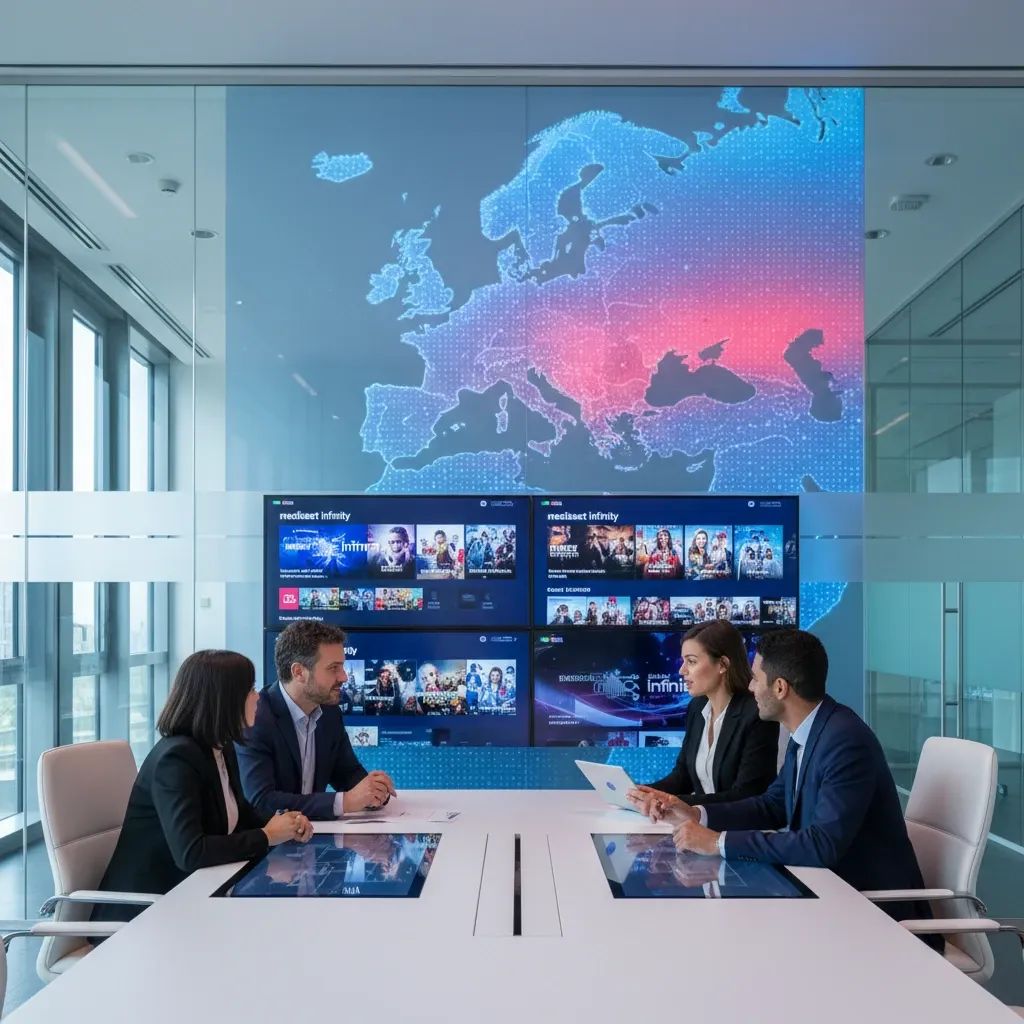
MFE-MediaForEurope, the Italian broadcasting giant, has completed a major corporate restructure, pivoting from a passive financial holding into an integrated operational media company that directly manages its assets across four European nations. The reorganization, spearheaded by Pier Silvio Berlusconi, now consolidates strategic control, advertising sales, and digital innovation under a single continental command structure—a move analysts say is critical for competing in a fragmenting European media market.
The board of directors formally elevated Berlusconi to the dual role of Chairman and Group Chief Executive Officer, while Fedele Confalonieri, the historic face of Mediaset since its founding, retains the ceremonial title of statutory Chairperson, with responsibility for presiding over shareholder meetings and board sessions. The distinction is symbolic but clear: operational power now flows through Berlusconi, whose leadership tenure as CEO since 2015 has been marked by aggressive pan-European expansion.
What This Means for Italian Viewers and Residents
For people living in Italy, this restructure translates into tangible changes to how media services are delivered and consumed. MFE controls Mediaset Infinity, the free and subscription streaming platform that competes with Netflix, Prime Video, and Italy's public broadcaster RAI. Under the new centralized structure, Infinity will merge with Germany's Joyn and Portugal's Opto into a single European streaming platform within 12 to 18 months—likely bringing expanded content libraries and a unified user experience.
Current Infinity subscribers and viewers should expect improved streaming quality. MFE has invested in new infrastructure delivering 1080p 50fps streaming, bringing the service closer to international standards. The company is also rolling out AI-driven personalization, meaning the platform's content recommendations will become increasingly tailored to individual viewing habits across Italian audiences.
For advertisers and the broader Italian media economy, the restructure signals MFE's commitment to maintaining its dominance. Italian audiences have grown significantly, with prime-time viewership up 6% year-over-year in the third quarter of 2025, widening the gap with RAI. However, MFE's decision to opt out of bidding for Champions League broadcast rights in Italy signals that the company is prioritizing digital expansion and cost discipline over premium sports content—a strategic shift that could reshape Italian sports media.
For Italian employees across MFE's operations, the shift creates a more internationally integrated career structure. Senior roles now span multiple countries, with dedicated innovation hubs in Munich and expanded opportunities in AI and data analytics roles. MFE has emphasized internal promotion, suggesting career advancement will depend increasingly on technical and digital expertise rather than traditional broadcast experience.
Why This Restructure Matters
• Operational control consolidates: The holding previously acted as a financial umbrella; now it directly coordinates content, ad sales, and technology across Italy, Spain, Germany, and Portugal.
• 2026 is the test year: MFE aims to merge its digital platforms—Joyn (Germany), Infinity (Italy), and Opto (Portugal)—into a single streaming service within 12 to 18 months.
• New strategic divisions: Two entirely new departments have been created to focus on digital innovation and artificial intelligence, plus a data analytics and media currency unit to measure cross-platform performance.
• Unified advertising strategy: Seven senior executives have been appointed or reassigned to new Group-level roles, ending the siloed national structures that defined the old Mediaset.
From Holding to Operating Company
The shift from vertical to horizontal structure reflects a fundamental reimagining of how MFE operates. Previously, each national broadcaster—Mediaset Italia, Mediaset España, ProSiebenSat.1, and TV Impresa—functioned as a standalone entity, with the Amsterdam-based holding limited to financial oversight and dividend collection. Under the new model, central functions like strategy, content production, advertising sales, legal affairs, finance, and technology are integrated at the Group level, eliminating duplication and enabling cross-border coordination of programming and ad inventory.
The reorganization was described by the company as necessary to "coordinate and directly steer its subsidiaries in all countries, leveraging the best internal resources and expertise while strengthening innovation through new organizational and managerial structures." In practical terms, this means MFE Advertising, the newly centralized ad sales division, can now package campaigns that run simultaneously across Italian, Spanish, German, and Portuguese channels—a capability that did not exist under the old federated model.
Key Leadership Appointments
The restructure installs a new executive layer that operates across all MFE markets:
• Pier Silvio Berlusconi — Chairman and Group Chief Executive Officer, leading overall strategy and pan-European integration
• Marco Giordani — Chief Finance and International Business Officer, overseeing Group-level financial supervision and serving as CEO of ProSiebenSat.1 (Germany)
• Stefano Sala — Chief Global Advertising Officer, leading unified ad sales across all countries
• Niccolò Querci — Chief Operating and Human Resources Officer, responsible for organization, HR, technology, and operations
• Gina Nieri — Chief Institutional Affairs Officer, representing MFE in regulatory contexts across Europe
• Federico di Chio — Director of Data and Media Currency, measuring audience behavior across platforms to enable precise advertiser targeting
• Dirk Voigtländer — Leading the new Digital Innovation and Artificial Intelligence unit
Digital and Innovation Focus
Two entirely new strategic divisions address the digital transformation challenge. The Digital Innovation and Artificial Intelligence unit will accelerate the rollout of AI-driven content recommendations, advertising personalization, and automated production tools, drawing on expertise from ProSiebenSat.1's Munich office.
The Data and Media Currency directorate standardizes audience measurement across linear and digital platforms—a critical capability for building advertising offers that compete with Google and Meta's granular targeting capabilities. For advertisers across Italy and Europe, this means campaigns based on consistent metrics across four countries and multiple platforms.
The European Consolidation Strategy
MFE's transformation is inseparable from its pan-European expansion strategy. The company holds a controlling stake in ProSiebenSat.1, Germany's largest commercial broadcaster, and has entered the capital of TV Impresa in Portugal. Combined with the full incorporation of Mediaset España in 2019, MFE now operates in four of Europe's largest media markets.
The stated goal is to create a single streaming platform integrating Joyn, Infinity, and Opto within the next 12 to 18 months. This platform would offer a combination of free ad-supported content and premium subscriptions, positioning MFE as the only European-owned alternative to American streaming services with true continental scale.
However, the strategy faces headwinds. ProSiebenSat.1 has struggled financially, and regulatory approval for cross-border media consolidation remains uncertain, particularly in Germany, where media ownership laws are strict. MFE has proposed spinning off ProSiebenSat.1's e-commerce and dating assets to streamline operations and facilitate further integration.
Financial Performance and Strategic Priorities
MFE reported improved earnings and cash flow for the first nine months of 2025, driven by strong performance in Italy and cost reductions in Spain. However, the Spanish market remains challenging, and the German subsidiary has been a drag on Group profitability. The company's decision to opt out of bidding for Champions League broadcast rights in Italy underscores the financial discipline required to fund digital and international expansion.
The restructure positions MFE to capture a larger share of Europe's €45 billion TV advertising market, which is increasingly shifting toward digital formats. By centralizing ad sales and unifying its technology stack, MFE aims to offer multinational advertisers a single point of contact for pan-European campaigns—a capability no other European broadcaster currently offers at scale.
What Comes Next
2026 will be a decisive year for validating MFE's strategy. The success of the streaming platform integration, the financial turnaround of ProSiebenSat.1, and the execution of the new organizational model will determine whether MFE can establish itself as a credible European alternative in the digital age.
For Italy, the stakes are equally high. MFE remains the country's largest private broadcaster, and its ability to compete in the digital era has implications for employment, content production, and media plurality. The restructure signals that the Berlusconi family, which founded Mediaset in the 1980s, intends to remain a major force in European media for decades to come.


