
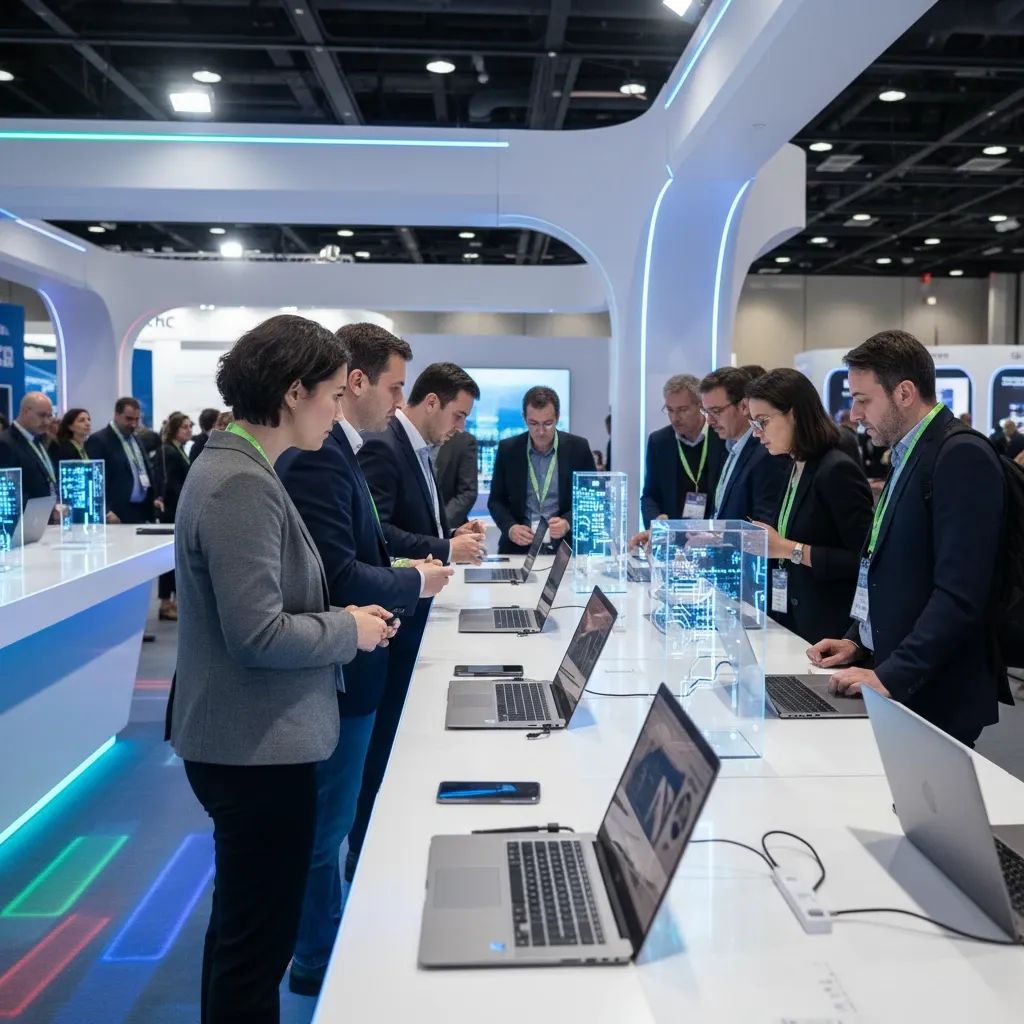
The Italian Trade Agency (ITA) has positioned eight homegrown technology startups at the forefront of European innovation, showcasing tools that range from AI-powered lie detectors to neural helmets—and several are already securing contracts with governments and multinational corporations. The EU-Startups Summit held in Valletta on May 7-8 drew over 2,400 visitors from 30 countries, most of them investors and corporate buyers, offering Italian firms a prime stage to demonstrate their dual-use technologies and fintech breakthroughs.
Italy's Ambassador to Malta, Valentina Setta, opened the Italian Innovation Corner pavilion, a touring showcase managed by ITA that has already visited Vancouver and is scheduled for Paris next. The eight companies on display operate across five strategic sectors: artificial intelligence, fintech, climate tech, health tech, and cybersecurity. Their presence in Malta—a jurisdiction increasingly favored for its startup-friendly regulation and venture capital access—signals a strategic shift for Italian tech firms seeking scale beyond domestic borders.
CheckSig Becomes Italy's First MiCAR-Licensed Crypto Custodian
On May 7, the Italian Securities and Exchange Commission (CONSOB) granted CheckSig the country's first MiCAR license under the new EU-wide Markets in Crypto-Assets Regulation. This makes the Rome-based firm the inaugural regulated crypto service provider in Italy, authorized to offer custodial wallet services to both retail and institutional clients.
CEO Ferdinando Ametrano described the approval as the realization of a years-long effort to embed crypto assets within a transparent, auditable framework. The license confirms CheckSig's compliance with European standards on security, risk management, and consumer protection—criteria that will be mandatory across the EU by year-end. For investors and businesses in Italy, this means access to a locally regulated alternative to offshore exchanges, reducing legal ambiguity and counterparty risk.
The timing is notable: Italy's Legislative Decree 129/2024, which implements MiCAR domestically, assigns oversight to both CONSOB and the Bank of Italy. CheckSig's early certification positions it to capture market share as other operators scramble to meet the new rules before the transition period expires.
Norwegian Police Adopt FlySight's AI Tracking System
FlySight, an Italian developer of AI-driven target recognition software, has completed integration of its OPENSIGHT mission console aboard Norwegian AW101 helicopters used in search-and-rescue (SAR) operations. Testing began in late April and will run through August 2026, with the system already logging hours over mountainous and maritime terrain in Scandinavia.
The software processes electro-optical sensor feeds and geospatial data in real time, automatically identifying and tracking targets—whether a lost hiker in forested highlands or a suspect vehicle navigating urban congestion. The Norwegian authorities are using it to enhance situational awareness and reduce decision latency in life-or-death scenarios. FlySight claims the system can isolate a single moving object in vast, cluttered landscapes, a capability that has attracted interest from both defense and civilian law enforcement agencies.
One early application: detecting speeding violations from airborne platforms. Norwegian traffic police have reportedly begun trial enforcement runs using FlySight-equipped helicopters to monitor highways, marking a rare convergence of SAR technology and routine policing. The dual-use nature of the platform—equally suited to rescuing stranded climbers or tracking fugitives—underscores the blurred line between public safety and surveillance in modern AI deployments.
What This Means for Investors and Tech Buyers
The EU-Startups Summit functions as a matchmaking venue where corporations and governments scout for off-the-shelf solutions to problems that would otherwise require years of in-house development. The Italian cohort's success in Valletta demonstrates a pattern: high-impact, regulation-ready products designed for markets that demand both performance and compliance.
Fred, a product research platform described by co-founder Imre Guaglianonen as "a lie detector without pentothal," has drawn inquiries from Microsoft and the Chinese government. The software uses AI to validate product claims and consumer sentiment at scale, offering a forensic-level audit of market data. For enterprises navigating anti-greenwashing rules or counterfeit-prone supply chains, Fred provides a verifiable truth layer.
Startex, another Italian fintech, delivers near-real-time company valuations—a tool that collapses due diligence timelines for private equity and venture funds. In a European market where regulatory reporting demands are intensifying, Startex's ability to generate defensible valuations on demand has already generated a waiting list of clients.
eMomentum, operating in the climate tech vertical, deploys AI for predictive maintenance of industrial machinery. The startup caught the attention of Malta's Minister of the Economy, Silvio Schembri, and Minister for Foreign Affairs, Ian Borg, who brokered introductions to the Malta Water Services Corporation. The use case: extending the operational lifespan of water infrastructure through machine learning-driven diagnostics, a critical concern for an island nation with limited freshwater resources.
Neurotechnology Enters the Consumer Wellness Market
Elephant Brain Lab, a Rome-based neurotechnology firm, unveiled its E1 headset—a 32-channel EXG device with integrated photoplethysmography, skin conductance, and temperature sensors. The helmet is designed for neurofeedback training, a technique used in psychotherapy, sports performance optimization, and stress management.
The E1 runs closed-loop calculations on-board, minimizing latency and enabling real-time feedback during extended reality (XR) sessions. An AI agent guides users through voice commands, interpreting physiological data and adjusting training protocols. Elephant Brain Lab claims the device democratizes brain health by making neurofeedback accessible outside clinical settings, with remote deployment and personalized protocols.
The company holds a patent pending and is reportedly in discussions with the Italian Army for potential applications in cognitive resilience training. With a stated goal of reaching $100M in annual recurring revenue within five years, Elephant Brain is betting that neurotechnology will migrate from research labs to consumer wellness platforms.
Malta's Strategic Role in European Tech Ecosystems
Malta has cultivated a reputation as a low-friction jurisdiction for startups, offering a combination of favorable tax treatment, English-language business environments, and proximity to North African and Middle Eastern markets. The EU-Startups Summit returned to Valletta for the second consecutive year, underscoring the island's ambitions as a venture capital hub.
The Maltese government supports startups through initiatives like Start In Malta and a €10M venture fund targeting early-stage technology companies. Malta Enterprise, the national development agency, provides grants for R&D and expansion. The presence of PlugAndPlay, a Silicon Valley-based accelerator, adds a global network layer for local and incoming startups.
For Italian firms, Malta offers regulatory familiarity (both countries operate under EU law) without the bureaucratic friction that often slows Italian public procurement and licensing. The island also serves as a testing ground for products destined for larger European markets, particularly in fintech, where Malta's regulatory sandbox has historically offered faster approval cycles.
Upcoming Events Signal Sustained Momentum
Valletta's tech calendar for 2026 includes TechTok on September 16, focused on emerging tools and threats; the International Conference on Artificial Intelligence Applications in FinTech (ICAIAF) on August 5; and MedTech World Europe from November 11-13, a major healthcare innovation summit. These gatherings reinforce Malta's positioning as a year-round convening point for European tech communities.
The Italian Embassy in Valletta, in partnership with ITA and the Italian-Maltese Chamber of Commerce, provides ongoing support for Italian companies exploring the Maltese market, including guides to local incentives and introductions to corporate buyers. For startups seeking capital or pilot customers, the embassy functions as both a diplomatic outpost and a business development office.
The Regulatory Advantage
What distinguishes the Italian showcase from competitors is regulatory readiness. CheckSig's MiCAR license, FlySight's integration with Norwegian public agencies, and eMomentum's engagement with Maltese ministries all reflect a strategy of building compliance into the product from inception, rather than retrofitting it after market entry.
This approach resonates with European buyers—particularly government agencies and regulated industries—that face mounting scrutiny over vendor risk and data governance. Italian startups presenting at Valletta were not pitching prototypes; they were demonstrating deployable, certified systems with reference customers. In an innovation landscape increasingly defined by regulatory gatekeeping, that distinction is becoming a competitive moat.


