
Starting at €26,900, Leapmotor electric vehicles are now available at over 800 Italian dealerships—undercutting Volkswagen and Renault by €10,000 or more. But there's a catch: while prices drop, questions mount about Italy's manufacturing role and what this shift means for workers, consumers, and the country's automotive future.
What Italian Buyers Need to Know
• Production in Spain starts Q3 2026: Leapmotor's B10 SUV will roll off assembly lines at the Stellantis Figueruelas plant in Zaragoza, dodging EU tariffs on Chinese imports.
• Aggressive pricing: The B05 electric sedan starts at €26,900—roughly €10,000 less than comparable Volkswagen ID.3 or Renault Mégane models.
• Italy's 800+ sales points: Leapmotor vehicles are now available through the existing Stellantis dealer network across the country, including service infrastructure.
• Profitability milestone: Leapmotor posted its first annual profit in 2025, achieving a 14.5% gross margin while Ford's EV division lost nearly $23,000 per vehicle in Q1 2026.
How Leapmotor Undercuts the Competition
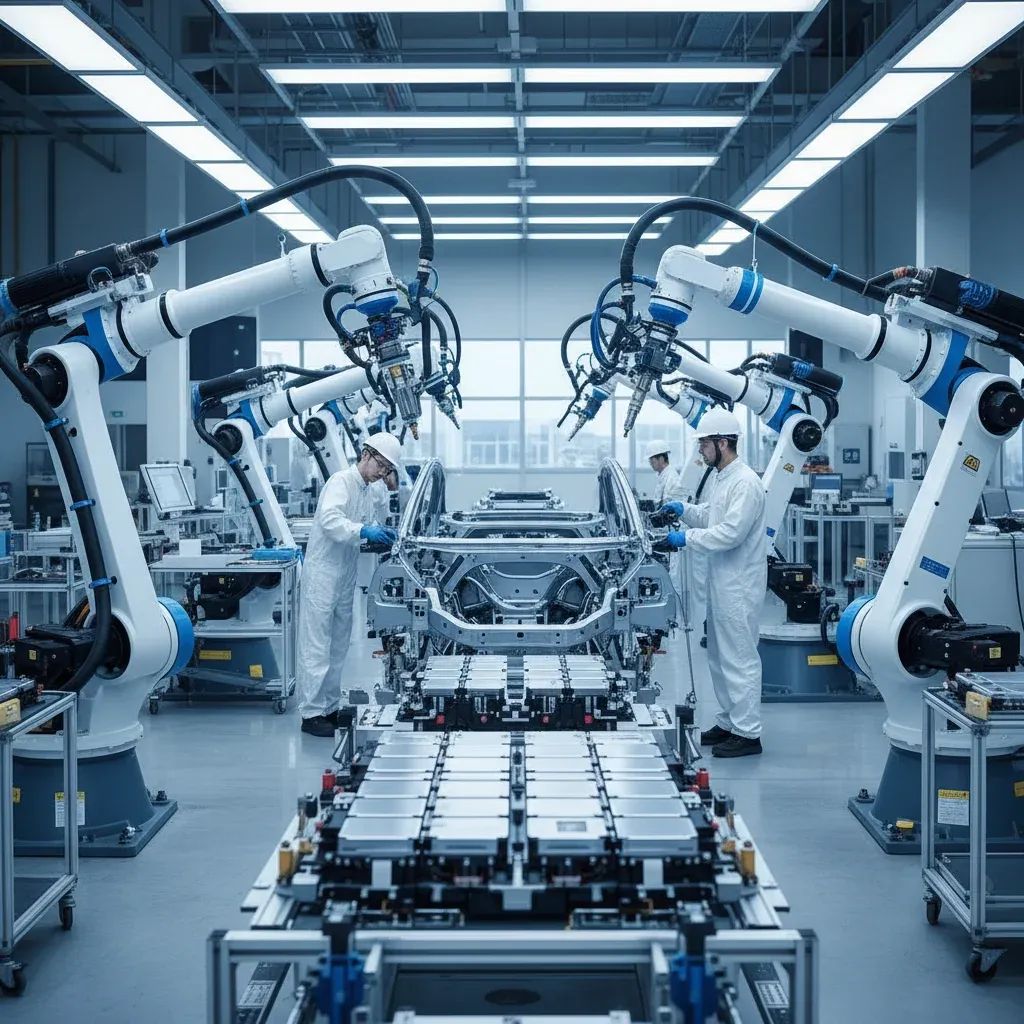
What sets Leapmotor apart from struggling European and American EV makers is not marketing buzz—it's factory economics. The company, founded in 2015 in Hangzhou with 28,000 employees globally, controls roughly 65% of its vehicle components by value by producing batteries, electric motors, and software in-house. This vertical integration delivers an estimated 10% cost advantage over competitors who rely on external suppliers.
This industrial model enabled Leapmotor to become the fastest Chinese EV startup to hit 1 million units produced, doubling output in just 343 days. The model is now being exported to Europe through the Stellantis partnership, which invested €1.5 billion in 2023 for a 21% stake in Leapmotor and formed Leapmotor International, a 51-49 joint venture based in Amsterdam with exclusive rights to sell and produce vehicles outside China.
What's Available Now and Coming to Italian Showrooms
For anyone shopping for an electric vehicle in Italy, the Leapmotor lineup introduces a rare combination: competitive pricing, European safety certification, and access to established service networks. The T03 city car and C10 SUV have been available since late 2024, but the 2026 wave brings volume models aimed squarely at the mass market.
The B05 fastback sedan, launched in April 2026, offers 401 km or 482 km WLTP range depending on battery size, fast-charging capability, and a base price of €26,900—undercutting the MG4 by €3,100 and European rivals by significantly more. The B10 SUV, priced from €29,900, comes standard with heated and ventilated seats, a panoramic glass roof, 17 driver-assistance functions, a 14.6-inch touchscreen running Leap OS 4.0, and a 5-star Euro NCAP safety rating, with equivalent features in Volkswagen or Peugeot models often requiring expensive option packages.
By May 2026, an extended-range electric version (EREV) of the B10—combining a battery with a gasoline range extender—will reach Italian showrooms. This works like a Chevrolet Volt: the gasoline engine never powers the wheels directly but charges the battery when depleted, eliminating charging anxiety for longer trips. In September, the B03X urban SUV arrives, and by year-end the A05 compact hatchback (expected around €25,000) will compete directly with the Cupra Born and Renault Megane.
Servicing and Warranty: What to Expect in Italy
A key concern for Italian buyers considering a Chinese-branded vehicle is service reliability. Leapmotor vehicles sold in Italy are covered by Stellantis's established warranty system through the company's 800+ Italian dealer locations, meaning service and parts availability align with familiar Peugeot and Opel networks. However, buyers should clarify warranty duration (typically 3-5 years for batteries in European markets) and confirm that components like battery packs are fully covered through Italian Stellantis service centers.
Questions about long-term spare parts availability and potential software updates affecting vehicle features remain unresolved, as Leapmotor's track record in Western markets spans only months. Prospective owners should ask dealerships specifically about warranty transfer in case of resale and whether Chinese-origin components will have supply continuity if the company's European strategy shifts.
The Spanish Production Gambit and EU Tariff Strategy
The decision to assemble Leapmotor vehicles in Zaragoza, Spain, rather than import them from China, is a calculated regulatory and financial maneuver. Under current EU trade rules, electric vehicles manufactured in China face additional tariffs designed to protect European automakers. By producing vehicles at the Figueruelas plant—which also builds the Peugeot 208, Opel Corsa, and Lancia Ypsilon—Leapmotor qualifies as a "European-made" vehicle, sidestepping import duties and lowering the final retail price.
For Italy, this presents a double-edged scenario. On one hand, affordable EVs accelerate the country's transition away from fossil fuels and make electric mobility accessible to middle-income households. On the other, the reliance on Chinese technology platforms and Spanish assembly raises questions about the future role of Italian manufacturing sites. Stellantis has hinted at evaluating "additional industrial opportunities" in other countries, including Italy, but no concrete commitments have been announced.
Charging Infrastructure and Italian Incentives
Before purchasing, Italian buyers should verify charging compatibility. Leapmotor vehicles use the CCS2 standard (also called Type 2 AC and Type 2 DC), which is compatible with the vast majority of Italian public chargers. However, charging network participation varies by region. In Northern Italy, networks like Be Charge and Enel X have strong coverage, while Southern regions have more limited infrastructure.
Additionally, Italian buyers may still qualify for the Ecobonus tax incentive (up to €5,000 or €6,500 depending on income level), though the exact qualification status for Leapmotor vehicles should be confirmed with dealerships, as some incentives have income or price-cap restrictions.
Impact on Italian Auto Industry and Employment
Italy's automotive sector, historically centered on Fiat and luxury brands, faces an uncomfortable reality: the country risks becoming a distribution node rather than a manufacturing leader in the EV transition. While Stellantis has not ruled out Italian production for Leapmotor models, the initial choice of Spain for B10 and B05 assembly reflects broader concerns about labor costs, factory flexibility, and political stability.
Italian unions—including FIM-CISL and FIOM-CGIL—have raised concerns about job losses at Stellantis plants in Turin, Pomigliana, and Mirafiori if the group increasingly relies on Spanish assembly. To date, no significant layoffs have been announced, but union leaders are calling for government guarantees on technology transfer and future EV production commitments to Italian sites.
The implication for Italian workers and suppliers is sobering. If Stellantis increasingly relies on Chinese-designed platforms and Spanish assembly, the role of Italian engineering and manufacturing shrinks. The window for Italy to secure a meaningful role in next-generation vehicle production is closing rapidly.
Profitability vs. Losses: A Stark Contrast
Leapmotor's financial trajectory diverges sharply from the broader EV industry. In 2025, the company posted its first full-year net profit of 540 million yuan (approximately €70 million), with a gross margin reaching 14.5%. Its net profit margin was modest—just 0.83%, or roughly €120 per vehicle—but it was profit, not loss.
Compare this to legacy players: Ford's Model e division lost $4.8 billion in 2025 and is projected to lose another $4.0–4.5 billion in 2026, with Q1 2026 losses approaching $23,000 per EV sold. General Motors wrote down $7.9 billion in EV-related charges in 2025, and Mercedes-Benz saw margins collapse to 4.1% in Q1 2026 from 7.3% the prior year. Even Tesla, long the profit leader, saw net margins shrink to 4.9% in 2025, down from 23.8% in 2022.
European Market Penetration and Growth Trajectory
Leapmotor's European sales surged 754% in March 2026 compared to the prior year, with over 11,000 registrations and a 3.2% share of the European EV passenger market. In Q1 2026, the company delivered 24,751 vehicles across Europe, an increase of 706% year-over-year, placing it among the top three BEV brands for private buyers on the continent. The T03 captured 56.4% of the European A-segment EV market, and the B10 ranked fourth in the C-SUV BEV segment by March 2026.
Distribution now exceeds 800 sales and service points across Europe, including major markets like Germany, France, Italy, and Spain. Leapmotor has also established a European Innovation Center in Munich (opened March 2026) to tailor products and software for local preferences. The stated goal is to rank among the top five Chinese EV brands in Europe by end-2026 and introduce at least one new model annually for the next three years.
Stellantis's Broader Ambitions: Technology Sharing and Brand Implications
Stellantis is not merely selling Leapmotor vehicles—it is considering a much deeper integration of Leapmotor's battery and powertrain technology into its own European mass-market brands, including Fiat, Opel, and Peugeot. Advanced negotiations are underway for a joint development of an Opel-branded SUV (codename O3U), using Leapmotor's platform and assembled in Zaragoza.
For Antonio Filosa, Stellantis CEO, the partnership addresses two critical challenges: reducing EV development costs and optimizing underutilized European factories. However, critics—including some Italian automotive analysts—question whether this strategy sacrifices Italian manufacturing expertise for short-term cost savings.
The Road Ahead: What Comes Next in 2026
Stellantis is scheduled to reveal its full European strategy on May 21, 2026, which will clarify production volumes, additional model launches, and the extent of Leapmotor's integration into legacy brands. Until then, the expansion continues at pace: over 800 dealer locations are already stocked, new models arrive quarterly, and Leapmotor's global target of 1 million annual sales in 2026 hinges heavily on European uptake.
For Italian consumers, the immediate takeaway is access to affordable, well-equipped electric vehicles with European safety certification and local service support. For Italian policymakers and industry stakeholders, the message is more urgent: the EV market is being reshaped by vertically integrated Chinese manufacturers with cost structures legacy automakers cannot match—and the window to secure Italy's role in this transition is closing rapidly.


