
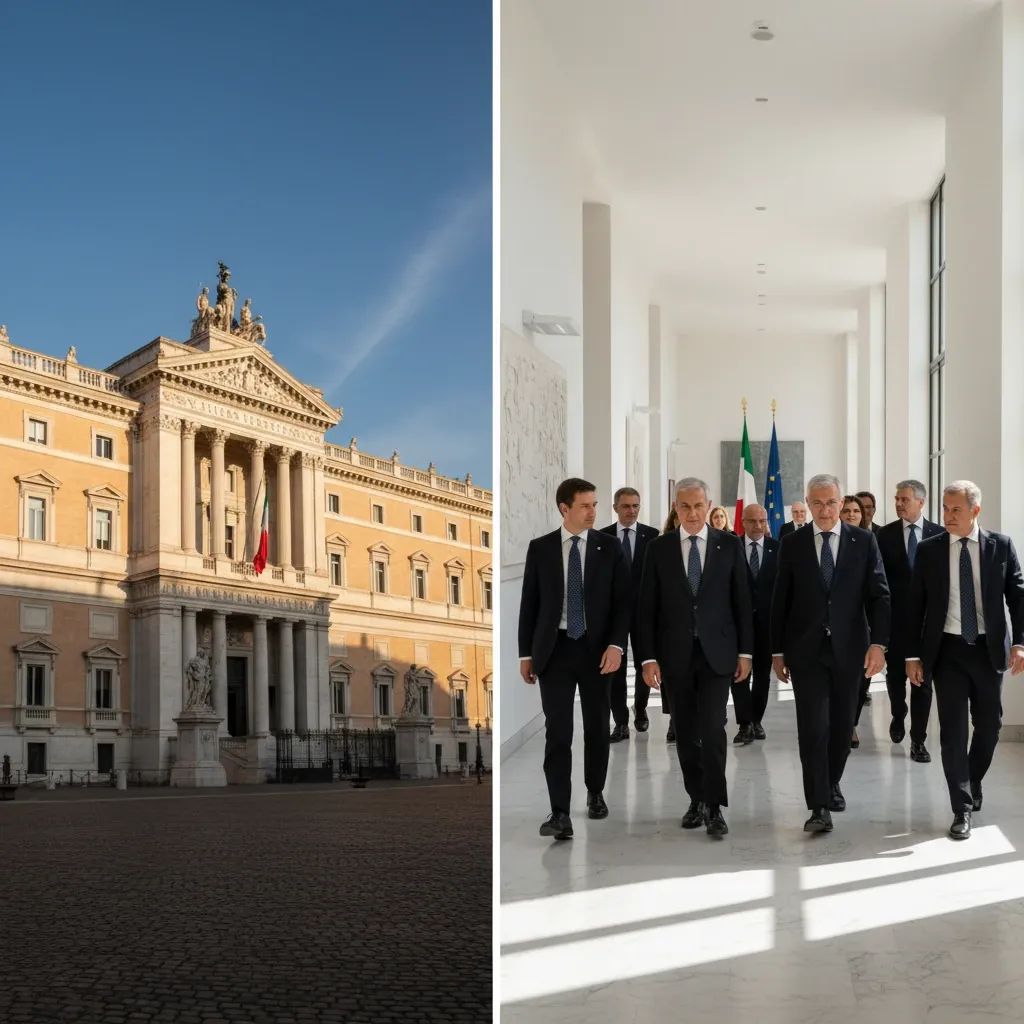
The Italy Senate and Chamber of Deputies now face a formal no-confidence motion against Tourism Minister Daniela Santanchè, with opposition parties demanding an immediate parliamentary debate over her continued tenure. The motion marks a significant shift in Prime Minister Giorgia Meloni's handling of the controversial minister.
The Political Turning Point
Opposition blocs spanning the Five Star Movement (M5S), Democratic Party (PD), Italia Viva, and the Green-Left Alliance (AVS) have coordinated to file parallel no-confidence motions in both chambers, a procedural move that compels parliamentary leadership to schedule a floor debate.
The timing is significant: Prime Minister Meloni reportedly issued a private document recently urging Santanchè to resign, marking the first public acknowledgment from the executive that the minister's position has become untenable. This represents a notable reversal, as parliament has previously rejected similar calls for Santanchè's removal.
M5S Senate leader Luca Pirondini opened proceedings by accusing the government of enabling "an indecent spectacle" for over 1,000 days, framing Santanchè's tenure as protected by Meloni's political shield despite serious accusations against the minister.
Questions About the Timing
The most striking element is not the motion itself—since parliament has rejected similar calls before—but rather Meloni's sudden shift in posture. PD Senator Antonio Nicita seized on this inconsistency, questioning whether the timing represents genuine accountability or tactical distraction from the government's recent setback in the constitutional reform referendum, where voters decisively rejected a proposal to overhaul the justice system.
"What has changed today compared to previous rejections of similar motions?" Nicita demanded, calling for Meloni to appear personally before the Senate to explain the reversal.
Italia Viva's Ivan Scalfarotto echoed the sentiment, tying the motion to the referendum defeat. AVS Senator Tino Magni joined the demand for immediate scheduling, underscoring cross-opposition consensus that the matter cannot be deferred.
What Happens Next
Parliamentary rules require the Senate President to calendar the motion within 10 sitting days, meaning debate should occur in the coming weeks. The motion must be debated in both chambers, and a simple majority in either house would compel resignation—though the constitutional mechanism is fundamentally political rather than legally binding.
Meloni's next move will be revealing. She can allow the minister to resign before the vote, defend Santanchè on the floor and risk her own credibility, or rely on coalition discipline to vote down the motion and extend the distraction.
Coalition partners Forza Italia and Lega have remained largely silent on the matter but their votes will determine whether Santanchè survives the challenge.
Why This Matters for Italy
Beyond the immediate political drama, this motion raises a broader constitutional question: whether a prime minister can shield ministers from parliamentary accountability indefinitely. Italy's post-war political system relies on fluid coalitions and frequent reshuffles, and opposition parties argue that centralizing executive power erodes checks and balances.
For residents navigating Italy's governance landscape, ministerial leadership changes at the Tourism Ministry can create uncertainty in regulatory decisions affecting the hospitality sector and international partnerships. The outcome of this vote will signal how the government handles internal pressure and external scrutiny moving forward.
Meloni has not publicly commented since the motion was filed, leaving coalition members to parse her intentions through intermediaries. The Senate will reconvene in coming days when the calendar committee decides whether to prioritize the debate.


