
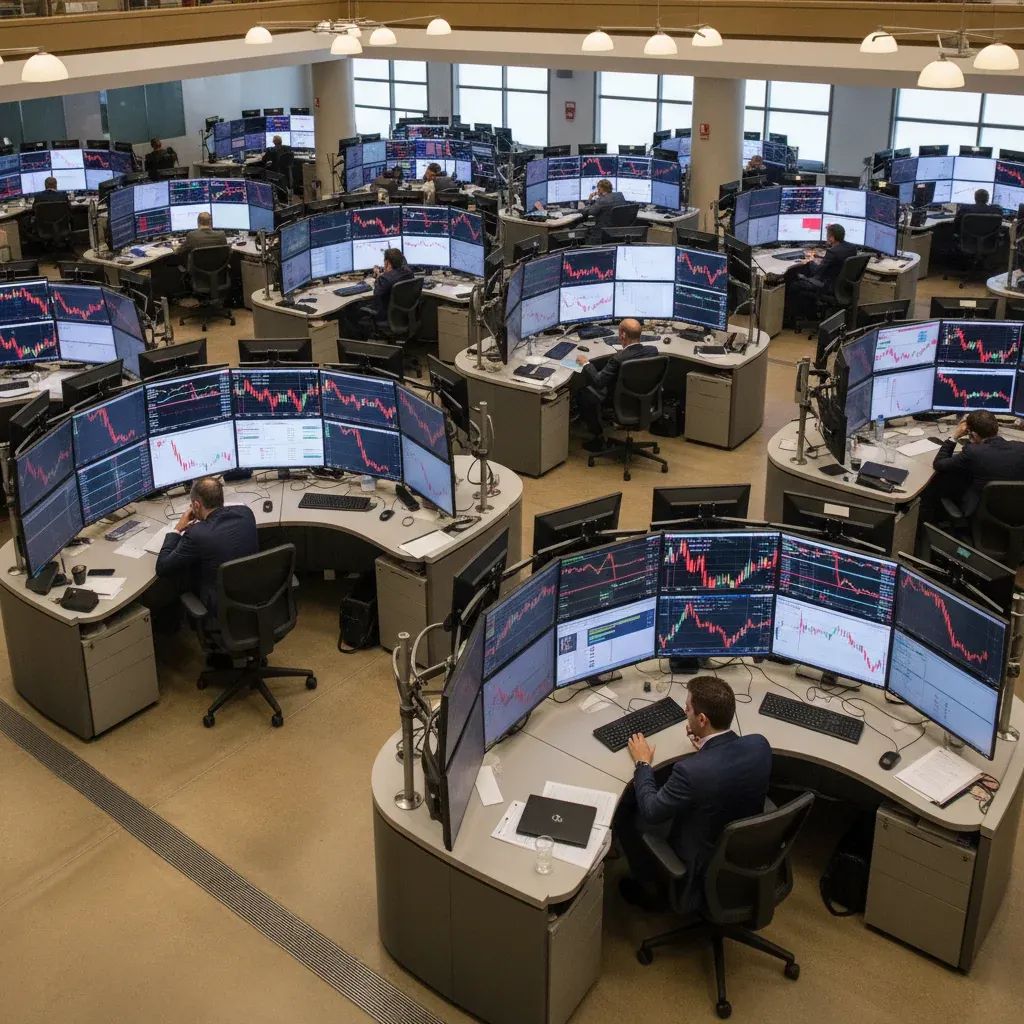
The Italy Stock Exchange surged to its highest level in over 26 years, a rally that benefited pension holders and investors across the country, as optimism around a potential Middle East peace agreement reshapes the European financial landscape. The FTSE MIB closed 2.35% higher at 49,696 points, a level not seen since March 2000.
Why This Matters
• Historic milestone: Piazza Affari reached a 26-year peak, potentially boosting pension fund values for Italian retirees and workers.
• Energy relief: Brent crude declined to around $102 per barrel, signaling possible lower fuel and heating costs in the months ahead.
• Improved market sentiment: European markets responded positively to hopes of a peace agreement in the Middle East, reflecting investor optimism.
What Sparked the Rally
European markets rallied following reports of hopes for a potential peace agreement regarding Middle East tensions. Lower geopolitical risk expectations prompted investors to reduce energy price expectations, with Brent crude declining and West Texas Intermediate falling to around $94 per barrel. European natural gas also declined. For Italy, a nation heavily reliant on energy imports, lower energy costs could provide relief for households and businesses dealing with elevated utility bills.
Across the continent, the sentiment was uniform. The Paris CAC 40 led with a 2.94% gain, while London's FTSE 100 added 2.15% and Frankfurt's DAX climbed 2.12%. The pan-European STOXX 600 hit two-week highs.
Italian Stocks: Who Won and Who Lost
Lottomatica was among the standout performers on the Italy Stock Exchange, surging 12.71%, while Amplifon jumped 12.4%. Other notable gainers included Buzzi (+5.75%), Leonardo (+5%), and Technogym (+9.95%). Among financials, UniCredit rose 5.5%, while Intesa Sanpaolo gained 4%, Banco BPM and BPER Banca each added 3.6%, and Mediobanca climbed 1.9%.
On the losing side, energy stocks bore the brunt of the oil price decline. Eni, Italy's national oil and gas company, slid 4.15%, followed by Tenaris (-1.99%) and Saipem (-1.29%). Utilities also softened: Snam fell 1.3% and Prysmian dipped 0.5%.
Impact on Italian Households and Businesses
For residents of Italy, lower energy costs could ease the squeeze on household budgets, particularly for families in northern regions where natural gas heating is standard. The rally in the FTSE MIB to 49,696 points—its best close since the dot-com era—lifts the value of retirement portfolios for millions of workers and retirees.
Lower energy prices may also have positive implications for borrowing costs. Italian banks performed well during the session, reflecting broader confidence in the financial sector. For small and medium-sized enterprises, the backbone of Italy's economy, improved banking sector performance could signal healthier access to credit.
Looking Ahead
For Italy-based investors, the sustainability of these levels will depend on developments regarding the peace hopes and the broader economic environment. The convergence of improved geopolitical sentiment and lower energy costs creates a more favorable backdrop for economic activity in the near term.
However, market participants should remain aware that geopolitical situations can shift rapidly, and any changes to peace expectations could impact energy prices and market sentiment accordingly.


