
Italian Exhibition Group's flagship energy expo wrapped up at the Rimini Expo Centre yesterday, drawing 10% more attendees than the previous edition and signaling renewed momentum in Europe's renewable infrastructure financing and grid flexibility sectors—a shift with direct implications for Italian businesses, energy consumers, and regional investors navigating the green transition.
Why This Matters
• New financing channels: Green bonds, Power Purchase Agreements, and community-backed models are becoming viable alternatives for Italian companies seeking to install solar or wind capacity without upfront capital.
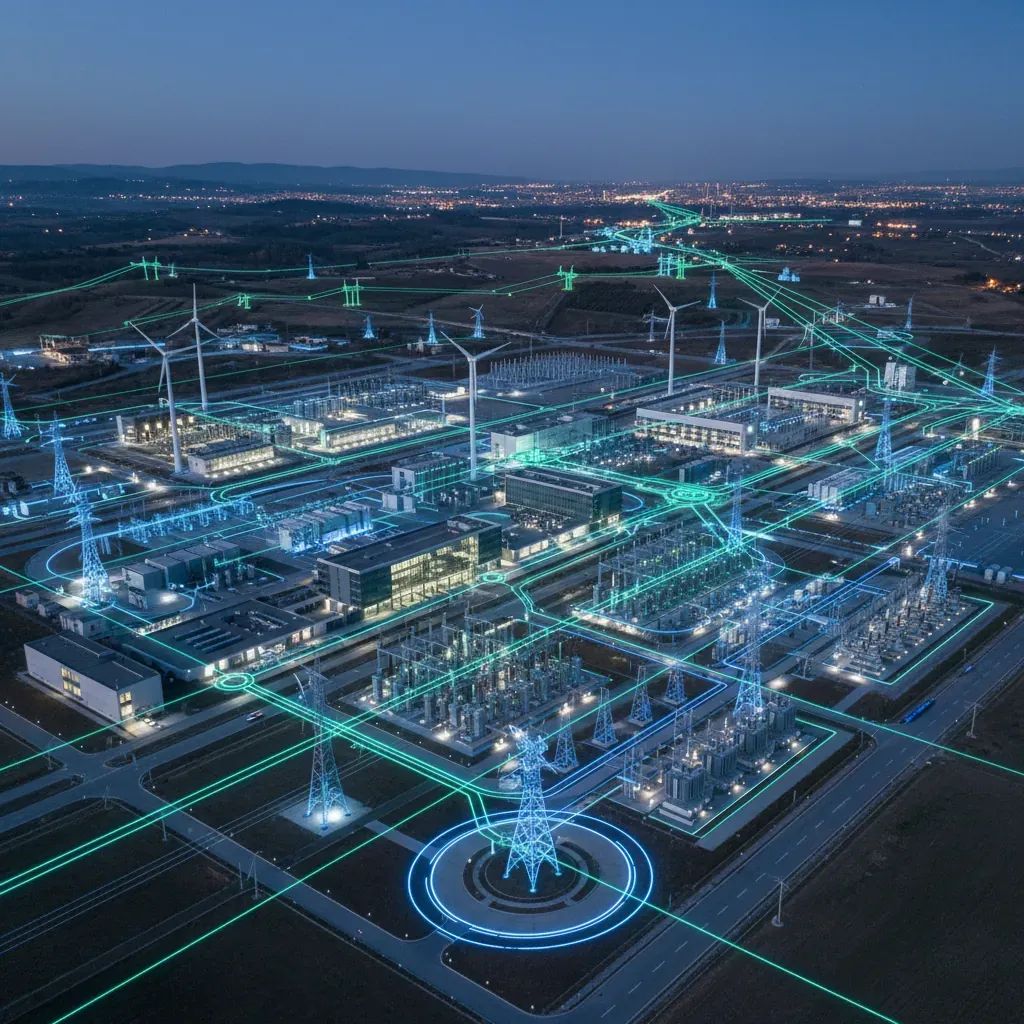
• Grid flexibility urgency: Industry groups at the expo called for regulatory clarity to unlock private investment in smart grids and battery storage, citing network congestion that already forces curtailment of renewable output in some Italian regions.
• African partnerships: The new Africa Investment HUB positions Italy as a Euro-Mediterranean energy corridor, opening opportunities for Italian EPC contractors and technology exporters in Africa's emerging renewables markets.
• Artificial intelligence adoption: Utilities and grid operators showcased AI tools that predict solar and wind output in real time, reducing reliance on fossil-fuel backup and cutting dispatch costs.
What This Means for You: Practical Options for Residents and Businesses
For Homeowners and Farmers
The Bando Agrisolare grant program—designed to support solar installations on agricultural buildings—has been expanded from €2.3 billion to €3.15 billion. This increase is projected to finance between 4,000 and 6,000 new farm installations, according to figures presented at the expo. If you own agricultural property in Italy, this expanded program means more available funding and shorter wait times for solar rooftop approvals.
Additionally, a new wave of crowdfunding platforms showcased at the expo now allow individual Italian residents to invest as little as €500 in utility-scale solar farms, earning annual returns indexed to wholesale electricity prices. This democratizes renewable investment beyond large institutional players.
For Businesses
Power Purchase Agreements (PPAs) featured prominently as a tool for corporate energy security. According to data from energy consultancy Elemens, Italian companies had already contracted at least 78 TWh of renewable electricity through off-site PPAs by 2025, locking in predictable pricing in a market still exposed to gas-price volatility. For your business, this means you can hedge against energy-cost swings while supporting renewable developers.
The expo's financial pavilion emphasized how PPAs benefit both industrial consumers (through price certainty) and renewable-asset owners (through guaranteed revenue), creating a win-win dynamic in Italy's energy market.
Municipal and Community Options
European Union directives now encourage energy communities—collective self-consumption schemes that grant preferential grid tariffs to participating towns and cooperatives. For Italian municipalities and rural communities, these structures offer a direct pathway to lower electricity bills while retaining a share of project revenues. Several exhibitors demonstrated how this model works in practice across European pilot projects.
Record Turnout and International Reach
The three-day event, which closed on March 6, occupied 125,000 square meters across 24 halls and hosted more than 1,000 exhibiting brands, of which 320 came from overseas. International attendance climbed 9%, while the overall visitor count rose 10%, according to the organizers.
A cohort of 530 hosted buyers—supported by the Italy Trade Agency (ICE) and the Ministry of Foreign Affairs and International Cooperation (MAECI)—arrived from 59 countries, underscoring the expo's pull beyond Europe's borders. The presence of 412 accredited journalists from around the world further amplified the event's role as a policy and technology barometer for the Mediterranean basin.
Italy's Minister of Environment and Energy Security, Gilberto Pichetto Fratin, inaugurated the expo, delivering remarks that emphasized the country's ambition to become a renewable-energy transit hub linking European grids with North African wind and solar farms.
Seven Sectors, One Transition
Exhibitors and conference speakers organized content around seven interconnected pillars: photovoltaics, wind power, storage systems, electric mobility, sustainable cities, hydrogen, and an Innovation District reserved for start-ups. This year's programming introduced a Sustainable Building District developed with the Green Building Council Italia, which showcased construction materials, retrofitting technologies, and building codes designed to cut operational emissions.
The expo also dedicated an entire hall to EPC contractors and financial institutions for the first time, reflecting industry demand for clearer investment structures. Attendees participated in 160 conferences, panel discussions, and technical workshops that tackled topics ranging from AI-driven grid management to the economic viability of offshore wind in Italian waters.
Deal Flow: 500 MW of Solar Modules Change Hands
The most tangible outcome was a pair of supply agreements signed by Tongwei, the Chinese module manufacturer. The firm committed to deliver 500 MW of high-efficiency solar panels in two tranches: 300 MW to Esaving for large-scale photovoltaic installations across Europe, and 200 MW to Coenergia for residential and commercial rooftop projects.
While neither company disclosed contract values, the deals represent a significant volume for Italian and pan-European installers at a time when module prices have stabilized after two years of volatility. The agreements also underscore the continued dominance of Asian suppliers in the European solar supply chain, even as Brussels considers local-content incentives.
The Grid Flexibility Challenge
A recurring theme across panels and exhibitor booths was the inadequacy of Italy's current grid to absorb the renewables capacity already in the pipeline. Industry associations warned that bureaucratic delays, aging transmission infrastructure, and outdated market rules risk stranding billions in private capital that could otherwise accelerate decarbonization.
At the expo, a newly launched trade group called FlexIT introduced itself as a coalition of demand-response operators pushing for a modern, competitive flexibility market. The group argues that compensating innovative software solutions and operational improvements—rather than only physical grid reinforcement—will prove cheaper and faster than traditional infrastructure upgrades.
Offshore wind advocates presented modeling that showed timely deployment of FER2 auctions and associated incentives could generate €129 billion in output, €56 billion in value added, and more than 800,000 jobs by 2050, assuming Italy installs 20 GW of offshore capacity. Unlocking that potential, however, hinges on streamlined permitting and clarity around seabed leasing—issues that remain unresolved in several Italian coastal regions.
Battery Storage and Smart Grid Technology
On the storage side, global battery installations are projected to exceed 130 GW this year, surpassing traditional pumped-hydro storage for the first time. Falling lithium-ion costs and evolving European power market rules have improved the economics of utility-scale batteries, making standalone storage projects increasingly viable without subsidies.
Italian utilities showcased grid-stabilizing battery systems as a critical technology for islands and remote areas where grid resilience remains fragile. These systems enable higher renewable penetration by responding to operational needs within seconds, effectively acting as virtual power plants that can compensate for fluctuations in solar and wind generation.
Additionally, AI algorithms now analyze weather data and consumption patterns to predict renewable output with sufficient accuracy to reduce reliance on gas-fired backup generation. Several exhibitors demonstrated how automatic adjustments to solar panel angles and wind turbine settings can squeeze additional output from existing installations—a practical efficiency gain as Italy pursues decarbonization targets.
Electric Mobility and Local Microgrids
The electric-vehicle charging track explored how Italian municipalities can integrate EV infrastructure with local solar-plus-storage microgrids, reducing strain on distribution networks during peak hours. Several exhibitors demonstrated bidirectional chargers that allow parked vehicles to feed stored energy back into the grid—a technology awaiting full regulatory approval in Italy but already operational in selected pilot programs.
This vehicle-to-grid capability represents a significant opportunity for Italian households with EVs, as it could provide additional revenue streams while supporting grid stability.
Regulatory Uncertainty Clouds the Horizon
Despite the upbeat attendance figures and deal announcements, speakers repeatedly flagged regulatory instability as a brake on investment velocity. Lengthy, opaque permitting processes—particularly for wind farms—mean that projects approved on paper can languish for years before breaking ground. The lack of transparent timelines also complicates financing, since lenders require predictable construction schedules to model cash flows.
Industry representatives called for standardized approval procedures, binding deadlines for administrative decisions, and clearer rules on grid-connection costs. Without these reforms, they warned, Italy risks falling behind France, Spain, and Germany in the race to decarbonize by mid-century, even as domestic manufacturing and installation capacity expands.
Looking Ahead
The expo's organizers have not yet announced dates for the 2027 edition, but the 10% attendance increase suggests the event is consolidating its position as the primary commercial platform for renewable technology in the Mediterranean basin. For Italian businesses and policymakers, the takeaway is clear: the hardware, software, and financing tools needed to decarbonize are increasingly mature and cost-competitive. What remains missing is a regulatory environment that can keep pace with technological change and capital availability.


