
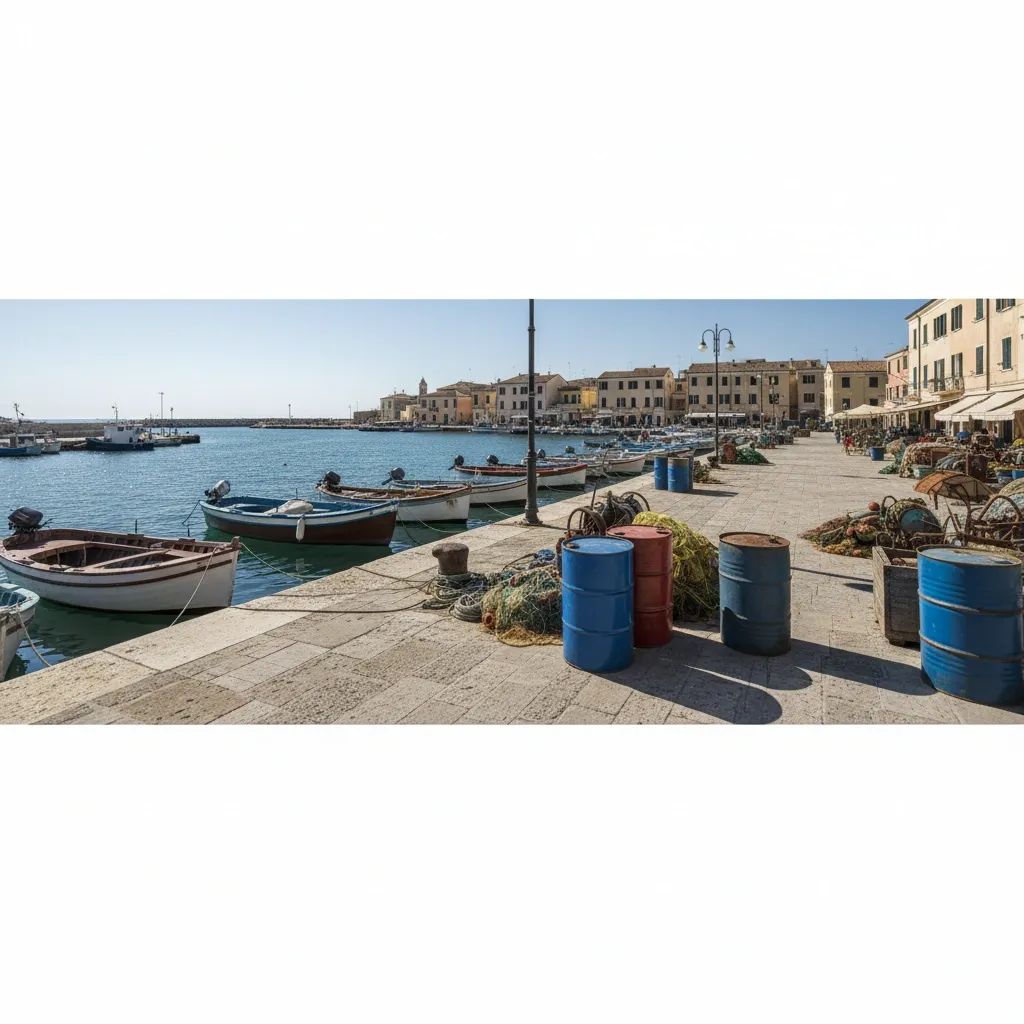
The Italian fishing fleet is operating under wartime economics in 2026, with vessels from the Adriatic to the Strait of Sicily cutting trips in half, returning early to port, and throttling engines to minimum speed just to stay afloat. The industry is navigating a perfect storm: fuel costs have more than doubled in some ports, profit margins have evaporated by 60%, and the price of fresh catch cannot rise to cover the difference without collapsing demand.
Why This Matters
• Fuel bills for large vessels (over 24 meters) have jumped from €6,000–€9,000 per tank to €13,440, an extra €4,500 weekly.
• Fishing days slashed: Boats now refuel with half the necessary volume, forcing returns every 18 days instead of monthly voyages.
• Deep-sea species disappearing from markets: Shortened trips mean premium catch varieties are becoming rarities.
• Aquaculture hit too: Energy bills for holding tanks are up 200%, polystyrene boxes up 40%.
The Italian Revenue Department has stepped in with a 20% tax credit on fuel purchases for March, April, and May 2026, backed by €10 M in public funds. But industry leaders warn this is a fiscal rebate—not cash at the pump—and does little to ease the immediate liquidity crunch strangling small and mid-sized operators.
The Numbers Behind the Crisis
Fuel now accounts for 40–60% of operating costs for Italian fishing enterprises, an incidence that has nearly doubled over the past quarter-century. In March 2026, marine diesel in Italian ports averaged €0.99 per liter, up 65% from February and 55% year-over-year. Some remote docks, like Lampedusa, saw prices spike to €1.33 per liter. Pessimistic forecasts warned of a near-term ceiling at €1.80 per liter, though calmer scenarios now suggest a gradual decline to €0.76 equivalent (around $76 per barrel) by 2027—contingent on easing tensions in the Strait of Hormuz and Middle Eastern supply corridors.
The immediate trigger was geopolitical: the Middle East crisis and disruptions in the Hormuz chokepoint sent Brent crude to a March average of $103 per barrel, with projections of $115 per barrel in the second quarter before cooling below $90 by year's end. For Italian fishers, this translated into an estimated €2 B aggregate burden across agriculture and fishing in 2026.
Survival Strategies from Port to Port
Across the Italian coast, operators have rewritten their playbooks to survive.
Ligurian lampara boats targeting blue fish (anchovies, sardines) now cruise at 8 knots instead of full throttle, sacrificing speed to conserve diesel. In Livorno, working hours have been trimmed by a third: crews dock at noon rather than late afternoon, abandoning deeper, more lucrative grounds.
In Mazara del Vallo, home to the iconic Gambero Rosso (red shrimp) fleet, vessels no longer top off their 60,000-liter tanks for a month at sea. "We stop at 30,000 liters to avoid immobilizing capital," explains Maurizio Giacalone, president of the Blue Sea OP Gambero Rosso cooperative. "That forces us back every 18 days, hoping fuel prices drop—but so far, no horizon in sight."
The catch-22 is market dynamics: raising the price of red shrimp triggers demand collapse, especially in the event catering and wedding sectors. "We tried passing costs to buyers when the Ukraine conflict erupted," Giacalone recalls. "The boomerang effect was immediate—orders vanished."
From Chioggia in the north to Sicily in the south, skippers are obsessively monitoring weather and sea state to avoid wasted fuel on empty nets. The result: an economy of attrition, where each voyage balances on a razor's edge between break-even and loss.
What This Means for Residents
For Italians, the fishing crisis translates into tangible shifts at the market and on menus.
Fresh local catch is becoming scarcer and pricier. Deep-water species—prized for flavor and texture—are vanishing as boats stick to shallow, near-shore grounds. Restaurants and fishmongers increasingly rely on imported frozen seafood, undermining the "Made in Italy" promise that commands premium pricing abroad.
Coastal employment is under threat. The Italian fleet has been shrinking for two decades, and the 2026 fuel shock accelerates the exodus. Younger workers see little future in an industry where a single trip can lose money, and seasoned captains face retirement without successors.
Tax credits offer delayed relief. The government's 20% fuel rebate helps on paper, but fishers must front the full cost at the dock and wait for tax season to recover the credit. For cash-strapped micro-enterprises, that lag can mean the difference between a viable season and insolvency.
Government and EU Response
Rome and Brussels have mobilized emergency frameworks, though critics argue the measures fall short of immediate needs.
The Italian Cabinet introduced the 20% fuel tax credit for March–May 2026, with a €10 M allocation. Separately, the 2026 Budget Law confirmed a Bonus Pesca program: up to €35,000 per vessel, totaling €8 M nationwide. Small boats (under 10 gross tons) receive €1,000 flat; larger craft get €150 per gross ton. Inland fishers qualify for €1,000 each. Applications closed April 24.
The European Commission activated the Middle East Crisis Temporary State Aid Framework (METSAF), valid through December 31, 2026, allowing member states to compensate up to 70% of incremental fuel costs caused by the crisis. Italy's tax-credit approach contrasts with Spain and France, which opted for direct per-liter subsidies to cap pump prices immediately.
Spain deployed a €5 B rescue package, slashing VAT on fuel from 21% to 10% and cutting excise duties to EU minimums—a combined discount of up to 30 cents per liter. Transport, agriculture, and fishing professionals receive an additional 20 cents per liter in direct aid.
France launched "prêts flash carburant"—flash fuel loans up to €50,000 at 3.8% annual interest for SMEs spending at least 5% of revenue on energy. The government also allocated €70 M+ in fuel subsidies and 20 cents per liter for low-income essential workers.
Portugal proposed a temporary 10-cent-per-liter diesel subsidy for agriculture, forestry, fishing, and public transport, effective April–June, contingent on prices staying elevated. An automatic protection mechanism already trims the Petroleum Products Tax by 3.5 cents per liter when weekly pump prices spike beyond threshold.
The EU's FEAMPA crisis fund released €760 M across the bloc to offset lost earnings and operational overruns, applicable retroactively from February 28, 2026. Italy, Bulgaria, Estonia, Latvia, and Portugal jointly pressed for urgent regulatory flexibility to unlock direct payments.
Regional Programs Add Depth
Several Italian regions have layered in targeted support:
Liguria unveiled an €11 M fishing and aquaculture program (2026–2028), opening €500,000 in FEAMPA grants for processing, marketing, and complementary aquaculture activities—all non-repayable. Two additional €200,000 tenders (closed April 24) incentivize coastal small-scale fishing competitiveness and onboard safety upgrades. Young fishers can claim a €30,000 entry premium.
Emilia-Romagna approved a €1 M call (deadline June 30) for biodiversity restoration, fish-tourism infrastructure, health and safety gear, funded by Snam FSRU Italia compensation packages under de minimis state-aid rules.
Tuscany scheduled €4.5 M in 2026 FEAMPA tenders for engine replacement, gear upgrades, pilot projects, port infrastructure modernization, and renewable energy installations at fish farms.
Lazio offers up to €35,000 per enterprise in de minimis grants to support recovery, alongside safety-focused grants under the 2021–2027 FEAMPA.
The Outlook: Volatility Through 2027
Price forecasts remain deeply uncertain. The U.S. Energy Information Administration projects Brent crude averaging $76 per barrel in 2027, down from a Q2 2026 peak of $115—assuming Middle East supply disruptions ease. Alternative models see prices oscillating between $92 and $146 through late 2026, or climbing toward $132 by mid-2027 if geopolitical instability persists.
For Italian fishers, even a return to pre-crisis prices may not restore equilibrium. The industry faces structural headwinds: shrinking fleets, aging infrastructure, stiff competition from imports, and a regulatory environment that limits fishing days and quotas to protect stocks. The Council of EU Agriculture and Fisheries Ministers averted a proposed 64% cut in trawling days for 2026—a reprieve won by Italy, Spain, and France—but the specter of tighter restrictions looms.
Impact on the Broader Food Chain
The fishing crisis ripples beyond docks and decks. Aquaculture operators report energy bills for temperature-controlled tanks surging 200%, while the cost of polystyrene packaging boxes has climbed 40%. Wholesalers and retailers face supply-chain friction as domestic landings shrink and imports fill the gap, diluting traceability and origin guarantees that justify premium shelf prices.
Consumer sentiment is shifting. Italian households accustomed to abundant, affordable fresh fish now encounter limited selection and rising costs, accelerating the pivot toward frozen and processed alternatives—often sourced from North Africa, Asia, or South America.
For coastal communities—especially in Sicily, Puglia, Liguria, and the Veneto—the fishing fleet is not merely economic infrastructure but cultural identity. Prolonged contraction threatens social cohesion, depopulates historic ports, and erodes artisanal knowledge passed through generations.
What Comes Next
Industry associations, including Confcooperative Fedagripesca and Federpesca, are lobbying for three immediate reforms:
Direct fuel price caps or per-liter subsidies, mirroring the Spanish and French models, to provide instant relief rather than deferred tax credits.
Raising the de minimis state-aid ceiling from the current €40,000 over three years to accommodate larger vessels and multi-boat cooperatives.
Accelerated access to FEAMPA crisis funds with streamlined bureaucracy, ensuring payments reach operators within weeks, not fiscal quarters.
A protocol signed between ISMEA (the Italian agricultural finance agency) and Federpesca aims to ease credit access for fleet modernization, innovation, and generational renewal, but uptake depends on banks' willingness to lend into a sector perceived as high-risk.
The Italian Ministry of Agriculture, Food Sovereignty and Forestry (MASAF) has centralized oversight of the blue crab emergency—an invasive species plaguing Adriatic lagoons—under a special commissioner, signaling that environmental and economic crises are converging.
The Bottom Line
Italy's fishing fleet is caught between geology and geopolitics: tied to diesel by design, vulnerable to supply shocks beyond its control, and squeezed by markets unwilling to absorb price hikes. The government's response offers fiscal cushioning but no structural fix. Without sustained relief—or a fundamental energy transition—the 2026 crisis may become the new normal, shrinking the fleet, hollowing out coastal towns, and transforming fresh Italian seafood from everyday staple to luxury exception.


