
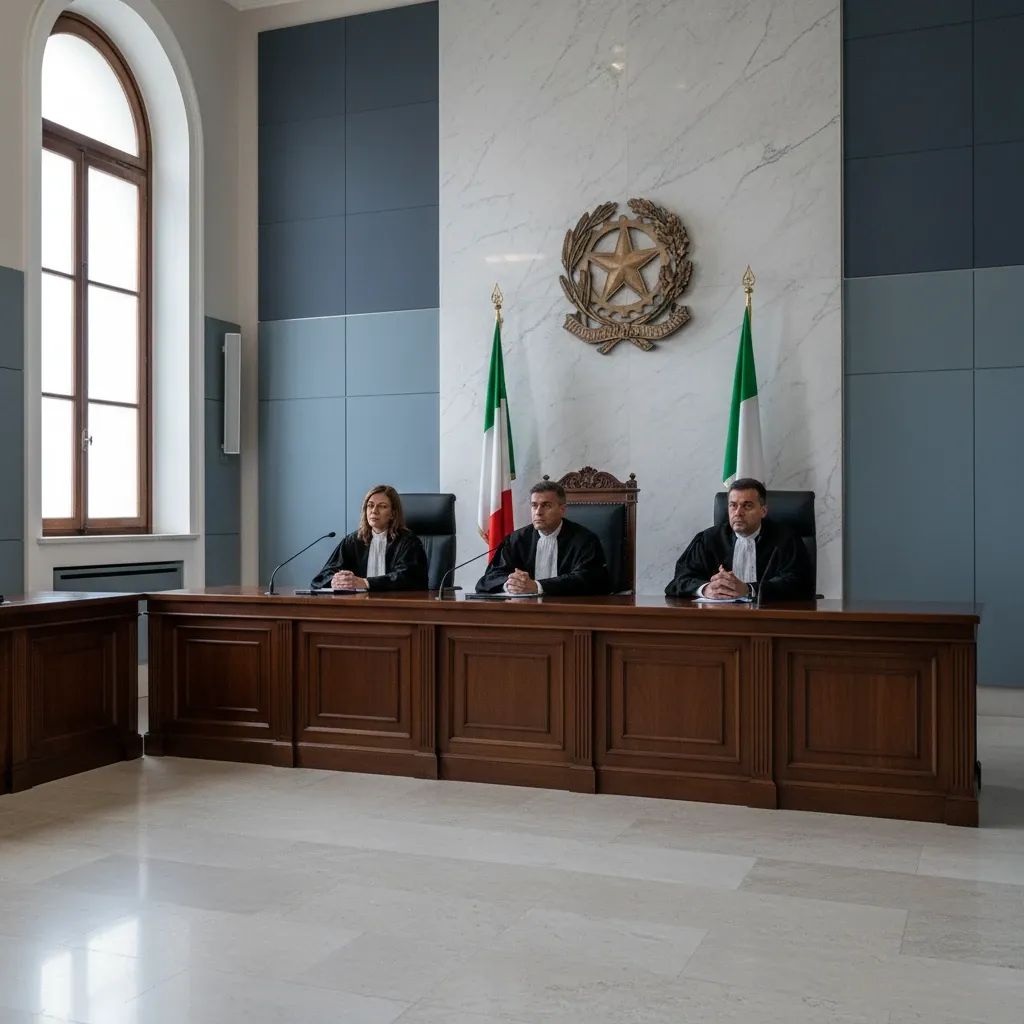
Italy's constitutional referendum on judicial reform drew just 14.9% of eligible voters to polling stations by midday Sunday, according to Interior Ministry data released through the Viminale's Eligendo tracking system. The figure represents the first measurable snapshot of citizen engagement in a high-stakes vote that could permanently reshape how the country's courts operate—yet it also underscores the profound disengagement that has plagued Italian referendums for decades.
Why This Matters:
• No quorum required: This constitutional referendum will pass or fail based purely on majority of valid votes cast, meaning low turnout doesn't invalidate the result—it just concentrates decision-making power in a smaller electorate.
• Voting continues: Polls remain open until 23:00 Sunday and reopen Monday from 07:00 to 15:00, with results expected immediately after closure Monday afternoon.
• Structural change on the line: A "Yes" vote implements permanent separation of judges from prosecutors, splits the powerful Consiglio Superiore della Magistratura (CSM) into two bodies, and introduces lottery-based selection for some judicial governance roles.
What's Actually Being Decided
The Italian Parliament approved a seven-article constitutional amendment commonly labeled the "Nordio Reform" after the Justice Minister. The reform was approved by Parliament in 2025, and was published in the Gazzetta Ufficiale on October 30, 2025. Because it passed without the two-thirds supermajority threshold required by the Constitution, it triggered this obligatory public vote, taking place March 22-23, 2026, under Article 138 of the Constitution.
The reform targets Articles 87, 102, 104, 105, 106, 107, and 110, introducing four core changes. First, it separates the careers of judges and prosecutors from the moment they enter the profession, ending the current practice where magistrates belong to a unified order and may switch roles once within their first nine years. Second, it divides the CSM—Italy's powerful judicial self-governance body—into two parallel councils, one overseeing judges and another supervising prosecutors, both chaired by the President of the Republic. Third, it replaces the current election system for CSM members with sorteggio (random lottery selection) for both lay and magistrate seats, aiming to dilute the influence of the internal correnti (factions) that have long dominated judicial politics. Finally, it establishes an Alta Corte Disciplinare (High Disciplinary Court), a new constitutional-level tribunal responsible for disciplinary proceedings against magistrates, removing that authority from the CSM itself.
Because this is a confirmatory constitutional referendum, not an abrogative one, there is no minimum turnout threshold. The reform becomes law if a simple majority of valid votes supports it, regardless of how many citizens participate.
Polarized Campaigns and a Fractured Political Landscape
The political battle lines are starkly drawn. The center-right coalition—Fratelli d'Italia, Lega, Forza Italia, and Noi Moderati—backs the "Yes" vote, joined by the centrist Azione party. Their argument centers on impartiality: separating accusers from judges, they claim, strengthens the adversarial trial model and reduces the risk that prosecutors wield undue influence. Proponents also insist that sorteggio will break the grip of factional politics within the magistracy, making governance more meritocratic and transparent.
Opposition comes from the center-left: the Partito Democratico (PD), Alleanza Verdi e Sinistra (AVS), and the Movimento 5 Stelle all campaign for "No," arguing the reform threatens the unity and independence of the magistracy, a cornerstone of the 1948 Constitution. They contend that Italy's current unified system safeguards prosecutorial autonomy and that splitting the CSM and introducing lottery selection will weaken institutional authority and reduce accountability. Italia Viva granted its members freedom of conscience, while the CGIL trade union officially endorsed a "No" vote.
Legal scholars and commentators remain divided. Supporters see the reform as essential to consecrating adversarial justice and judicial impartiality. Critics worry it will fracture the "culture of jurisdiction" that unites judges and prosecutors in their commitment to the rule of law, and that the constitutional text leaves too much detail to future parliamentary legislation, opening the door to unpredictable implementation.
The Turnout Problem: A Decades-Long Slide
Italy's 14.9% midday turnout is more than 2 percentage points higher than the 2020 constitutional referendum on parliamentary seat reduction at the same hour, but it remains more than 10 points below the participation rate recorded at midday during the 2022 general election. Historically, Italian referendums once commanded massive public engagement—the 1946 monarchy-versus-republic vote drew 89% turnout, and the 1974 divorce referendum pulled 87.7%. That era is long gone. Since the 1990s, referendum turnout has collapsed, with only two abrogative referendums clearing the 50% quorum required for validity in the past three decades.
Multiple forces drive this disengagement. Political disaffection runs deep: many Italians no longer believe voting changes their daily reality, and abstention has become a habitual response across all elections. For abrogative referendums requiring a quorum, strategic abstention has evolved into standard opposition tactics—parties opposed to a question simply urge supporters to stay home. However, this tactic won't work here: because this referendum has no quorum requirement, abstention by opponents has no strategic value. Referendums are also increasingly seen as technical, niche, or internally factional, failing to generate the broad public urgency that once mobilized voters. The growing Italian diaspora, eligible to vote but participating at low rates, further dilutes national turnout averages.
What This Means for Residents Living in Italy
If you live in Italy—whether as a citizen, long-term resident, or expat—this vote will determine the structural architecture of the judiciary that directly affects your daily legal life:
• If you're accused of a crime: The judge and prosecutor will now be permanently separate professionals from the start of their careers, not interchangeable roles. Backers argue this strengthens your right to a fair trial; critics worry it may create prosecutorial independence issues over time.
• If you're involved in a civil dispute (housing contract disputes, inheritance matters, or employment conflicts): The reform's impact on CSM governance and disciplinary procedures could affect judicial efficiency and accountability. A more fragmented CSM might mean slower coordination on case management, while stricter disciplinary mechanisms could theoretically improve judge performance.
• If you file a complaint against a judge or prosecutor: The new Alta Corte Disciplinare (High Disciplinary Court) will handle your case instead of the current CSM process. This change aims to depoliticize disciplinary decisions, though it remains unclear whether it will speed up complaint resolution.
• For non-citizen residents and expats: Clearer prosecutor-judge separation may enhance confidence in prosecutorial decisions if you encounter the Italian criminal system, though language barriers and legal unfamiliarity remain separate challenges.
A "Yes" majority locks in this prosecutor-judge split, while a "No" majority preserves the current unified magistracy model but leaves unaddressed concerns about factional influence within the CSM.
Crucially, the Interior Ministry will release the next turnout update at 19:00 Sunday evening, offering a clearer picture of whether participation accelerates in the evening hours or remains stubbornly low. Final results are expected shortly after polling stations close at 15:00 Monday, with scrutiny beginning immediately.
President Sergio Mattarella cast his ballot in Palermo Sunday morning, greeted by applause from citizens and poll workers—a symbolic gesture underscoring the constitutional gravity of the vote, even as millions of Italians appear poised to sit it out. Whether low turnout reflects apathy, strategic calculation, or genuine satisfaction with the status quo, the referendum's result will reverberate through Italy's legal system for generations, decided by whichever faction mobilizes its base more effectively in the final hours before polls close.


