
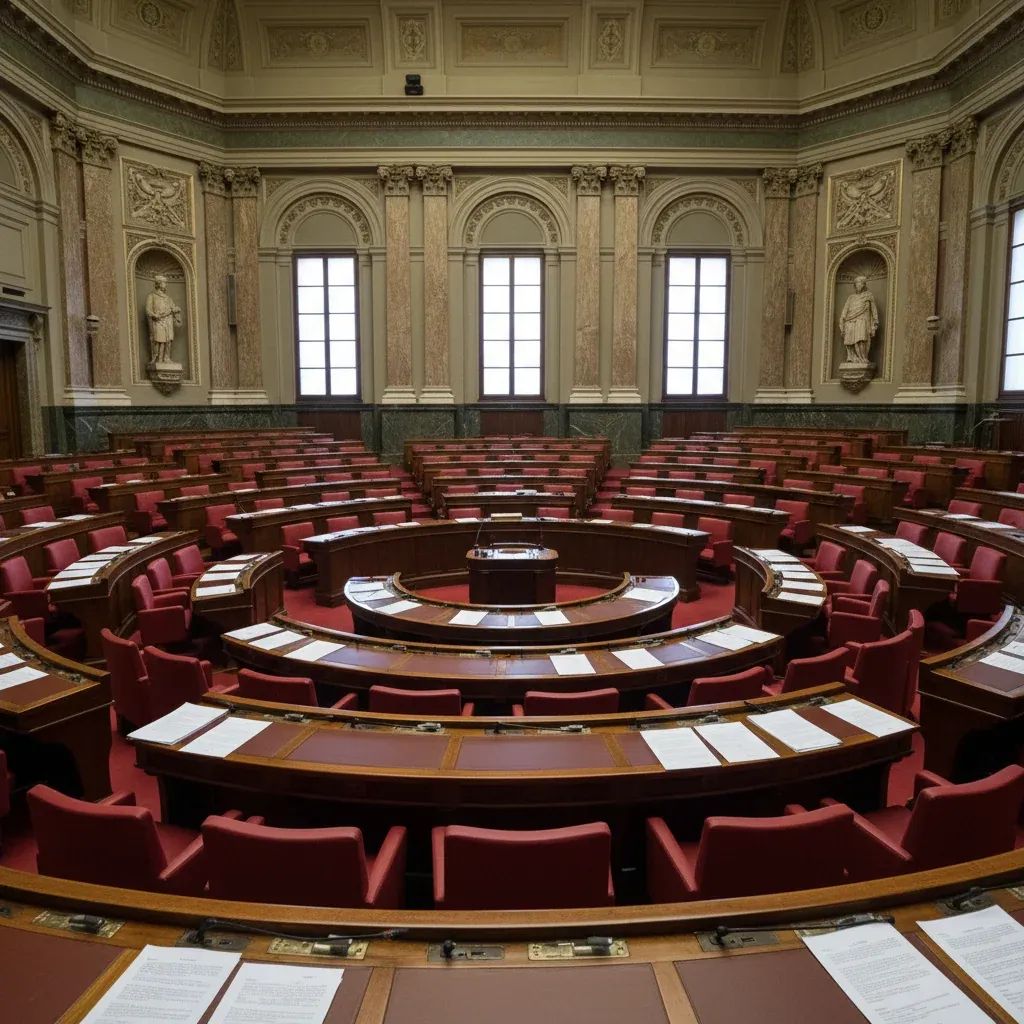
The Meloni government has officially become Italy's second-longest-serving administration since the republic's founding, surpassing 1,288 days in office and eclipsing the previous record held by Silvio Berlusconi's fourth cabinet. For residents and observers of Italy's notoriously turbulent political landscape, this milestone represents not just longevity but a rare period of institutional continuity in a country that has cycled through 68 governments in 78 years.
Why This Matters
• Stability dividend: Only one government has lasted longer—Berlusconi II (1,412 days, 2001–2005)—meaning Meloni's administration has outlasted the average Italian government by more than triple.
• Policy continuity: Unlike previous cabinets that collapsed mid-reform, this government has implemented 16 fiscal decrees, overhauled labor laws, and deployed €140.4 billion in EU recovery funds.
• Market confidence: Italy's sovereign spread dropped from 236 basis points (October 2022) to 79 (October 2025), translating to lower borrowing costs for the state and, indirectly, for mortgages and business loans.
A Record Born of Coalition Discipline
Prime Minister Giorgia Meloni marked the occasion with a message on social media, framing the achievement as a "responsibility" rather than a celebration. The rhetoric aligns with her government's branding: sober, service-oriented, and anchored in the concept of interesse nazionale (national interest).
Italy's Centre-Right coalition—comprising Fratelli d'Italia, Lega, and Forza Italia—has avoided the cabinet reshuffles and intra-party feuds that typically doom Italian governments. The coalition's survival is particularly notable given Italy's post-war average government lifespan of just 414 days. Political analysts attribute this durability to three factors: Meloni's personal authority within her party, the absence of viable alternative coalitions, and a disciplined parliamentary whip system that has minimized defections.
The previous record-holder in second place, Berlusconi IV (2008–2011), collapsed amid a sovereign debt crisis and internal party revolts. That Meloni's cabinet has surpassed it suggests a structural shift in Italy's political culture, where coalition partners now see value in riding out friction rather than triggering early elections.
The Economic Ledger: Gains and Constraints
For residents navigating daily costs, the government's fiscal scorecard presents a mixed picture. The deficit-to-GDP ratio fell from 8.1% (2022) to 3% (2025), meeting the threshold required to exit the EU's Excessive Deficit Procedure. This compliance matters: it shields Italy from Brussels sanctions and preserves access to low-cost EU financing.
Employment figures show tangible improvement. The jobless rate hit 6%—the lowest since June 2007—while the employment rate reached a historic 62.6%. The government claims to have generated 1.2 million permanent contracts through a 120% super-deduction for new hires and payroll tax cuts totaling €18 billion. For workers, this translates to fatter paychecks: the income tax (IRPEF) was consolidated from four brackets to three, and the tax wedge reduction put an average of €100 more per month into middle-income households.
However, purchasing power gains stem as much from collapsing inflation—down from 12.5% (2022) to 1.2% (2025)—as from wage growth. Economists caution that global energy price normalization deserves partial credit, rather than domestic policy alone. Similarly, Italy's return to a primary surplus in 2024 reflects both fiscal restraint and a post-pandemic rebound in tax revenue, with the Revenue Agency recovering €65 billion from evasion over two years.
What This Means for Residents
For expatriates, small business owners, and Italian families, the government's longevity has produced concrete regulatory shifts:
• Corporate tax relief: The IRES rate drops from 24% to 20% for firms that reinvest 80% of profits and increase headcount—relevant for foreign-owned subsidiaries and startups.
• Family subsidies: The Assegno Unico (Universal Family Allowance) now channels €19.5 billion annually to 6 million families, covering 10 million children. A new €3,600 childcare voucher and a "mom bonus" target working mothers.
• Pension floors: Minimum pensions rose from €525 (2022) to €617 (2025), though still below the EU poverty threshold for single-person households.
• Infrastructure execution: Italy leads the EU in PNRR (Recovery Plan) disbursement, with 447,000 projects financed and 294,000 completed. This includes road upgrades, digitalization of public services, and the green light for the Strait of Messina Bridge—a project dormant since the 1970s.
The government also abolished the Reddito di Cittadinanza (Citizens' Income), replacing it with the Assegno di Inclusione (Inclusion Allowance) and job-training stipends. Critics argue this tightened eligibility criteria, while supporters say it reduced welfare dependency.
The Political Weathervane: Stability, Yes—Momentum, Uncertain
Public opinion data from April 2026 shows Fratelli d'Italia polling at 26.7–28.2%, still the largest single party but down from its post-election peak. The Centre-Left coalition (including the Democratic Party and Five Star Movement) now edges ahead at 45.4% versus 44.7% for the ruling bloc in aggregate polling.
Meloni's personal approval sits at 40–41%, a respectable figure by Italian standards but indicating erosion. The March 2026 referendum on judicial reform—a signature Meloni initiative to separate prosecutorial and judicial careers—failed decisively. Voters rejected the measure, yet 57% said Meloni should not resign, signaling a preference for continuity over constitutional upheaval.
This dynamic reflects a paradox: Italians value governmental stability while remaining skeptical of specific reforms. The Pagella Politica "Promessometro" audit (October 2025) found that while many pledges are "in progress," a significant portion remain "compromised" or incomplete.
The Road Ahead: Can Meloni Outlast Berlusconi?
To claim the all-time record, the Meloni cabinet must survive until at least mid-December 2026, when it would surpass Berlusconi II's 1,412 days. Market analysts see a plausible path: the next scheduled elections are in 2027, and no coalition partner has an incentive to trigger a snap vote while the Centre-Left holds a polling edge.
Key tests loom. The 2027 budget cycle will require renewed spending restraint to keep the deficit under 3%. The Ponte sullo Stretto mega-project, while approved, faces environmental litigation and cost overruns. And the government's Africa Plan (Piano Mattei), which commits over €1 billion to migration management and trade partnerships, hinges on volatile geopolitics in Tunisia and Libya.
For residents, the practical question is whether stability translates to better services. Hospital waiting times, bureaucratic delays at municipal offices, and public transport reliability—the metrics of daily life—have seen modest improvement, but Italy still lags France and Germany on most public administration benchmarks.
Longevity as Legacy
Italy's second-longest government milestone is a statistical curiosity with real-world implications. It signals to investors that policy will remain predictable, to Brussels that Italy is a reliable partner, and to voters that coalition politics need not be chaotic.
Yet longevity alone is not a program. The Meloni government's legacy will hinge on whether it uses its remaining tenure to deepen structural reforms—pension sustainability, Southern Italy productivity, public administration digitization—or merely manages the status quo. For a country where governments typically expire before Christmas, surviving three winters in office is already a feat. Whether it amounts to transformation or simply endurance is the question residents will weigh when they next vote.


