
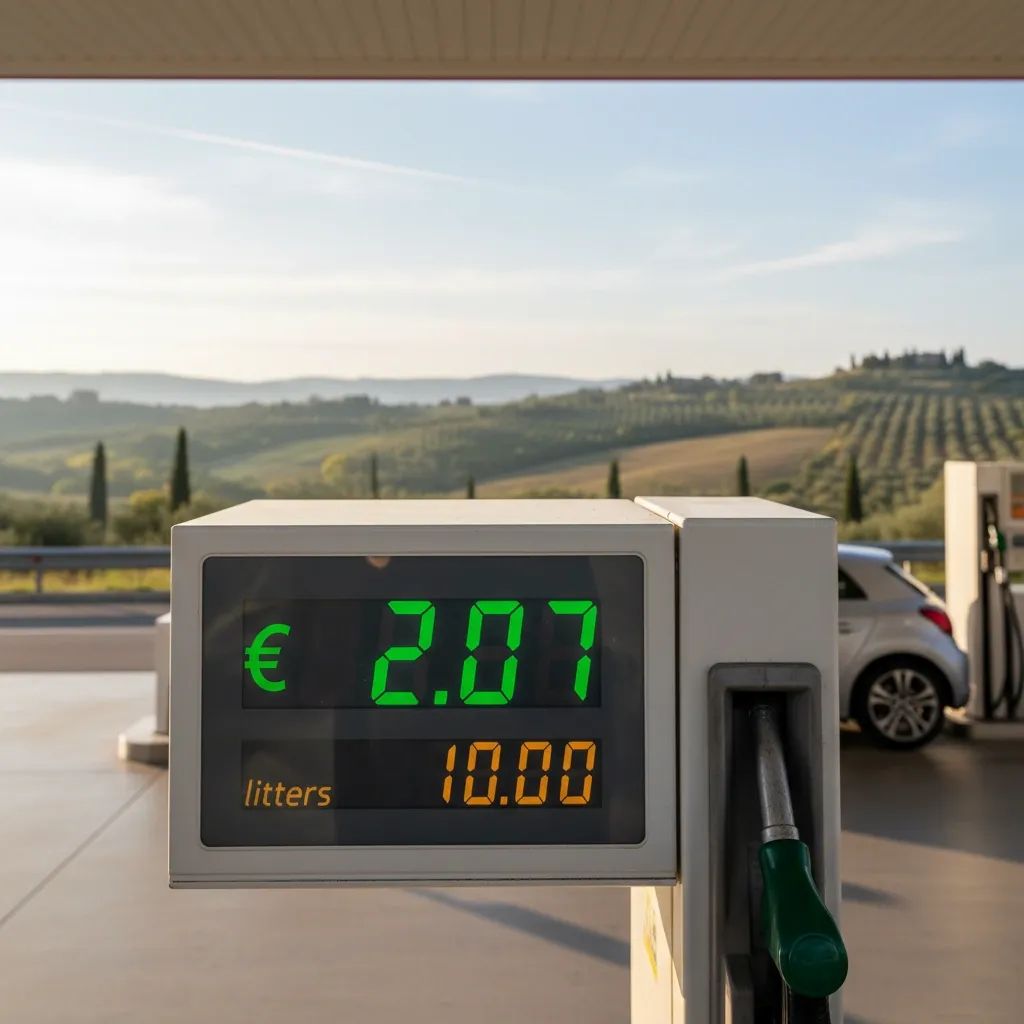
Italian consumer protection group Codacons has flagged a troubling reality for motorists across the country: despite a government-imposed excise tax cut enacted just one week ago, diesel prices have already clawed back nearly all the promised savings. At highway service stations, diesel has breached the €2.10 per liter threshold, settling at €2.102, while gasoline hovers at €1.806.
The announcement, based on daily data compiled from Italy's Ministry of Business and Made in Italy (Mimit), underscores how quickly fuel price volatility can erase fiscal relief measures—a pattern that affects everyone from daily commuters to commercial transport operators navigating Italy's extensive road network.
Why This Matters
• Tax relief evaporating fast: The government's excise cut was supposed to deliver a €0.244 per liter discount on diesel, but actual savings have shrunk significantly compared to pre-cut prices.
• Highway stations hit hardest: Diesel at autostrada pumps is now above €2.10, while gasoline exceeds €1.80—premium pricing that compounds costs for long-distance travelers.
• Regional price gaps persist: Diesel ranges from €2.016 in Le Marche to €2.071 in Bolzano, creating a €0.055 spread that rewards strategic refueling.
Highway vs. Street: The Price Split
Fuel pricing in Italy operates on a dual-tier model, with highway service stations commanding significant premiums over urban and suburban pumps. Codacons data reveals that diesel at autostrada facilities has surged past the symbolic €2.10 mark, reaching €2.102 per liter. Gasoline follows a similar trajectory at €1.806.
By contrast, the national average for self-service diesel on regular roads stands at €2.043 per liter—still elevated, but roughly €0.06 cheaper than highway equivalents. For motorists planning intercity travel, refueling before entering the autostrada can deliver meaningful savings, particularly for those operating vehicles with larger fuel capacities.
Where Prices Vary Most Across Italy
Fuel costs in Italy remain geographically fragmented, shaped by local distribution networks, regional tax variations, and competitive dynamics. Codacons analysis, drawing on Mimit's regional breakdowns, highlights sharp contrasts:
For diesel (self-service):
• Bolzano leads the nation at €2.071 per liter, followed closely by Valle d'Aosta at €2.067.
• Sicily and Molise round out the high-cost regions at €2.057 and €2.056, respectively.
• Le Marche offers the most competitive rates at €2.016, making it the go-to region for budget-conscious drivers crossing central Italy.
For gasoline (self-service):
• Basilicata tops the list at €1.775 per liter.
• Bolzano (€1.769), Sicily (€1.766), and Calabria (€1.766) also sit above the national average of €1.746.
The €0.055 spread for diesel and €0.029 gap for gasoline between the cheapest and most expensive regions demonstrate the value of strategic refueling decisions.
The Vanishing Tax Cut
One week ago, the Italy Cabinet rolled out an excise duty reduction designed to cushion consumers against global crude oil volatility. The measure was projected to shave €0.244 off every liter of diesel purchased—a move intended to ease inflationary pressure on transport-dependent sectors.
Yet Codacons data reveals a stark disconnect between policy intention and market reality. Actual diesel prices have declined minimally compared to levels recorded before the tax cut took effect, suggesting that market pressures have largely offset the government relief.
For gasoline, the pattern appears similarly challenging, though Codacons focused its critique primarily on diesel—the fuel of choice for Italy's commercial vehicle fleet and an increasing share of private passenger cars.
What This Means for Residents
The practical impact is immediate. For households refueling regularly, the reduced tax relief means higher pump costs than initially anticipated. Commuters relying on daily or weekly refueling will notice the difference in their budgets, and those undertaking longer journeys face compounded expenses.
For logistics and transport operators, diesel price volatility creates significant business planning challenges. Any sustained elevation in fuel costs feeds directly into goods distribution expenses, ultimately affecting pricing across the economy.
Tourists and seasonal travelers should be aware that highway refueling carries a premium. Visitors renting cars for extended road trips through Italy often default to highway refueling for convenience, unknowingly paying above-average rates. Strategic planning to refuel at regular urban pumps or in lower-cost regions can deliver noticeable savings.
Navigating the High-Cost Environment
For residents and regular drivers, strategic refueling offers practical savings opportunities. Codacons data suggests that motorists should:
• Avoid highway stations unless fuel reserves are critically low. Plan refueling stops at urban or suburban pumps before entering the autostrada.
• Target low-cost regions when traveling. Le Marche, with diesel at €2.016, offers the best value for those transiting central Italy.
• Consider self-service pumps exclusively, as full-service pricing typically carries additional markups.
• Monitor regional prices when planning travel routes, particularly for intercity journeys where refueling choices significantly impact total trip costs.
The data from Codacons underscores that while government fiscal measures matter, market dynamics and regional price variations remain powerful forces shaping Italian fuel costs. For now, residents navigating Italy's fuel landscape must remain vigilant about where and when they refuel.


