
In April 2026, the Italian Cabinet approved a labor decree linking public contracts to fair wages, a move that has exposed sharp divisions among the country's main labor unions despite their united front at Marghera's May Day rally. While the Italian Confederation of Workers' Unions (CISL) and the Italian Labor Union (UIL) welcomed the measure as a breakthrough, the General Confederation of Italian Workers (CGIL) condemned it as corporate welfare disguised as worker protection.
Why This Matters:
• Public funding restricted: Companies failing to apply national contracts signed by major unions will now be excluded from €960M in state incentives.
• Automatic wage adjustment delayed: Contracts expired over 12 months will receive only 30% inflation indexing—and not until January 2027.
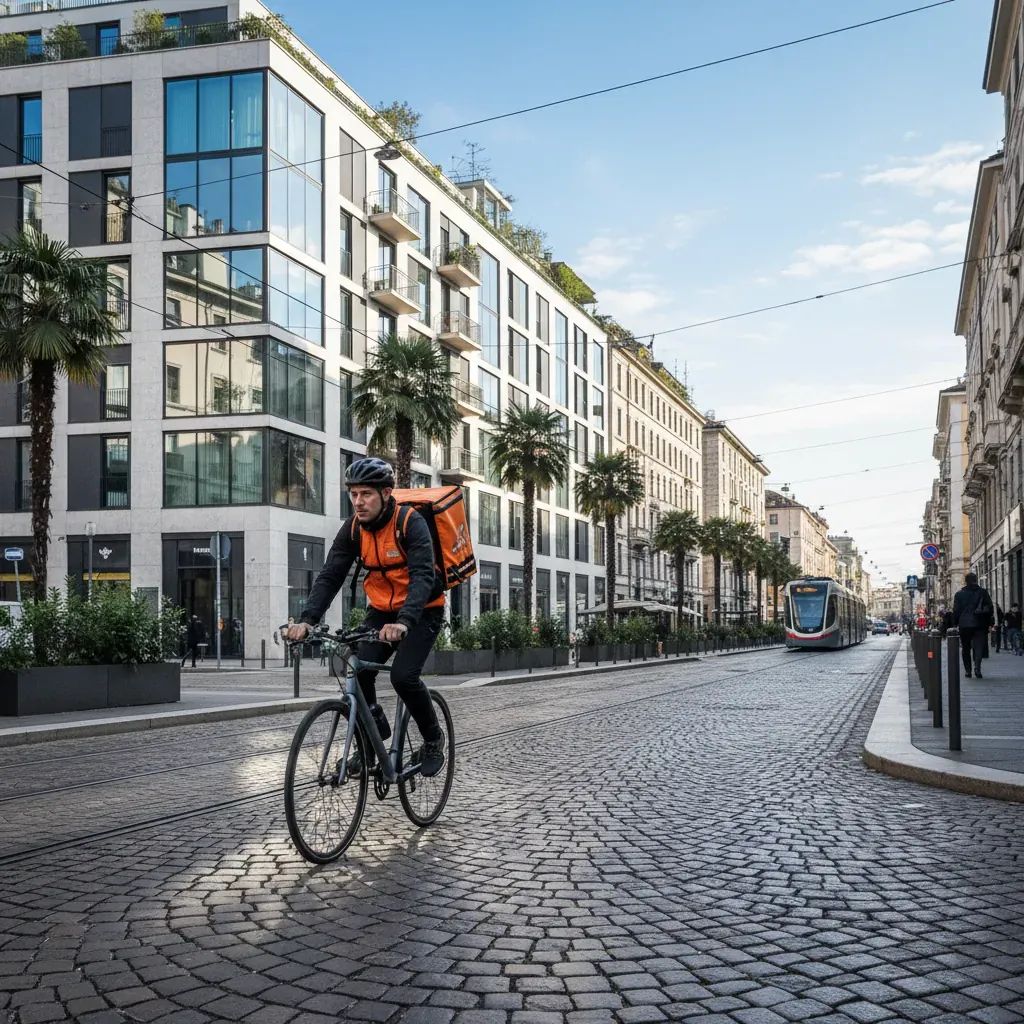
• Rider classification shift: Digital platform workers gain presumption of employee status when algorithms control their labor.
Unions Reunite in Marghera, But Fracture Lines Show
For the first time since 2024, Italy's three largest union confederations shared a single stage on May 1 in Marghera, near Venice, under the banner "dignified work: collective bargaining, new protections, new rights for an Italy changing in the age of artificial intelligence." The symbolic reunification came after last year's fragmented celebrations across multiple cities, yet the unified appearance masked significant disagreements over the April 28 decree from the Italian Cabinet.
CISL General Secretary Daniela Fumarola praised the legislation as "an encouraging signal" and the foundation for a broader "Pact of Responsibility" with government and employers. UIL leader Pierpaolo Bombardieri echoed her approval, telling the crowd that conditioning tax breaks on proper contract adoption was "the right path." Both leaders emphasized the decree's core principle: public money should flow only to employers respecting Collective National Labor Contracts (CCNL) negotiated by the most representative organizations—effectively shutting out so-called "pirate contracts" that undercut standard wages.
CGIL's Maurizio Landini delivered a starkly different verdict from the same platform. "This decree doesn't give workers a single euro," he declared, arguing that the allocated €960M serves as business subsidies rather than wage increases. Landini accused Prime Minister Giorgia Meloni's administration of hypocrisy: "This is the government that talks about fair wages but doesn't raise salaries for its own employees, that isn't reducing precarity, and that's driving young people to emigrate. It's time to say: enough propaganda."
What the Decree Actually Does
The April 2026 decree from Italy's Labor Ministry centers on three pillars designed to reshape how public funds interact with employment practices.
First, it legally defines "fair wage" as the total economic treatment outlined in CCNLs signed by CGIL, CISL, and UIL—the country's most representative labor organizations. Companies applying alternative or employer-friendly contracts will be barred from accessing state hiring incentives, which include payroll tax relief for employing women, young workers under 35, and staff in the Special Economic Zones (ZES) of southern Italy.
Second, the measure introduces presumed employee status for platform workers, particularly food delivery riders, when algorithmic systems dictate schedules, routes, or performance metrics. This provision targets what unions call "digital day labor," where gig workers lack basic protections despite de facto subordination.
Third—and most contentiously—it establishes an automatic wage adjustment mechanism for expired contracts, equal to 30% of the IPCA inflation index for agreements lapsed beyond 12 months. Yet this provision won't activate until January 1, 2027, and applies only prospectively, offering no relief for contracts already stagnant through 2025 and 2026.
Fumarola's Warning on Inflation Indexing
While CISL's Daniela Fumarola generally supported the decree, she flagged a critical flaw in the inflation adjustment clause. "An allowance so meager it becomes more convenient than actual contract renewals," she cautioned, noting that 30% of inflation barely scratches the surface when cumulative price increases have eroded purchasing power by double digits since 2021.
The concern is procedural: if employers can satisfy legal requirements with a nominal inflation bump rather than negotiating comprehensive raises, the incentive for substantive collective bargaining vanishes. Fumarola's warning underscores a paradox—a provision intended to spur contract renewals might instead calcify stagnation.
Meloni Defends "Concrete Measures" Over "Propaganda"
Prime Minister Giorgia Meloni, visiting the PizzAut restaurant in Monza—a social enterprise employing staff on the autism spectrum—framed the decree as proof of her administration's commitment to tangible results. "For us, work isn't defended with propaganda but with concrete measures," she told reporters. "Public resources must go to those who respect workers, not to those who underpay, exploit, or use pirate contracts."
Her remarks were a direct rebuttal to Landini's accusations, though the allocation of €960M by the Italian Revenue Agency primarily as hiring incentives for firms—rather than direct wage supplements—lends credence to CGIL's critique that the measure subsidizes capital, not labor.
The Safety Crisis and Push for Homicide Statute
Beyond wages and contracts, the Marghera rally spotlighted Italy's persistent workplace fatality crisis. INAIL (Italy's workplace insurance authority) recorded over 1,093 workplace deaths in 2025, a figure climbing above 1,450 when commute-related fatalities are included.
UIL Secretary Bombardieri used his speech to demand creation of a dedicated crime of workplace homicide, modeled on vehicular homicide statutes introduced in prior years. Current law treats on-the-job deaths as aggravated involuntary manslaughter (Article 589, Criminal Code), carrying sentences of two to seven years—penalties widely criticized as insufficient deterrents.
Union proposals circulating in parliament would establish standalone offenses for workplace homicide and severe injury, with sentences ranging from five to ten years, escalating to ten to eighteen years when employers systematically neglect risk assessments or safety training. The Italian General Confederation of Workers (CGIL), the USB grassroots union, and political movements including ManifestA and Potere al Popolo have backed a popular initiative demanding these changes, alongside stronger legal protections for workplace safety representatives who file complaints.
President Sergio Mattarella reinforced the urgency in his May 1 statement, calling the annual toll of over a thousand workplace deaths "an unacceptable wound for our society" and framing safety as "a commitment and a duty."
Political Presence and Regional Mobilizations
Democratic Party Secretary Elly Schlein joined the Marghera event, hailing "an important united square defending the dignity of work." She criticized precarity and wage poverty as betrayals of Italy's constitutional foundation as a republic "based on labor." Nicola Fratoianni, leader of the Green and Left Alliance (AVS), dismissed the government decree as an "April Fool's joke," despite its April 28 approval date.
Beyond Venice, Italy saw dozens of territorial demonstrations. In Turin, the Piedmont CGIL-CISL-UIL federation organized a march focused on industrial transformation and job preservation, though clashes erupted near the former Askatasuna social center. Bologna's Piazza Maggiore hosted rallies centered on manufacturing quality and ecological transition, while Milan's procession from Corso Venezia to Piazza della Scala featured delegate speeches and musical performances. In Naples, the three confederations demanded an end to "work without rights," and Trieste's march adopted the slogan "work is not a slogan."
What This Means for Residents
For employees, the decree's immediate impact hinges on employer classification. Those working under CGIL-CISL-UIL contracts will see their employers retain access to tax incentives; those under non-representative agreements may face heightened job insecurity as firms weigh the cost of compliance versus lost subsidies.
Gig workers in food delivery and ride-hailing could experience significant shifts if platforms respond to the presumed subordination rule by reclassifying drivers and riders as employees—potentially gaining sick leave, minimum wage, and social security contributions, though also losing scheduling flexibility.
The inflation adjustment for expired contracts offers little near-term relief, as its 2027 activation date leaves workers in stagnant agreements without recourse through 2026. Unions are likely to escalate pressure through strikes and demonstrations to force earlier implementation or higher indexing percentages.
Fragile Unity, Persistent Divisions
UIL's Bombardieri insisted the three confederations remain aligned in principle: "We're not divided; we have different sensibilities, but we'll continue making agreements. When unions are united, no one can stand against us." Yet the stark divergence over the government decree suggests tactical unity—sharing a stage, coordinating rallies—masks strategic rifts over whether to engage or resist Meloni's labor agenda.
The Rome May Day Concert at Piazza San Giovanni, broadcast live on RAI 3 and RAI Radio 2, reinforced the traditional imagery of labor solidarity, with hosts Pierpaolo Spollon, Arisa, and BigMama leading Europe's largest free music festival. But as speeches gave way to performances, the underlying question remained unresolved: Can Italy's fractured labor movement leverage its ceremonial unity into substantive power, or will philosophical divides undermine collective bargaining strength precisely when economic precarity demands maximum cohesion?


