
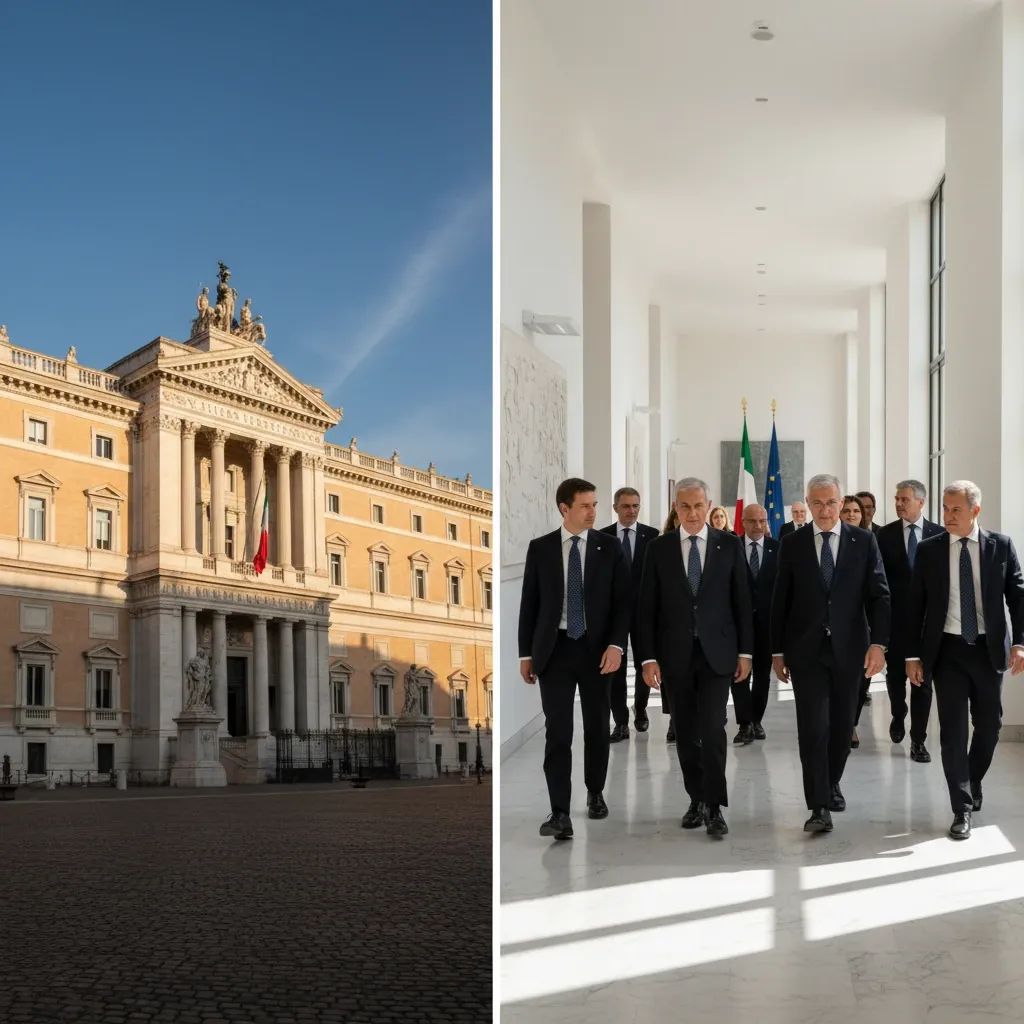
Tourism Minister Daniela Santanchè resigned today following Prime Minister Giorgia Meloni's formal request, ending weeks of mounting political pressure over judicial investigations tied to her business affairs. The departure marks a significant moment for Meloni's right-wing government as it navigates coalition tensions and ongoing legal scrutiny of several ministers.
Why This Matters
Santanchè's exit signals that Meloni has adopted a strict standard: ministers under active judicial investigation face removal, regardless of conviction status. This stance carries political weight in a government that campaigned on anti-corruption rhetoric, yet it also reveals the tension between legal process and political expediency.
The resignation comes despite Santanchè maintaining, in her letter to Meloni, that "to date my criminal record is spotless" and that regarding allegations of misuse of pandemic wage subsidies, "there isn't even a simple indictment." In Italian jurisprudence, this distinction matters—an investigation is far removed from formal charges, let alone conviction. Santanchè's departure before crossing that prosecutorial threshold represents a strategic calculation by Meloni's inner circle.
The Legal Context
Santanchè has been under investigation for allegations related to misuse of cassa integrazione—Italy's state-funded wage subsidy program that supported millions during pandemic lockdowns. Prosecutors suspect companies linked to the former minister improperly accessed these emergency funds. Additional investigations reportedly concern a fraudulent bankruptcy at Visibilia, a media company Santanchè founded before entering politics.
Opposition parties, particularly the center-left Partito Democratico and the Movimento 5 Stelle, had repeatedly called for her removal, framing her continued tenure as evidence of double standards. Media coverage intensified as court hearings approached, making the political cost of remaining untenable.
Personal Loyalty and Political Resignation
Santanchè's resignation letter, addressed as "Cara Giorgia," opens with a personal tone that underscores the complex relationship between longtime political allies now forced into separation. She frames her departure as obedience rather than guilt: "I have no difficulty saying 'I obey' and doing what you ask of me."
The language reflects the hierarchy and loyalty culture within Meloni's Fratelli d'Italia movement. Santanchè and Meloni share a three-decade political history, both rising through nationalist movements that eventually coalesced into the current party. This makes the forced resignation particularly delicate—it's a leader asking a comrade to sacrifice for the collective, not simply a dismissal.
The Delmastro Connection and Coalition Fractures
Santanchè's letter makes a pointed reference to Andrea Delmastro, the undersecretary for justice facing his own controversy involving alleged misconduct at a high-security prison. She writes that she wanted her resignation "separated from the contingent and very different matter concerning the Honorable Delmastro, who is also paying a high price."
The phrasing reveals internal frustration with being lumped into a broader narrative of ministers in trouble, and exposes fractures in how Meloni's coalition handles ethical breaches. Delmastro's case involves allegations of abusing institutional authority, while Santanchè's troubles stem from private business conduct predating her ministerial appointment—yet both departures within weeks project vulnerability for a government that has prided itself on discipline.
What Comes Next
Prime Minister Meloni is expected to announce Santanchè's replacement within days. Speculation centers on figures from coalition partners Forza Italia or Lega Nord, who may seek to claim the tourism portfolio as compensation for other concessions. Alternatively, Meloni could retain the role within Fratelli d'Italia to maintain direct control.
For Santanchè personally, the path remains uncertain. She retains her parliamentary seat and has not been expelled from the party, leaving the possibility of political rehabilitation if legal proceedings conclude in her favor. Italian political history includes both comebacks by figures who survived judicial storms and cautionary tales of those who did not.
The resignation underscores a broader reality in Italy's governance: the line between public duty and private enterprise remains blurred, and judicial investigations—whether they lead to convictions or acquittals—can determine political survival independent of electoral outcomes.


