
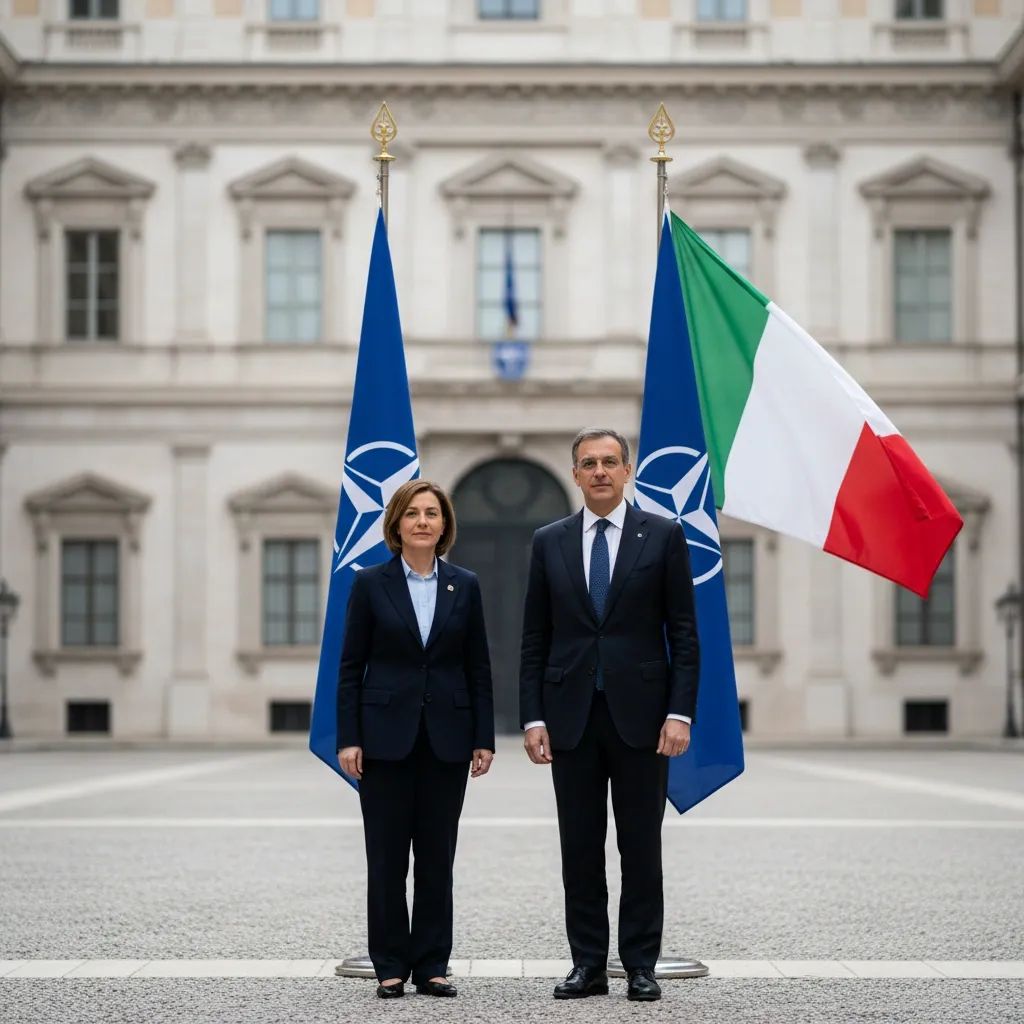
The Italy Ministry of Environment and Energy Security has formally committed the country to a global pledge aimed at tripling nuclear power capacity by 2050, marking a dramatic reversal in the nation's energy policy four decades after voters shut down the industry. Minister Gilberto Pichetto Fratin announced the decision at the Nuclear Energy Summit in Paris on March 10, joining 37 other nations to bring the total initiative signatories to 38—up from 25 countries that originally backed the commitment at COP28 in Dubai.
Why This Matters:
• Policy pivot: Italy joins Brazil, China, Belgium, and South Africa as the latest signatories, signaling renewed confidence in nuclear despite referendum bans dating to 1987 and 2011. Those referendums gave Italian voters direct control over nuclear policy following the Chernobyl and Fukushima disasters, making this reversal politically significant as it bypasses direct public consultation.
• Long-term horizon: First reactors unlikely before 2035; Italy targeting 8–16 GW of capacity by 2050 to meet 11–22% of electricity demand.
• Regulatory first: Parliament currently reviewing enabling legislation that prioritizes legal frameworks over immediate construction deals.
A Decades-Long Taboo Reversed
Italy's nuclear sector has been dormant since public votes effectively banned new plants following the Chernobyl disaster and the Fukushima crisis. The country once operated commercial reactors at Latina, Garigliano, and Trino starting in 1963, but all were decommissioned by the early 1990s. Today, over 32,000 cubic meters of radioactive waste sit in temporary storage sites scattered nationwide, a legacy that has kept the nuclear question alive even as political consensus remained elusive.
The October 2025 cabinet approval of a draft enabling law broke the stalemate. That proposal is now under examination by the joint Environment and Industrial Activities committees of the Chamber of Deputies, with formal hearings beginning on January 21, 2026. Experts, energy firms, and trade associations are testifying on everything from Small Modular Reactor (SMR) designs to waste-management protocols, reflecting the government's stated preference for establishing a "clear and credible regulatory framework" before committing to industrial contracts.
What This Means for Residents Right Now
For households and businesses, the critical reality is this: do not expect immediate impact on your electricity bills. Italy currently imports roughly 15% of its overall energy needs, with natural gas accounting for approximately 45% of electricity generation. The average Italian household pays around €150–180 monthly for electricity, vulnerable to volatile global gas prices that fluctuate weekly. Nuclear advocates argue that long-term baseload atomic generation could eventually stabilize grids, but that benefit remains 15+ years away.
The National Integrated Energy and Climate Plan (PNIEC) envisions nuclear contributing meaningfully only after 2040. In the interim, the government is banking on a diversified mix: expanded solar and wind capacity, energy-efficiency mandates, and strategic gas reserves. From a practical standpoint, residents will not see major infrastructure changes or construction sites before the mid-2030s. The timeline is deliberate: Parliament is reviewing legislation now, site selection would follow over the next 2–3 years, and licensing and construction would stretch into the 2030s.
The Technology Gamble
Italy's return to nuclear will not replicate the large-scale pressurized water reactors of the 1960s. Instead, policymakers are eyeing third-generation advanced SMRs and fourth-generation fast reactors cooled by molten lead, technologies that promise enhanced safety, modularity, and reduced waste profiles. In 2025, state-backed utility ENEL, industrial manufacturer Ansaldo Energia, and defense conglomerate Leonardo formed a joint venture called Nuclitalia to evaluate which reactor designs best suit Italy's geography, regulatory environment, and grid architecture.
SMRs, which can be factory-assembled and transported to sites, theoretically shorten construction schedules and lower upfront capital outlays. Yet no commercial SMR is currently generating power in Europe; the technology remains in demonstration phases in the United States, Canada, and China. Italy's bet is that by the mid-2030s, proven designs will be available for licensing—a timeline dependent on international research and development progress.
The Waste Dilemma
Reintroducing nuclear generation reopens Italy's most politically charged infrastructure debate: where to bury the waste. The state decommissioning agency Sogin has proposed a National Repository to be completed by 2039, a surface facility designed for low- and very-low-activity waste. A draft National Map of Suitable Areas (CNAI) lists 51 potential sites, but local resistance—the infamous "not in my backyard" effect—has stalled progress. If regional governments refuse to cooperate, the enabling law grants the cabinet power to impose a location via intergovernmental committee or presidential decree.
High- and medium-activity waste presents a tougher problem. Italy plans a temporary High-Activity Storage Center within the National Repository, but a permanent deep geological repository will not be ready before 2050. With existing waste volumes deemed too modest to justify a standalone Italian facility, officials are exploring international partnerships for shared disposal—a politically delicate proposition given that EU and IAEA conventions require each nation to manage its own waste unless bilateral agreements exist.
Complicating matters, Italy must repatriate over 235 metric tons of spent fuel currently stored in France and the United Kingdom under reprocessing contracts signed decades ago. Rome has paid roughly €1.2 billion since 2001 for interim storage abroad, and all material must return by 2025 under treaty obligations. Where to put it remains unresolved, underscoring the tension between ambitious nuclear expansion plans and the unfinished business of the old atomic age.
Parliamentary Scrutiny and Timeline
The draft enabling law defines four pillars: national programming, governance structures, strengthened safety oversight, and lifecycle regulation including waste. Minister Pichetto Fratin emphasized the deliberate sequencing—"first a clear regulatory framework, then industrial decisions"—a response to past criticisms that Italy rushed into nuclear projects without adequate safeguards or public consultation.
Hearings in the Chamber are expected to continue through spring, with a floor vote possible by summer. If enacted, the law would empower the government to issue detailed implementing decrees on reactor licensing, site approval, and environmental assessments. Opposition parties have signaled they will demand public referendums or regional veto rights, setting up potential constitutional battles over energy sovereignty versus local autonomy.
Global Context and Competitive Pressures
Italy's Paris commitment places it alongside economic heavyweights—China, the United States, France, and the United Kingdom—but also regional neighbors like Poland, the Czech Republic, and Romania, all racing to secure reactor supply contracts. French state champion EDF and South Korean firms Kepco are angling for European orders, while Westinghouse and GE Hitachi vie for SMR deals. Italy's late entry means it must navigate a crowded vendor marketplace, negotiate financing packages in a high-interest-rate environment, and compete for scarce engineering talent.
The tripling pledge originally backed by 25 countries at COP28 has expanded to 38 signatories. Analysts note that collective political will does not guarantee individual follow-through: financing gaps, public opposition, and technical delays have derailed nuclear projects across Europe in recent years. Italy's credibility will depend on whether it can translate ministerial declarations into concrete milestones—site selection, vendor contracts, and construction starts—within the next parliamentary term.
Why Nuclear Fits (and Doesn't) into Italy's Energy Future
Policymakers frame nuclear as essential for a "secure, decarbonized, and competitive energy mix" in an era of electrified transport, sprawling data centers, and AI-driven demand surges. The ministry's rhetoric emphasizes "technological neutrality," integrating nuclear alongside renewables rather than treating them as rivals. Yet the timeline mismatch is undeniable: solar and wind capacity can scale in 3–5 years, while nuclear requires 15–20 years from approval to power generation.
For residents, the strategic question is whether nuclear is the right investment of capital and political attention. Environmental groups argue Italy should prioritize grid storage, energy efficiency, and offshore wind—solutions deployable this decade to address today's rising energy costs. Industry associations counter that only nuclear can provide the round-the-clock, weather-independent power needed to replace coal and gas without sacrificing grid reliability during peak demand.
The debate will intensify as parliamentary committees review cost projections, waste scenarios, and safety protocols in the coming months. Italy's decision to rejoin the nuclear club is no longer theoretical—it is now a legislative process with real budgets, real sites, and real consequences for energy policy, climate targets, and the country's industrial future. For now, residents should understand this clearly: the decision taken today will shape energy availability and costs after 2040, not next year's utility bills.


