
Italy's highest institutions gathered in Rome on 9 May 2026 to mark the country's annual Day of Remembrance for Victims of Terrorism, a commemoration that has taken on renewed urgency as families of the dead continue to demand answers nearly five decades after the bloodiest chapters of the nation's postwar history.
Why This Matters
• New declassifications: The Italy Chamber of Deputies released 35 more documents—over 10,100 pages—in a continuous transparency effort that aims to clarify the 1978 kidnapping of statesman Aldo Moro.
• Reopened inquiries: The Bologna Prosecutor's Office has restarted investigations into the Uno Bianca gang after a 2026 television interview in which convicted killer Roberto Savi hinted at secret-service cover-ups.
• Unfinished justice: Despite hundreds of convictions, many massacres from the Years of Lead remain partially resolved, with families pressing for full disclosure of state complicity and external conspirators.
Mattarella Leads Sombre Tribute at Via Caetani
President Sergio Mattarella opened the day's observances by laying a laurel wreath in Via Caetani, the narrow street in central Rome where Christian Democrat leader Aldo Moro was found shot dead in the boot of a red Renault 4 on 9 May 1978—precisely 48 years before this 2026 commemoration. Flanked by Senate President Ignazio La Russa and Chamber President Lorenzo Fontana, Mattarella stood in silence at the spot, a two-minute walk from the former headquarters of the Italian Communist Party, where the Red Brigades had dumped Moro's body to deliver a symbolic blow to the heart of the republic.
The quiet ceremony drew a cluster of onlookers and photographers but was deliberately low-key, a contrast to the formal televised event that followed at Palazzo Madama. State broadcaster RAI carried the Senate gathering live via its parliamentary channel, underscoring the high civic and institutional significance Italy attaches to the remembrance. Also present were Constitutional Court President Giovanni Amoroso, Deputy Prime Minister and Foreign Minister Antonio Tajani, Interior Minister Matteo Piantedosi, and Education Minister Giuseppe Valditara.
"We Will Never Surrender to the Vile Blackmail of Terrorism"
High-school students from Liceo Manzoni in Latina opened the Senate ceremony by singing the national anthem, their youthful voices echoing through the chamber before relatives of the slain took the lectern to share their grief and their grievances. Massimo Coco, son of Francesco Coco—the Genoa appeals prosecutor murdered by the Brigades in 1976—delivered one of the sharpest addresses. "Demanding truth is a necessary obstinacy, and we will never give up. Vengeance does not belong to us, but reclaiming justice does," he said to sustained applause.
La Russa, speaking as the Senate's presiding officer, described memory as "not merely an album of sorrow but the most precious shield guarding the rights and freedoms at the core of our democracy." He acknowledged that the geopolitical landscape has evolved beyond the Cold War bifurcations of the 1970s, yet cautioned that danger is always lurking, citing the ongoing conflict in the Middle East and new surges of intolerance that warrant vigilance. "Italy has never bowed and will not bow to the vile blackmail of violence and terrorism," La Russa declared, calling national cohesion the antidote to any attempt to "transform piazzas into trenches of intolerance."
Fontana echoed the warning. "Recalling some of the darkest pages of our past is necessary to forge consciences capable of resisting all forms of fanaticism," the Chamber president said, insisting that liberty and dignity "are never guaranteed—they must be guarded and preserved constantly."
Why Families Say the Fight for Truth Is Far From Over
Among the most poignant testimonies was that of Pierpaolo Deianna, whose father Antioco died alongside Prosecutor Coco as part of his security detail. But the afternoon's most contentious moment belonged to Alberto Capolungo, son of Pietro Capolungo, a former carabiniere killed at a Bologna gun shop in 1991 by the Uno Bianca gang—a rogue band of police officers responsible for 24 murders across Emilia-Romagna and Le Marche between 1987 and 1994.
"Investigations are still under way on this terror, yet the killers continue to mislead them—even going on television to tell outright lies and half-truths," Capolungo told the assembly, referring to a recent prime-time interview on the Belve Crime show in which gang leader Roberto Savi suggested that certain killings, including Pietro Capolungo's, may have been commissioned by intelligence services. Savi claimed Capolungo had been involved in covert operations, an allegation the victim's family categorically rejects as a deliberate smokescreen.
In response to the broadcast, the Bologna Prosecutor's Office announced it would summon Savi for questioning and has formally reopened the inquiry into whether a "third tier" of accomplices shielded the gang during its seven-year rampage. Lawyers for victims' families filed a complaint in 2023 arguing that critical evidence of external complicity had been overlooked; Savi's televised claims provided fresh impetus for judicial review.
What This Means for Residents: Transparency Meets Political Will
For Italians living through an era of heightened concern over disinformation, extremism, and institutional accountability, the 9 May 2026 commemoration functions as both a historical reckoning and a real-time stress test of the state's commitment to transparency. The Italy Chamber of Deputies has made significant strides: in May 2026 it published 35 newly declassified dossiers totaling 10,100 pages from the Ministry of the Interior, adding to 18,600 documents already released earlier in 2026. These files pertain to the parliamentary commission that examined Moro's abduction, and scholars note they expand public access to materials that for decades were shielded by state-secrecy statutes.
Yet the documents also highlight how much remains in shadow. A book published in April—"Storia segreta del caso Moro" by journalist Stefano Romei—argues for a "radical re-reading" that situates the 55-day kidnapping within Cold War espionage dynamics, exploring links between the Red Brigades and West Germany's Rote Armee Fraktion, as well as mysterious figures like Romanian defector Ion Pacepa. Meanwhile, a Turin investigation into a separate Years of Lead case has surfaced intercepts suggesting an "extra man" took part in the Via Fani ambush that killed Moro's five-member escort on 16 March 1978—a name never previously mentioned in any trial record.
Taken together, these threads illustrate why families like the Cocos and the Capolungos persist. Between 1969 and 1982, terrorist violence claimed roughly 350 lives and wounded 1,100 more. Many prosecutions—especially those targeting far-right bombers behind the Piazza Fontana and Piazza della Loggia massacres—ended in acquittals or statute-barred dismissals after protracted legal battles marred by proven diversions orchestrated by rogue intelligence officers. The judicial truth, as historians put it, remains "partial, confused, and sometimes contradictory."
Political Leaders Sound a Common Note—With Divergent Emphases
Prime Minister Giorgia Meloni posted a social-media message that broadened the memorial lens beyond Moro, invoking Peppino Impastato, the Sicilian activist murdered by Cosa Nostra on the same date in 1978 after exposing mafia networks, and magistrate Rosario Livatino, gunned down in 1990. "Not forgetting is a duty—to honour those who sacrificed their lives for freedom, out of respect for our history, and to defend democracy every day," Meloni wrote.
Tajani, speaking from the Senate floor, framed the victims' sacrifice as "a powerful warning against all extremism and a call to uphold the value of freedom, democratic institutions, and national unity." Defence Minister Guido Crosetto stressed that the day honors "those who paid with their lives for fidelity to the Institutions and to democracy."
The convergence around memory does not erase political debate over how to interpret the Years of Lead—right-leaning politicians often emphasise left-wing terror, while centre-left voices highlight state collusion with neo-fascist cells—but it does reflect a shared institutional consensus that the struggle for full disclosure must continue.
The Long Shadow of the Years of Lead
Italy instituted the Day of Remembrance for Victims of Terrorism and Massacres by Law 56 of 4 May 2007, anchoring it to 9 May to mark the discovery of Moro's corpse. The statute mandates annual commemorations that rotate between the Chamber and Senate, and it tasks schools with promoting awareness among younger Italians, many of whom know little about the conflict that shaped their parents' generation.
Yet surveys and educational assessments reveal that confusion persists: students often conflate the origins and motives of neo-fascist bombers with those of Marxist insurgents, and the role of deviated state apparatuses—secret units that planted false leads or protected informants—remains under-explored in textbooks. Advocacy groups argue that without a comprehensive national curriculum on the Years of Lead, memory risks becoming fragmented along partisan lines.
For expatriates and foreign residents in Italy, the commemoration offers a window into why Italian public discourse occasionally flares over judicial independence, media responsibility, and the limits of state secrecy. The unresolved cases are not academic footnotes; they touch foundational questions of rule of law and democratic trust that continue to reverberate in contemporary debates over intelligence oversight and historical revisionism.
What Comes Next
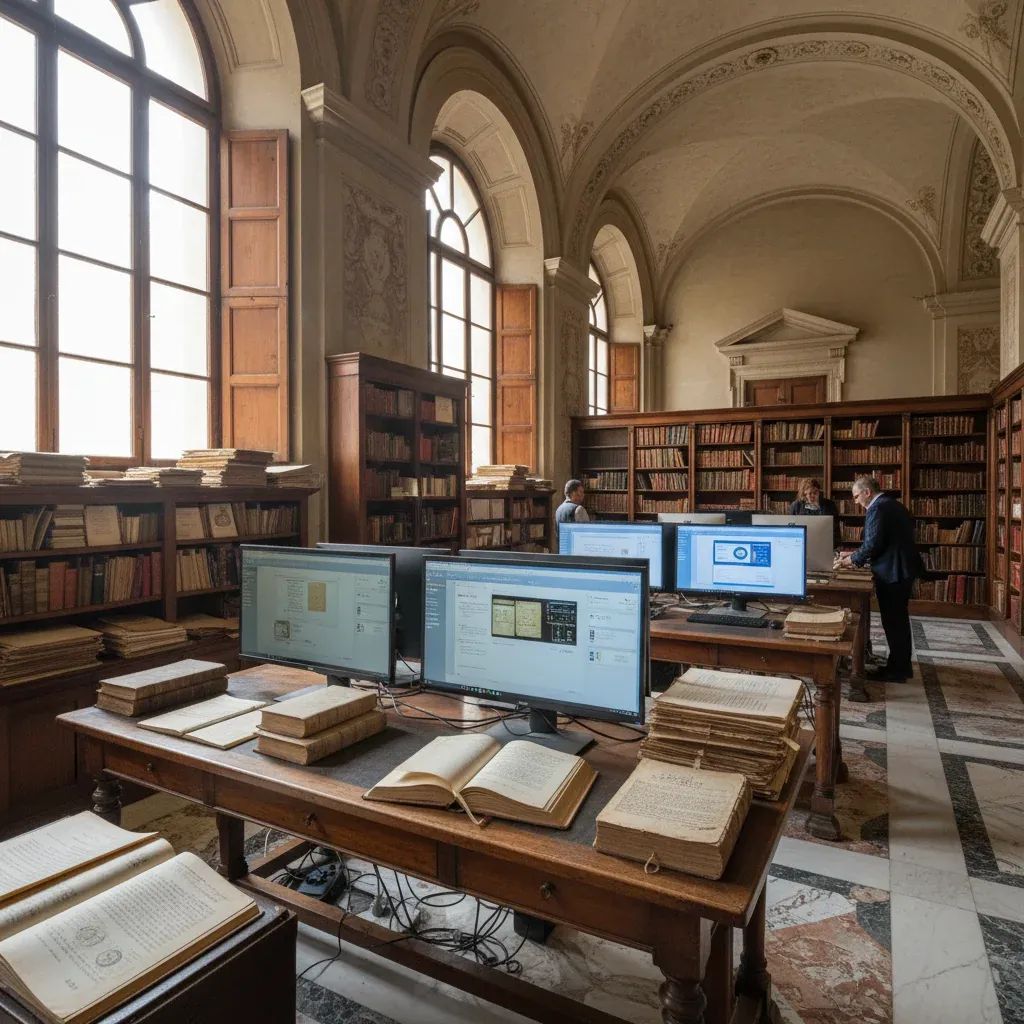
The Bologna Prosecutor's Office has indicated it will question Savi in the coming weeks, and legal experts anticipate that any new findings could prompt supplementary charges if previously unknown accomplices are identified. In parallel, the Chamber presidency has committed to releasing additional tranches of Moro-related documents throughout 2026, part of a multi-year digitization and declassification initiative.
Whether these efforts will deliver the "full truth" families seek remains uncertain. What is clear is that Italy's institutions, under presidential leadership and cross-party support, are signalling that the search for accountability is an ongoing obligation—not a closed chapter. As La Russa put it from the Senate rostrum, "Memory is a shield," and in a time of renewed global tensions and domestic polarisation, that shield must be polished constantly.


