
Italy's President Sergio Mattarella laid a wreath this morning in Rome's Via Caetani, marking the 48th anniversary of the discovery of Christian Democrat leader Aldo Moro's body in the trunk of a red Renault 4. Moro, who served as Prime Minister five times and was a key architect of Italy's post-war political stability, was kidnapped and murdered by the left-wing terrorist group Red Brigades. The somber ceremony, attended by the heads of both parliamentary chambers and senior government officials, continues a decades-long tradition that has evolved from private mourning into a national day of reckoning with Italy's most significant political violence of the modern era.
Why This Matters:
• Via Caetani remains at the center of Italy's unresolved questions about state intelligence, foreign interference, and the Red Brigades kidnapping that paralyzed the nation for 55 days in 1978.
• Newly declassified documents totaling more than 10,100 pages were released by the Interior Ministry in recent weeks, adding to 18,600 files already made public since March.
• The commemoration coincides with Italy's official Day of Memory for victims of terrorism, established by Law 56/2007 and observed annually on May 9.
• Transparency efforts now include digital archives of millions of trial pages, accessible to researchers and citizens through the Culture Ministry's platform.
The Ritual of Remembrance
The Italian Head of State was joined by Senate President Ignazio La Russa and Chamber of Deputies President Lorenzo Fontana for the floral tribute beneath the memorial plaque. Interior Minister Matteo Piantedosi and Rome Mayor Roberto Gualtieri also attended the brief ceremony, which takes place at the exact spot where police discovered Moro's corpse on May 9, 1978, after his 55-day captivity by the Red Brigades terrorist organization.
A delegation from the Democratic Party arrived separately at 10:30 AM, reflecting the political lineage that traces back to Moro's Christian Democracy. Across Italy, parallel ceremonies unfolded: Bari placed laurel wreaths in Piazza Moro and at the plaque on Palazzo di Città, while Novate Milanese honored Moro and his five-member security detail—all killed in the Via Fani ambush—at a local monument.
The Italian Senate hosted a separate institutional ceremony at Palazzo Madama, where Mattarella participated in the formal observance of the national Day of Memory for terrorism victims. What began as isolated commemorations has developed into a structured national observance, anchoring May 9 as a fixed point in Italy's civic calendar.
For residents in Italy: Public ceremonies at Via Caetani and throughout major cities are open to all citizens and visitors who wish to pay respects. The Culture Ministry's digitized archives are freely accessible online for those interested in researching the case directly. Educational initiatives promoted by the Ministry of Education offer opportunities for schools and civic organizations to engage with this period of Italian history.
What the Documents Reveal—and Conceal
The recent wave of declassifications, announced by Chamber President Fontana in May, represents the most significant transparency push since the XVII Legislature's parliamentary inquiry commission concluded in 2017. The Interior Ministry approved the release of 35 new document batches comprising roughly 10,100 pages, supplementing 18,600 files already digitized between March and May.
These materials join an expanding archive that includes 579 pages of judicially settled cases and submissions from various state agencies that have dropped secrecy classifications. Since 2014, the State Central Archives have received 57 dossiers containing approximately 400 acts and numerous attachments from the Italian intelligence services, covering events from 1978 through 1995.
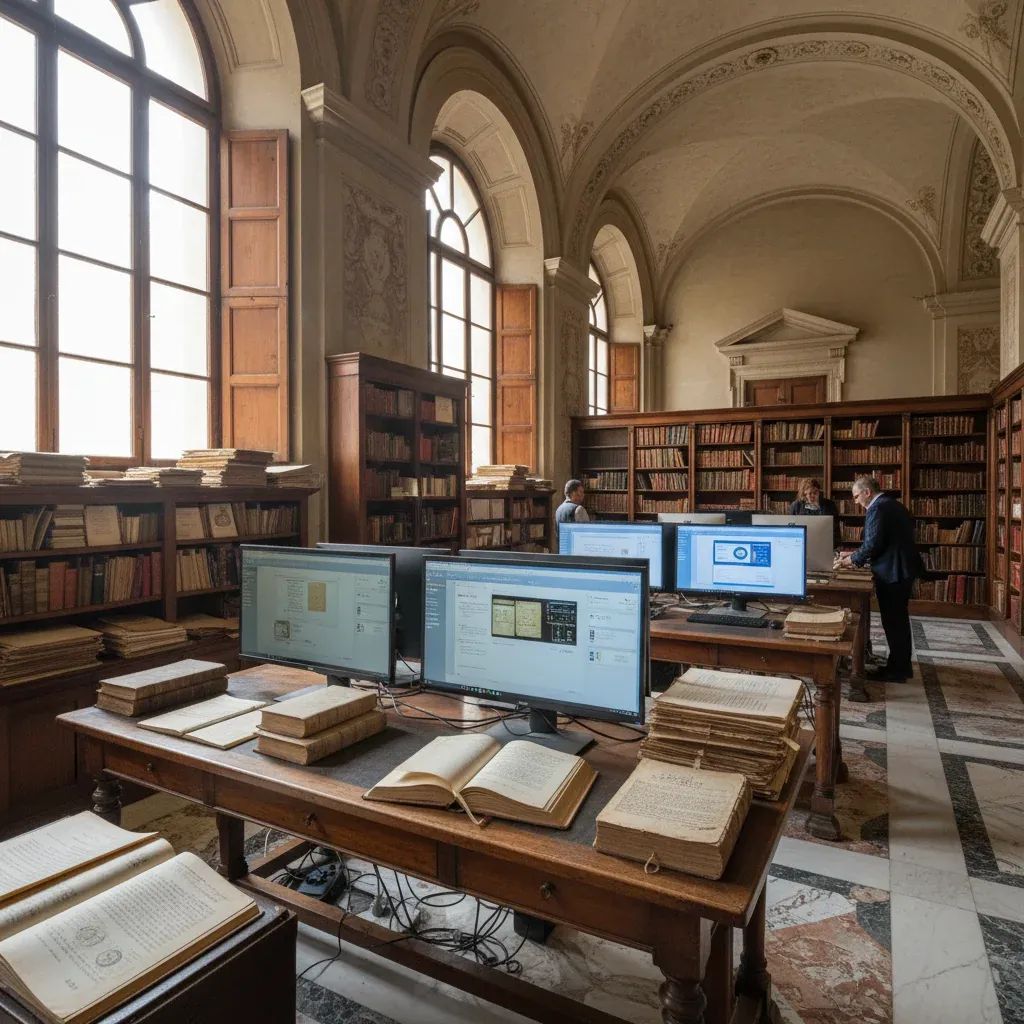
Yet even this volume of declassified material has not closed the case. The Ministry of Culture's General Directorate of Archives is digitizing millions of trial pages from the Rome Court of Assizes, making them available via the "Network of Archives for Not Forgetting" platform. The digitization project, which employed inmates from Rome's Rebibbia prison in social reintegration programs, should be complete by the end of 2025.
Persistent Shadows Over Via Fani and Via Caetani
Despite four decades of trials and parliamentary inquiries, core elements remain unresolved. The Via Fani ambush on March 16, 1978, which killed Moro's five bodyguards, still raises questions about the exact number of Red Brigades shooters and whether "external elements" participated. Investigators have noted a disproportionate number of rounds fired from a single weapon relative to the total count.
More significantly, a SISMI colonel (Italy's military intelligence service) was documented as present in Via Fani during the assault—an anomaly that has never been satisfactorily explained and fuels ongoing questions about state foreknowledge. The two briefcases Moro carried daily have never been recovered, and the original of his prison memoir remains missing; only a photocopy surfaced in Via Montenevoso in 1990, leaving scholars uncertain whether it represents the complete text.
Forensic analysis of bitumen residue on Moro's shoes and sand in his trousers, combined with muscle tone observed during autopsy, suggests he was not confined solely to the cramped Via Montalcini hideout for all 55 days. Where else was he held? The RIS forensic lab in Rome concluded Moro may have been shot while seated on a chair, possibly outside the vehicle, and that death was not instantaneous. Two weapons were used: a Skorpion and a Walther.
Theories and Documented Questions
Among the various theories that continue to circulate, a book released in April by journalist Stefano Romei, Storia segreta del caso Moro (Secret History of the Moro Case), argues that the kidnapping involved coordination with West Germany's RAF terrorists and Palestinian groups, linked to the Iraqi embassy in what he terms "Operation Fritz." This remains one of several interpretations in circulation, though documented evidence supporting such coordination has not yet been publicly confirmed.
Separately, a podcast investigation by Federico Zatti in March proposed that Moro's first prison may have been the Loyola University facility in Rome, alleging connections between Red Brigades operatives and American Jesuits. These interpretations, while reflecting enduring public suspicion, represent ongoing investigative work rather than established fact.
The Masonic lodge P2, led by Licio Gelli, remains part of the documented record. Members infiltrated state institutions, and their potential role—if any—in facilitating or exploiting Moro's abduction continues to be examined. The false communiqué number 7, which falsely claimed Moro's body had been dumped in Lake Duchessa, remains a documented example of deliberate disinformation that diverted police resources during the critical early weeks.
What This Means for Italy's Political Memory
For residents and observers of Italian public life, the Moro anniversary is more than historical ritual. It is an annual engagement with transparency and accountability. The continued declassification—overseen by the Italian Chamber of Deputies and enabled by ministerial consent—demonstrates ongoing efforts to provide public access to documentary evidence, even as questions remain.
The 2007 law establishing the Day of Memory transformed individual grief into collective reflection. The Ministry of Education now promotes educational programs in schools, aiming to teach younger Italians about the Years of Lead (Anni di Piombo), Italy's period of political terrorism in the 1970s-80s, not through formal ritual but through substantive civic engagement. The goal is to examine Moro's intellectual legacy: his advocacy for dialogue politics, constitutional balance, and the so-called "compromesso storico" (historic compromise)—his vision for political dialogue between Christian Democrats and Communists, which represented a significant shift in Cold War-era Italian politics.
That political project, which challenged Cold War alignments, remains at the center of questions about potential foreign involvement in Moro's fate. Documents from NATO archives and references to alleged international dimensions continue to circulate in scholarship, but definitive proof of external orchestration has yet to emerge in the declassified materials.
The Road Ahead for Truth-Seeking
The Chamber of Deputies maintains an online portal where newly declassified files are continuously uploaded. These materials are available for examination by researchers, historians, and citizens interested in this period of Italian history.
As additional declassified documents enter the public domain, scholars and researchers continue their work. Yet established observers note that declassification does not automatically produce comprehensive clarity. Many sensitive files remain redacted or withheld under ongoing security classifications, and key witnesses—many now deceased—took their accounts with them.
For now, Via Caetani serves as both memorial and reminder: a narrow Roman street that holds the memory of a significant political figure and represents Italy's ongoing effort to confront and comprehend a critical chapter of its recent past.


