
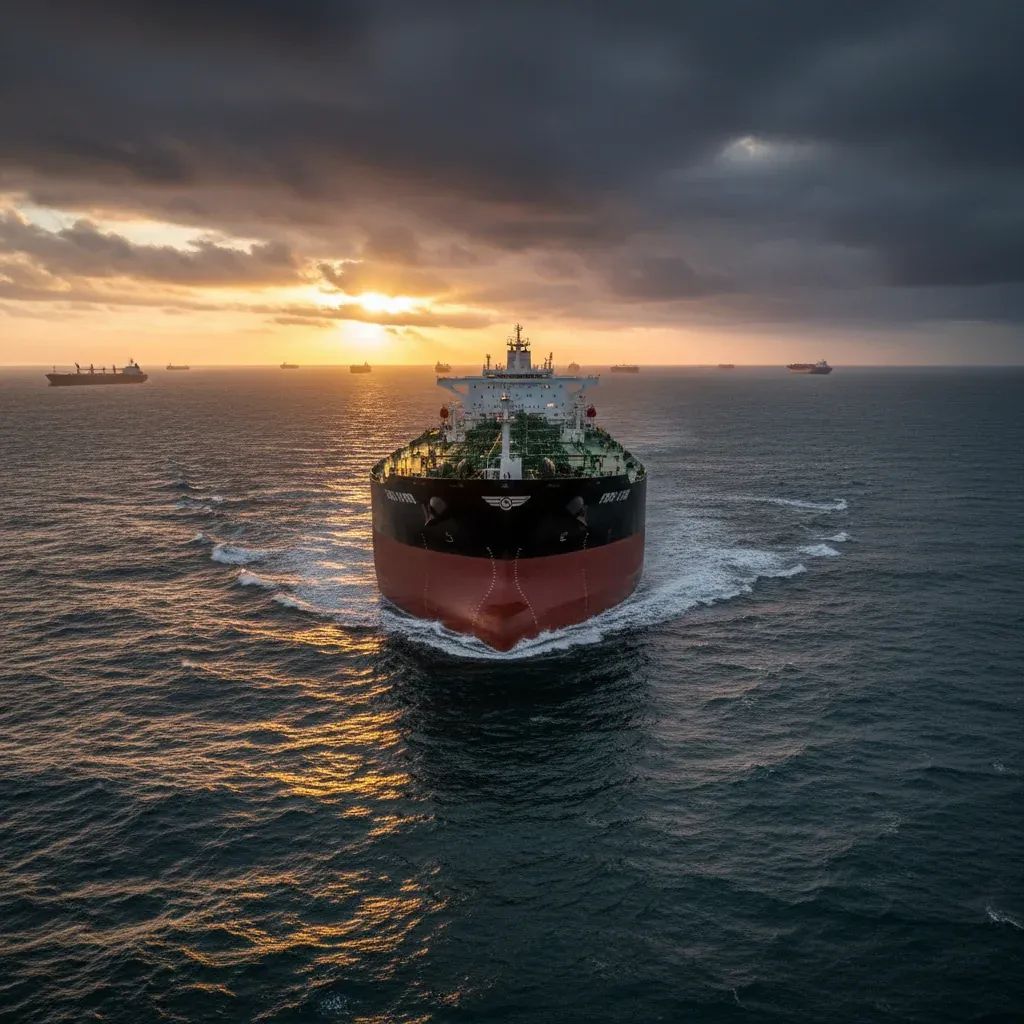
The Italian Navy may reposition vessels closer to the Persian Gulf in the coming weeks, but a full-scale deployment to the Strait of Hormuz remains contingent on a ceasefire, legal framework, and parliamentary approval, according to Defense Minister Guido Crosetto. The move reflects mounting pressure from France and the United Kingdom on European allies to ready naval assets amid the ongoing Hormuz Crisis of 2026, which has strangled global energy flows and left nearly 1,000 cargo ships stranded in the Gulf.
Why This Matters
• Energy security: Hormuz normally channels 37% of global seaborne crude oil and 28% of worldwide liquefied petroleum gas; the current blockade has slashed daily transits by 89%, triggering price spikes that will hit Italian households and businesses.
• Supply-chain ripples: Some $23.7B worth of goods are immobilized, forcing European importers—including Italy—to extend lead times and absorb sharply higher freight and insurance costs.
• Parliamentary timeline: The Meloni government plans to brief Parliament starting Wednesday, meaning any formal mission authorization could take several more weeks.
What Triggered the Standstill
A February 2026 confrontation involving the United States, Israel, and Iran escalated into Tehran's decision to mine and blockade the Strait of Hormuz, the 39-kilometer-wide channel between Oman and Iran. Commercial traffic ground to a near halt, leaving crude tankers and LNG carriers anchored outside the Gulf entrance. Insurers immediately tripled war-risk premiums for vessels operating in the Persian Gulf, while spot oil futures surged to multi-year highs. The European Union activated diplomatic channels for a negotiated reopening, and Italy's Chief of Naval Staff, Admiral Giuseppe Berutti Bergotto, began drafting a plan to contribute up to four warships—two mine-countermeasure vessels, a frigate, and a logistics support ship—should a ceasefire and multilateral framework emerge.
Legal and Political Hurdles
Crosetto drew a sharp distinction between positioning vessels "closer to the theater"—potentially as far forward as Djibouti on the Horn of Africa—and launching a full Hormuz mission. The former could fold into Italy's existing Aspides operation in the Red Sea and Gulf of Aden, which the Italian Parliament extended through 2026. The latter would require a new parliamentary resolution, consistent with the 2024 reform to Italy's framework law on international missions (Law 168/2024). That reform streamlined Cabinet approval of high-readiness forces but preserved Parliament's right to authorize deployments, especially operations that could place Italian personnel in harm's way.
Prime Minister Giorgia Meloni has said repeatedly that Rome will not join hostilities in the Middle East and that any Italian contribution must rest on a credible truce and UN or NATO legal cover. Article 11 of the Italian Constitution forbids war as an instrument of aggression, a constraint the government cites when ruling out offensive action. "We are looking at contingency planning, not a war mission," a defense official told Italian media last week.
The Four-Ship Package and Four-Week Transit
Admiral Berutti Bergotto's proposal centers on Italy's eight Gaeta-class mine-hunters, assets rated highly by NATO for their ability to detect, identify, and neutralize mines in shallow coastal waters. Two of these vessels would sail from La Spezia, accompanied by a FREMM-class frigate for escort and a replenishment oiler. At a cruising speed of 15 knots, the task group would need approximately four weeks to reach the Persian Gulf, transiting the Suez Canal—if traffic reopens sufficiently—or detouring around the Cape of Good Hope. The latter route adds 3,500 nautical miles and roughly 10 days to any mission profile.
France and the United Kingdom have already positioned frigates and mine-countermeasure vessels in the Arabian Sea and are pressing Belgium, the Netherlands, and Italy to follow suit. London and Paris argue that a visible European naval presence will give Tehran an incentive to accept international oversight of the strait's reopening. Operational command would likely fall under an ad-hoc coalition rather than NATO's formal structures, sidestepping the need for consensus from all 32 Alliance members.
Economic Fallout Spreads to Italy
Data released by Assoporti and SRM, Intesa Sanpaolo's maritime research arm, show the knock-on effects are already severe. Daily transits through Hormuz have collapsed from more than 50 large vessels per day to fewer than six. Meanwhile, the Suez Canal continues to register traffic 48% below 2022 levels, a legacy of Houthi attacks on Red Sea shipping that began in late 2023. Italian ports—Genoa, Trieste, Gioia Tauro—are seeing extended container dwell times as shippers reroute Asia–Europe cargo around the Cape of Good Hope, a detour that lengthens voyages by up to 120% and adds 10 to 20 days to delivery schedules.
Freight rates on the Shanghai–Genoa lane have more than doubled since January, with carriers passing fuel and insurance surcharges directly to importers. Each additional day at sea costs a large container ship between €100,000 and €150,000 in bunker fuel alone, and the longer routes trigger higher liabilities under the EU's Emissions Trading System, which began covering maritime transport in January 2024. Italian manufacturing firms that rely on just-in-time delivery of semiconductors, machinery components, and petrochemicals report inventory shortfalls and production delays. Roberto Petri, president of Assoporti, noted that Italian ports have remained "solid" despite the turbulence, but acknowledged that volatility in global chokepoints directly affects competitiveness.
Impact on Residents and Businesses
For people living in Italy, the Hormuz standoff translates into three immediate pressures:
Fuel and energy bills: Italy imports roughly 90% of its crude oil and natural gas. Brent crude has climbed above $100 per barrel—levels not seen since the energy crisis of 2022—driving up pump prices for diesel and gasoline. Electricity generators that burn natural gas are passing costs to retail suppliers, meaning household utility bills could rise by double-digit percentages over the next quarter.
Inflation on consumer goods: Clothing, electronics, and durable goods sourced from Asia face longer lead times and higher logistics costs, which retailers typically embed in shelf prices. Supermarket chains have warned that non-perishable imports—rice, canned fish, cooking oils—will see price adjustments by mid-summer.
Job security in logistics and manufacturing: Ports, freight forwarders, and manufacturers in export-dependent regions—Lombardy, Veneto, Emilia-Romagna—are bracing for order cancellations if European buyers shift to local suppliers or postpone purchases. Trade unions have called on the government to extend wage-support schemes should layoffs accelerate.
Alternative Routes and Their Limits
Shipping lines have responded by blanking sailings—canceling scheduled departures—to manage capacity and stabilize spot rates. Major alliances such as Gemini Cooperation (Maersk and Hapag-Lloyd) and Premier Alliance (MSC, Yang Ming, HMM, and Ocean Network Express) have redeployed vessels to the Cape route, but port congestion in southern Africa and the Mediterranean has worsened. Cape Town and Durban lack the bunkering and repair infrastructure to handle the sudden influx, causing bottlenecks.
Some analysts have floated the Northern Sea Route across Russia's Arctic coast as an alternative, but the passage remains open only from July to October, requires specialized ice-class vessels, and depends on Russian state cooperation—a geopolitical non-starter for most European carriers. In practice, the Cape of Good Hope remains the default detour, with all its attendant costs.
What Comes Next
Minister Crosetto will brief the Chamber of Deputies and Senate defense committees starting Wednesday, outlining the scenarios the Joint Chiefs of Staff have prepared. Djibouti, where Italy maintains a small logistics base alongside French and U.S. forces, is the most frequently mentioned staging area. Vessels forward-deployed there could respond within a week to a ceasefire announcement, compared to the month-long transit from La Spezia.
Whether Parliament greenlights a formal Hormuz mission hinges on three variables: evidence of a durable ceasefire, agreement on a multilateral legal mandate—preferably under UN Security Council auspices—and assurance that Italian mine-hunters will operate in permissive rather than contested waters. Opposition lawmakers have signaled they will scrutinize the cost—estimated at several million euros per month—and demand clarity on rules of engagement. The government has set no firm deadline for a vote, but defense planners are working toward a late-May or early-June readiness window should diplomacy produce an opening.
For now, Italian naval officers are reviewing charts, updating mine-warfare protocols, and watching oil futures. The Amerigo Vespucci, Italy's historic sail-training ship, departed Genoa on 9 May for a goodwill tour of North America—an event Crosetto attended with a public call for peace at Hormuz. Behind the ceremonial send-off, the navy's operational arm is quietly preparing for a mission that, if ordered, will test Italy's ability to project power in one of the world's most volatile waterways.


