
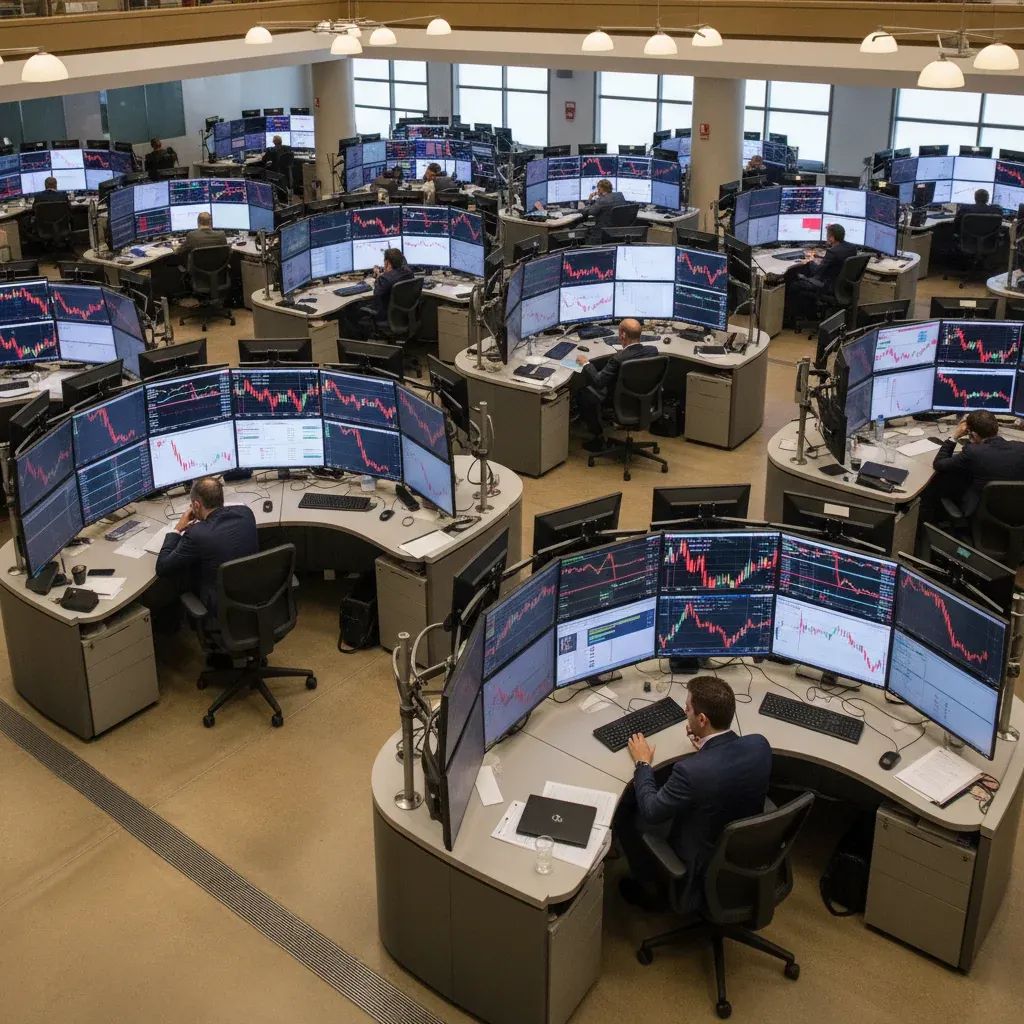
European stock markets have surged sharply after U.S. President Donald Trump announced on March 9 that the Middle East war is "nearly finished," triggering a dramatic collapse in energy prices that offers immediate relief for households and businesses across Italy and the broader continent.
Why This Matters
• Energy costs down: Oil prices plunged by roughly 9% and natural gas by 14%, translating to potential relief on fuel and heating bills.
• Market rally: Italy's stock exchange and other European bourses posted gains exceeding 2%, led by banks, technology, and utilities.
• Inflation watch: Lower energy prices could ease pressure on the European Central Bank (ECB) to maintain high interest rates, though analysts remain cautious about durability.
A Sudden Reversal in Energy Markets
On March 10, the Amsterdam TTF benchmark for natural gas dropped 14% to €48.67 per megawatt-hour, while Brent crude fell 9% to $90.14 per barrel and West Texas Intermediate (WTI) declined 8.6% to $86.62. The moves came after Trump declared that the conflict was "almost over" and would conclude "very soon."
The statement marked a sharp tonal shift from the previous week, when energy prices had spiked amid fears of prolonged disruptions. Trump's remarks also included references to potential sanctions adjustments to boost supply and lower prices.
Europe's Stock Markets Snap Back
Equity markets across the continent responded with enthusiasm. The pan-European Stoxx 600 index gained 2.3%, while Madrid's IBEX 35 surged 3.2%, Frankfurt's DAX climbed 2.6%, Paris's CAC 40 rose 2%, and London's FTSE 100 advanced 1.8%. Italy's FTSE MIB also posted solid gains, reflecting a broader appetite for risk as energy-related inflation fears momentarily receded.
Banking stocks led the charge with a 4% rally, followed by insurers at 2.4% and technology companies at 3.2%. The luxury goods sector, a bellwether for European consumer confidence, added 2.7%. Automakers climbed 3%, buoyed by earnings from Volkswagen (up 3.7%) and announcements from Renault (up 2.1%).
Utilities, often sensitive to natural gas pricing, gained 2.1% as the sharp drop in gas futures eased cost pressures. The only notable laggard was the energy sector, which fell 1.9% as oil majors confronted the prospect of lower crude prices eroding margins.
What This Means for Italian Residents
For those living in Italy, the immediate implications of cheaper oil and gas include potential downward pressure on household energy bills, particularly for natural gas used in heating and cooking. Gasoline and diesel prices at the pump are also likely to decline in the coming weeks.
Industrial competitiveness could benefit as well. Italy's energy-intensive industries—including ceramics, glass, paper, and steel—have faced cost pressures during the recent conflict. Lower energy prices would reduce input costs for these sectors.
On the inflation front, lower energy prices could moderate overall inflation, potentially giving the ECB more flexibility in its monetary policy decisions. This could have implications for mortgage rates and borrowing costs for businesses.
However, the picture remains uncertain. The situation depends on whether energy prices stabilize or whether geopolitical developments trigger further volatility.
Bond Markets and Monetary Policy Implications
Italian government bonds rallied alongside equities. The spread between 10-year Italian BTPs and German Bunds narrowed, reflecting reduced concerns about sustained inflation pressures.
Analysts noted that energy price movements have significantly influenced market expectations for the ECB's policy direction. If energy prices remain subdued, the central bank may have more flexibility in supporting economic growth through monetary policy.
Asian Markets Set the Tone
The rally in Europe followed strong gains in Asia, where investors had already responded to Trump's announcement. Tokyo's Nikkei 225 jumped 2.88%, and Seoul's KOSPI soared 5.3%. Hong Kong's Hang Seng rose 2%, while Shanghai and Shenzhen posted gains of 0.65% and 1.8%, respectively.
The synchronized global response underscored the extent to which energy volatility has dominated market sentiment in recent weeks.
Geopolitical Uncertainty Remains
Despite the market gains, uncertainty persists about the durability of the ceasefire claims. The situation in the Middle East remains fluid, and any escalation could trigger renewed energy price volatility.
The Road Ahead
For now, the market response reflects cautious optimism about near-term energy relief. Italian consumers and businesses may experience relief from lower energy costs, though the sustainability of these price levels depends on developments in the Middle East.
The ECB's next policy decisions will be closely watched for signals on how the central bank interprets the energy price shift and its implications for inflation and monetary policy.
Market participants view the current situation with caution, recognizing that Europe's vulnerability to energy shocks remains a significant factor. Italy, with its limited domestic energy production, faces continued exposure to external energy price dynamics.


