
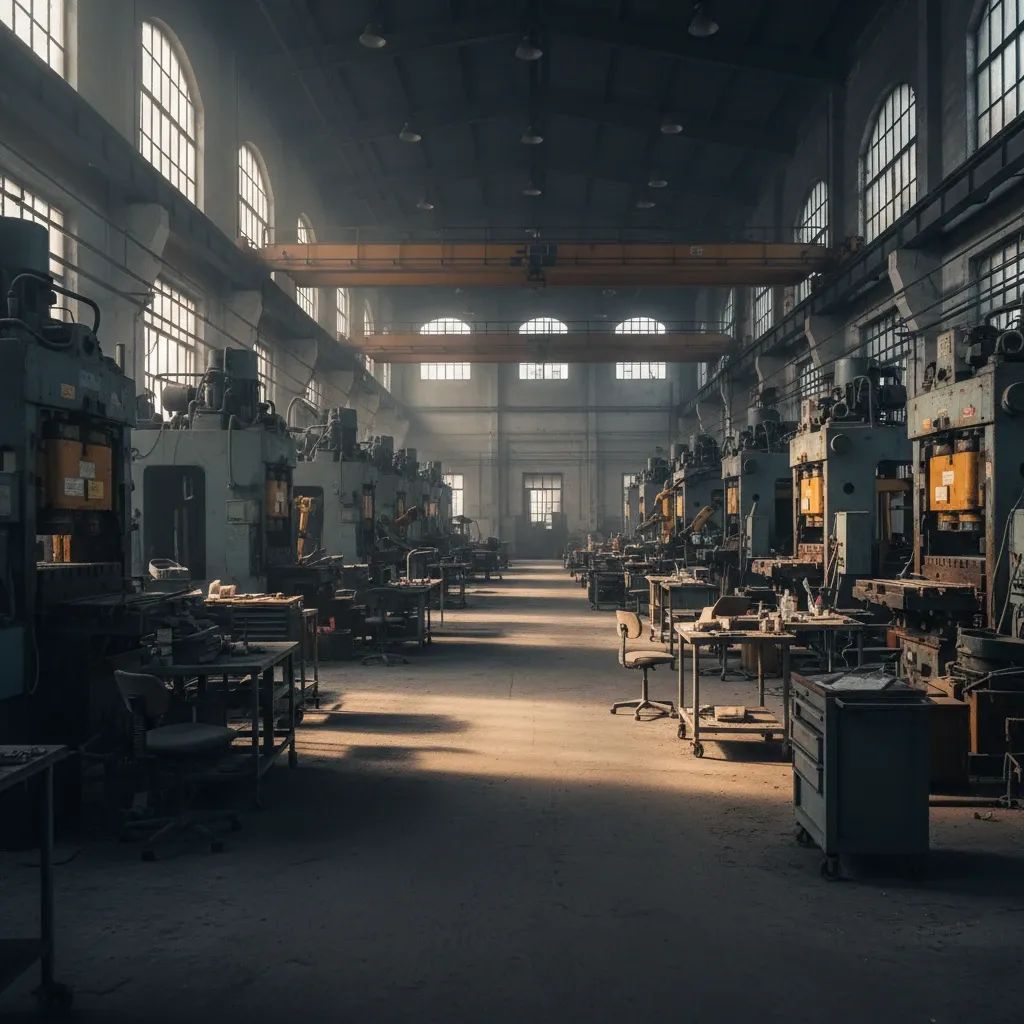
The Sweden-based appliance giant Electrolux has triggered a fierce backlash in Italy after unveiling plans to slash 1,700 jobs—nearly 40% of its Italian workforce—and shutter the Cerreto d'Esi plant in the Marche region, relocating production to Poland. Workers walked out of the facility in anger, local mayors vowed to rally regional governments, and Italy's Minister of Business and Made in Italy, Adolfo Urso, has scheduled an emergency meeting on May 25 to explore remedies.
Why This Matters:
• 170 workers in Cerreto d'Esi face immediate unemployment, many within a few years of retirement and with zero alternative employers nearby.
• Five Italian sites—including Porcia, Susegana, Forlì, and Solaro—will see cuts, marking the latest collapse in Italy's once-thriving appliance manufacturing sector.
• The May 25 ministerial summit will test whether Rome can deploy industrial-crisis tools—retraining funds, incentivized exits, or reindustrialization plans—before layoffs take effect.
Cerreto d'Esi: Two Weeks from Praise to Closure Notice
Emotions ran high outside the Cerreto factory on the morning after the announcement. Marco Sassi, a 26-year veteran and union delegate for Fim Cisl, told reporters the plant had just been lauded for hitting all its performance targets and triggering bonus payments. "Passing from that result to closure in two weeks is shameful, absolutely shameful," he said, surrounded by colleagues holding strike banners.
The Cerreto site specializes in high-end kitchen hoods—an Italian engineering niche developed over decades. Electrolux confirmed the line will move to Poland, citing "structurally high costs" and "weak demand across Europe." Yet union officials at the scene pointed out the factory has remained profitable by internal metrics, with Pierpaolo Pullini of Fiom Cgil calling the plan "industrial desertification." He held a placard reading "Electro…shock!" to underscore the sudden betrayal workers feel. "This territory owns that know-how. Taking it to Poland or redirecting resources to North America would be a disgrace," Pullini said, urging the Italy Cabinet to deploy national industrial-policy levers to block the transfer.
Among the 170 employees are married couples, both spouses on the Electrolux payroll, who now face complete household income loss. Elisabetta Cola, 55, a 33-year veteran in an Electrolux fleece and waving a Fim Cisl flag, described her predicament: "I'm four years short of retirement, raising a daughter alone. How do I cover rent and expenses? And who hires someone my age?" She paused before adding, "It's like a family here. Losing this job feels like the ground disappearing under my feet."
Five Plants, Zero Spared: The National Scope
Although Cerreto d'Esi grabbed headlines as the only outright closure, Electrolux's restructuring touches all five Italian facilities. According to syndicate data and company filings:
• Porcia (Pordenone) will cease producing washer-dryers altogether.
• Forlì stops making cooktops and anticipates roughly 400 layoffs.
• Susegana (Treviso) scrapped a planned third line for the "Genesi" mid-range fridge series, leaving 150 workers without new assignments and trimming output of low-end refrigerators.
• Solaro (Milan) faces dishwasher cuts due to what Electrolux calls "substantial loss of competitiveness."
The company blames a prolonged soft patch in European appliance demand, elevated energy and labour costs, and intensified pressure from Asian competitors. Management has ruled out a partnership with China's Midea Group for Italy—a model Electrolux pursued in the United States but now deems unworkable domestically.
Union Pushback and the May 25 Showdown
Fim-Cisl, Fiom-Cgil, and Uilm-Uil immediately declared permanent agitation and called an eight-hour national strike across all Electrolux sites, deeming the plan "unacceptable." Their demand: withdraw the restructuring blueprint entirely and open genuine talks on alternative efficiency measures that preserve Italian jobs.
Minister Urso responded by summoning executives, syndicate leaders, and representatives from Emilia-Romagna, Friuli Venezia Giulia, Lombardy, Marche, and Veneto to Palazzo Piacentini on May 25 at 15:00. The agenda: assess occupational and industrial fallout, and examine whether existing crisis-management instruments—such as wage-guarantee schemes (Cassa Integrazione) (a temporary income support typically covering 80% of wages during layoffs), solidarity contracts (reduced working hours with partial wage support to prevent layoffs), or incentivized voluntary exits—can cushion the blow.
Italy has deployed these tools before. When Whirlpool closed Naples, the site was eventually re-industrialized for solar-panel production under a plan coordinated by Invitalia, though in a different sector. Beko's Siena workers went on wage support when production halted, and Electrolux itself extended solidarity contracts for 644 employees at Solaro in a prior round of cuts. Historically, large appliance crises have triggered regional requalification and training programmes—sometimes funded under the Project for Industrial Reconversion and Requalification (PRRI) framework—to equip laid-off workers for sectors such as digitalization or green manufacturing.
What This Means for the Fabrianese District
Cerreto d'Esi sits in the Fabrianese industrial district, once a powerhouse for whitegoods and mechanical engineering but now a symbol of Italy's deindustrialization. Over the past two decades, the area has endured serial plant closures—Whirlpool, Embraco, Candy—each time shedding hundreds of jobs that were rarely replaced. Local infrastructure remains oriented toward manufacturing, yet opportunities for skilled workers have dwindled to precarious contracts or part-time service roles.
David Grillini, mayor of Cerreto d'Esi, issued a forceful statement rejecting the closure. "This factory has been a foundational industrial anchor for decades, a pillar of our identity and labour dignity," he said, pledging to mobilize all levels of government for an urgent negotiating table. "We will explore every alternative to safeguard employment and productive continuity. The community will not accept a decision that hammers hundreds of families and the entire social and economic fabric."
Grillini's words carry weight: small-town mayors in Italy often serve as the first line of defense during corporate retreats, leveraging regional alliances and media pressure to force companies back to the bargaining table. A preliminary crisis meeting is already scheduled in the Marche regional government for the day after the factory announcement, signaling coordinated institutional pushback.
The Bigger Picture: Italy's Appliance Sector Under Siege
Electrolux's move is the latest convulsion in a sector that once symbolized Made in Italy manufacturing prowess. Global consolidation, Asian competition, and shifting consumer habits have steadily eroded margins. Beko (formerly Arçelik Europe) announced job cuts in 2025; Candy, acquired by Haier, turned its Brugherio plant into a logistics hub with 50 redundancies; Embraco shuttered Riva presso Chieri in 2022, leaving 377 workers jobless.
Union leaders now worry that Electrolux's strategy—shifting production eastward while maintaining only high-value R&D or logistics functions in Italy—could become the template for remaining multinationals. The European Investment Bank provided Electrolux with €200 M to finance a green transition, yet critics note that investment has not translated into job security or expanded Italian capacity.
Next Steps and Worker Outlook
For the 170 Cerreto employees, the immediate future hinges on the May 25 ministerial summit and subsequent regional discussions. Best-case scenarios involve retraining packages, bridge contracts to retirement, or a buyer willing to take over the hood line. Worst-case: mass layoffs by year-end with minimal safety nets beyond standard unemployment insurance.
Workers like Marco Sassi, facing another decade before pension eligibility, are already calculating Plan B. "Finding work in this territory is extremely difficult—it's either absent or precarious," he said. "Another 170 families without income? We've hit the limit of what this community can endure."
Elisabetta Cola, after 33 years on the line, is running her own pension math and contemplating a job search at 55. "If we all stayed, it's because we need to work and because there's a territory to protect. If this factory closes, it's over," she said, her voice steady but tired. "I still hope the company stays open, or at least that they accompany us through these years and help us find something. But I know colleagues with 10 or 15 years left. I feel for everyone—this really was a family."
Pullini, the Fiom delegate, summarized the broader battle: "The government must activate every industrial-policy action to ensure these productions remain on Italian soil. We'll do everything we can to make sure this doesn't happen. This plan must be withdrawn."
Whether Rome can wield sufficient leverage—through subsidies, regulatory pressure, or reputational cost—to alter Electrolux's calculus will become clear in the coming weeks. For now, the Cerreto picket line remains a vivid tableau of Italy's struggle to retain industrial muscle in a globalized, cost-driven market.


