
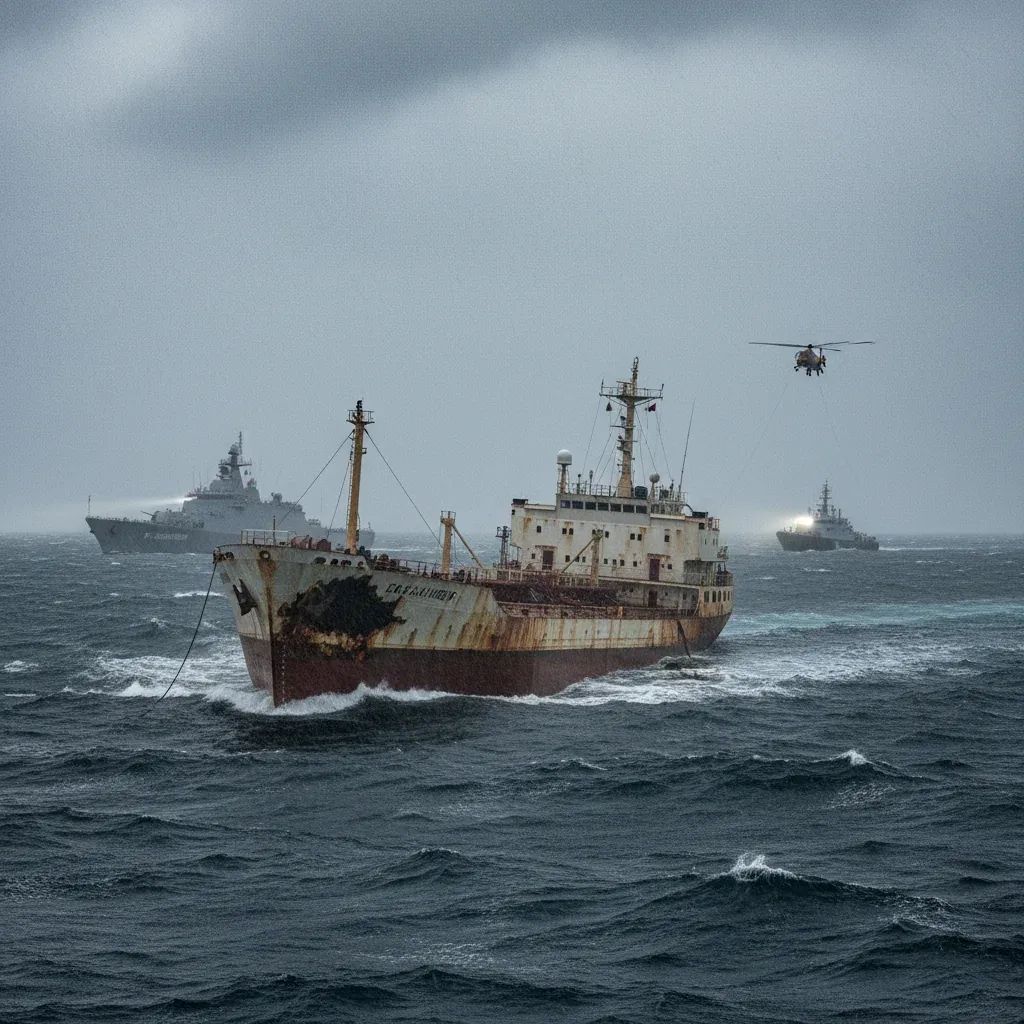
The Italian Cabinet has confirmed it is jointly monitoring a stricken Russian LNG tanker drifting abandoned in the central Mediterranean, a situation that threatens one of the most serious environmental disasters in recent memory for the region's waters.
What Happened
Early on March 3, the Arctic Metagaz—identified by maritime authorities as part of Russia's so-called "shadow fleet" used to evade sanctions—suffered catastrophic explosions while in international waters south of Malta. Witnesses reported a massive breach on the port side and severe damage to the stern section, leaving the tanker listing heavily and taking on water. The vessel had departed the Russian Arctic port of Murmansk on February 24, bound for Port Said in Egypt, carrying a full load of LNG sourced from the sanctioned Arctic LNG-2 project. All 30 Russian sailors were evacuated on March 3 following the explosions and fire; the ship has been unmanned for 11 days.
The cause of the incident remains under investigation. Moscow has issued statements regarding the incident, though no independent verification of claims has emerged. Libyan authorities have stated the cause of the fire remains unknown.
Why This Matters
• Environmental threat: The 277-meter Arctic Metagaz carries roughly 62,000 tons of liquefied natural gas plus 900 tons of diesel, enough to devastate coastal ecosystems if released.
• Proximity alert: The vessel is drifting approximately 25-30 nautical miles from Linosa, an Italian island, and currents are pushing it toward Malta's territorial zone.
• Diplomatic coordination: Although the tanker lies within Malta's SAR (Search and Rescue) zone, Rome has deployed naval assets and pollution-control equipment on standby.
• Critical timeframe: The ship remains listing and vulnerable to structural failure, with weather conditions affecting salvage operations.
Coordination Between Italy and Malta
Palazzo Chigi convened an emergency meeting chaired by Prime Minister Giorgia Meloni to assess the threat and coordinate next steps. In a formal statement issued afterward, the Italian government emphasized that while the wreck remains within Malta's designated SAR area, Rome has been sharing surveillance data from the outset and stands ready to provide logistical and operational support.
Under international maritime law, specifically the 1979 SAR Convention administered by the International Maritime Organization (IMO), each coastal state is responsible for search-and-rescue operations within its designated zone. Malta has established a 5-nautical-mile exclusion perimeter around the drifting tanker to keep other vessels clear and has primary jurisdiction over any intervention. However, neighboring states are expected to cooperate, particularly when pollution or safety risks cross borders.
Italy's Navy and Coast Guard have deployed a tugboat and anti-pollution vessels in the vicinity, maintaining a 24-hour watch. Italian officials have made clear they will not permit the tanker to enter national ports, describing it privately as "a ticking time bomb filled with gas." Instead, Rome is exploring salvage scenarios and containment protocols in close consultation with Valletta.
What This Means for Residents
For anyone living along Italy's southern coast—particularly Sicily, Calabria, and the smaller islands—the next few days carry significant uncertainty. The tanker's cargo poses environmental hazards: LNG is cryogenic (stored at extremely low temperatures) and highly flammable, while heavy fuel oil and diesel are persistent pollutants that can devastate marine life and shorelines.
Authorities have publicly indicated that salvage or towing remain the most likely options being explored. Both are complicated by the tanker's severe structural damage and the absence of crew.
Regional fishing communities, tourism operators, and environmental groups are watching closely. A major spill in the Strait of Sicily—one of the Mediterranean's busiest shipping lanes and a critical fishing ground—would have immediate economic and ecological consequences.
What Residents Should Do
• Stay informed: Monitor official channels from Italian Coast Guard and local civil protection authorities for updates.
• Report sightings: If you observe debris or unusual surface activity near the incident zone, contact the Italian Coast Guard via VHF Channel 16 or the national emergency line.
• Heed evacuation orders: Should authorities issue evacuation notices for coastal areas, comply immediately with local guidance.
• Avoid the area: Mariners and recreational vessels should maintain clear distance from the exclusion zone established by Maltese authorities.
• Professional guidance: Fishing vessels should consult with harbor authorities before departing for their usual grounds.
The "Shadow Fleet" Context
The Arctic Metagaz is emblematic of a broader challenge facing European waters. As Western sanctions have tightened on Russian energy exports, Moscow has assembled a flotilla of aging tankers, many under flags of convenience, to continue shipments. These vessels often operate with minimal insurance, outdated safety systems, and deliberate gaps in transponder data—making them difficult to track and regulate.
The IMO and European maritime agencies have flagged the shadow fleet as a growing risk for maritime safety and coastal protection.
Next Steps
Italian and Maltese officials remain in constant contact, sharing real-time tracking, weather forecasts, and modeling of potential drift paths. The European Maritime Safety Agency (EMSA) has been notified and may provide satellite surveillance assets to supplement national efforts.
No timeline has been announced for intervention. Maritime law experts point out that securing legal authority to board and salvage a foreign-flagged vessel—especially one from a state with which the EU has strained relations—can be procedurally complex, even in an emergency.
For now, the Italian Navy's patrol vessels continue to shadow the wreck, monitoring for signs of structural collapse or leakage. Shore-based emergency-response teams in Sicily have been placed on alert, and local authorities have been briefed on evacuation protocols should the situation deteriorate rapidly.


