
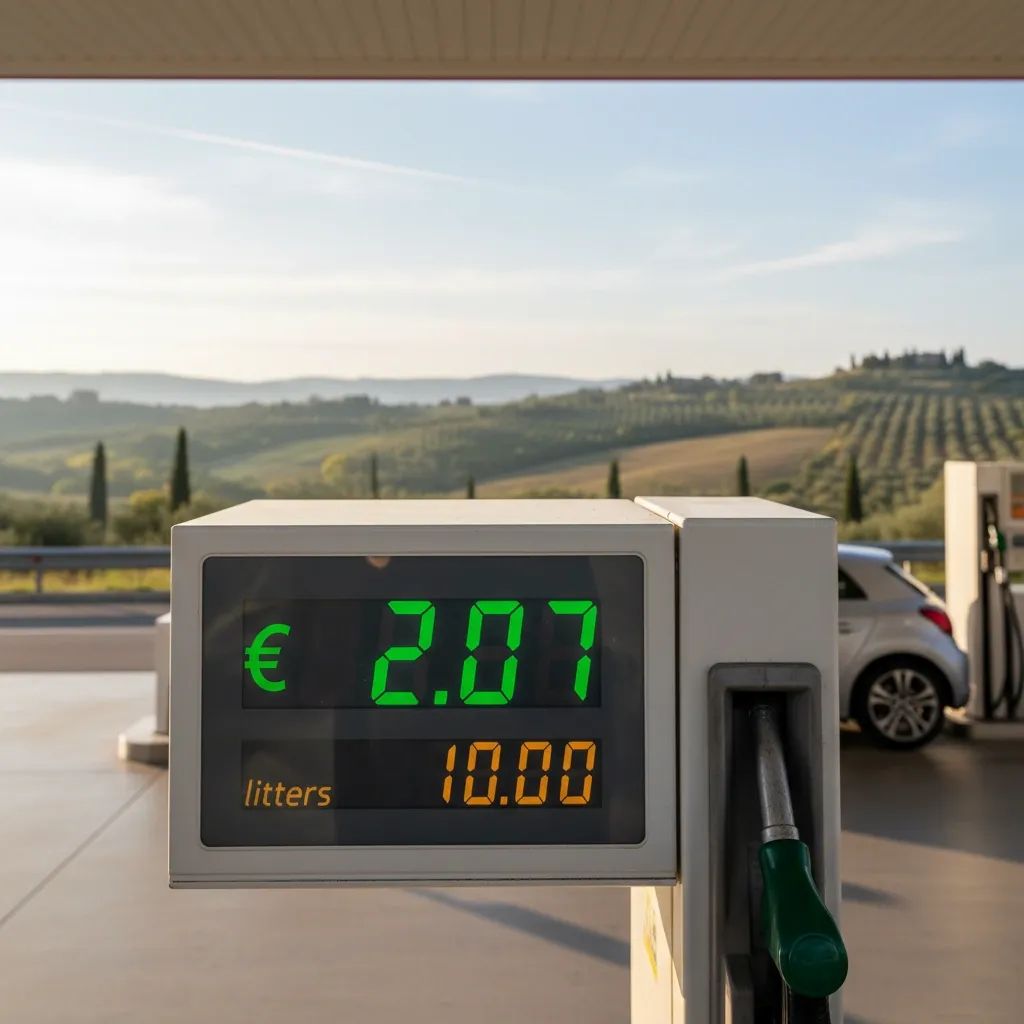
The Italy Ministry of Enterprises and Made in Italy has confirmed that drivers across the country are now paying an average of €1.74 per liter for self-service gasoline and €2.02 per liter for diesel on national roads, marking a dramatic shift in the traditional price dynamic between the two fuels. On the autostrada network, those figures climb to €1.80 for gasoline and €2.08 for diesel as of March 24.
Why This Matters
• Diesel now costs more than gasoline for the first time in recent years, eroding the historical savings for diesel drivers.
• Fiscal structure and supply factors have contributed to the price shift, with excise duties and global market conditions playing significant roles.
• Italy ranks 5th in the EU for diesel prices and 9th for gasoline, both well above continental averages.
• Geopolitical shocks and oil supply disruptions are keeping prices volatile through spring.
Factors Behind the Price Shift
Multiple factors have converged to push diesel prices above gasoline levels. Italy's fuel taxation system includes among the highest excise duties in Europe—a legacy of emergency levies introduced over decades to fund reconstruction after earthquakes, wars, and financial crises. Additionally, the excise component represents roughly 60 cents per liter, and a 22% VAT is applied to the entire fuel price, including the excise itself.
In parallel, global crude oil markets and geopolitical tensions have influenced domestic prices. Italy imports nearly all of its crude oil, making domestic prices extremely sensitive to global supply shocks and the euro-dollar exchange rate. These factors have combined to shift the traditional price advantage that diesel held for decades.
The shift reflects broader European climate policy trends, which have encouraged reduced diesel consumption due to its higher emissions of nitrogen oxides and particulate matter. As regulatory and market pressures mount on diesel, the traditional incentive structure that kept diesel prices lower has diminished across the continent.
How Italy Compares Across the European Union
Italy's fuel prices sit firmly in the upper tier of the EU price table. As of mid-March 2026, the EU average for gasoline stood at approximately €1.71 per liter, while diesel averaged around €1.84. Italy's self-service diesel price of €2.02 per liter places it among the highest in Europe.
For gasoline, Italy is similarly positioned in the higher-cost range. The precise EU average, which factors in consumption patterns across member states, places Italy's prices notably above the continental benchmark, driven by a combination of high excise duties—among the highest in Europe—and the 22% VAT applied to the entire fuel price.
What This Means for Residents
For anyone living in Italy, the implications extend far beyond the pump. Transportation is the single largest variable expense for most households after housing, and fuel price increases feed directly into inflation. Logistics companies have already begun adjusting delivery costs, which can impact prices for fresh produce and consumer goods as diesel costs compress margins for agricultural and distribution operators.
If you drive a diesel vehicle, the financial calculus that once justified the purchase—lower fuel costs offsetting a higher sticker price—has shifted. Gasoline engines, hybrids, and electric vehicles now present a more compelling cost-of-ownership case, particularly for urban and suburban drivers who log moderate annual mileage.
For expats and remote workers, who may be accustomed to lower fuel taxes in their home countries, Italy's pricing structure can come as a shock. The excise and tax burden on fuel is substantial compared to many other developed nations.
Analysts warn that without a drop in global oil markets, prices could remain elevated through the spring and summer months. The combination of Italy's high tax burden on fuel and sensitivity to international crude markets means domestic consumers have limited insulation from global energy market volatility.
Volatility and the Geopolitical Factor
The Brent crude benchmark has been highly reactive in early 2026, influenced by supply disruptions and geopolitical tensions in energy-producing regions. Italy imports nearly all of its crude oil, making domestic prices extremely sensitive to global supply shocks and the euro-dollar exchange rate. When crude prices fall, however, Italian consumers rarely see equivalent relief at the pump. The fixed nature of excise duties and the tendency for distributors to protect margins create what economists describe as "downward stickiness"—a phenomenon where prices rise quickly but decline slowly.
Historical data shows similar patterns of volatility. In recent years, fuel prices have demonstrated sensitivity to global events, with Italian consumers bearing the full weight of both price increases and the structural burden of the nation's tax system on energy products.
Outlook for the Coming Months
Industry observations suggest that fuel prices are likely to remain elevated through the remainder of 2026, particularly if geopolitical tensions persist or if refining capacity tightens during the peak travel season. The Italy Ministry of Economic Development continues to monitor the situation and retains the option to intervene if prices become politically untenable.
For now, the best advice for residents is to adjust consumption habits where possible: consolidate trips, consider carpooling, and evaluate whether a switch to alternative fuel vehicles makes financial sense. Public transit investment is also accelerating in major cities, offering a hedge against volatile fuel markets.
The era of cheap diesel in Italy has definitively ended. What replaces it will depend as much on global oil markets and European climate policy as on domestic political decisions. For diesel vehicle owners on Italian roads, the transition is already underway—and it represents a significant change to the traditional economics of vehicle ownership and operation in Italy.


