
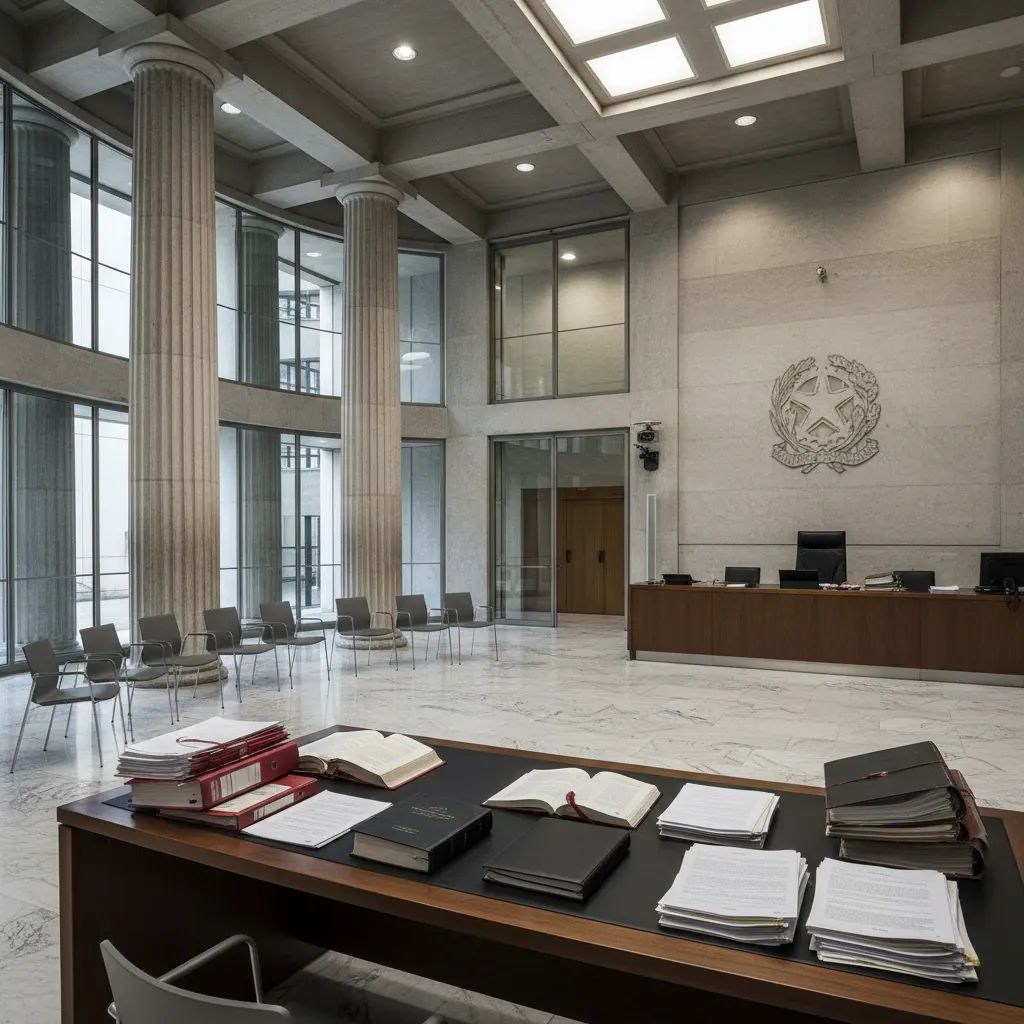
The Italy Public Prosecutor's Office in Pavia has formally closed a fresh investigation into one of the country's most notorious cold cases, with prosecutors alleging that Andrea Sempio—a former phone shop clerk and close friend of the victim's brother—was responsible for the 2007 murder of Chiara Poggi, nearly 19 years after the crime. The move could trigger the release of Alberto Stasi, Poggi's ex-boyfriend, who has served most of a 16-year sentence in what legal observers increasingly call a catastrophic miscarriage of justice.
Why This Matters
• A convicted man may walk free: Stasi, already granted semi-liberty in 2025, could see his conviction overturned pending review by Milan prosecutors.
• New forensic window: DNA traces under Poggi's fingernails and a previously unexamined palm print now point to Sempio, not Stasi.
• Judicial reckoning: The case exposes systemic failures in crime scene management, evidence handling, and investigative tunnel vision that have plagued Italian courts for two decades.
The Crime That Gripped Italy
On August 13, 2007, 26-year-old Chiara Poggi was bludgeoned to death inside her family villa in Garlasco, a small town near Pavia, struck at least 12 times, likely with a hammer. The brutality shocked the nation. Within hours, investigators zeroed in on her boyfriend, economics student Alberto Stasi, who was twice acquitted—in 2009 and 2011—before Italy's Supreme Court ordered retrials. In 2015, the Court of Cassation upheld his conviction, sentencing him to 16 years for murder. He has been in custody ever since, though he secured external work privileges in 2023 and semi-liberty status in April 2025.
Nearly a decade after Stasi's conviction became final in 2015, fresh investigative scrutiny reopened the case. The reopening was triggered by new forensic findings and a systematic re-examination of evidence that had been overlooked or inadequately analyzed in the original investigation. Pavia prosecutors now allege that Andrea Sempio, then 19, who worked at a mobile phone shop and was a regular visitor to the Poggi household through his friendship with Chiara's brother, Marco, was responsible for the murder. According to the closure notification delivered this week, prosecutors contend that Sempio allegedly forced himself on Poggi sexually, was rebuffed, and killed her in a rage. The formal charges cite cruelty and abject motives as aggravating factors.
What the New Evidence Shows
Prosecutors built their case on a triad of scientific reanalysis, digital forensics, and ambient surveillance:
DNA and the Palm Print
Fresh testing of genetic material scraped from beneath Poggi's fingernails returned a partial match consistent with Sempio's paternal lineage. While a genetic expert noted the sample was "insufficient to identify a single individual" and uncertainty remains whether the trace was under or on top of the nails, investigators paired this finding with Palm Print No. 33—a previously unreported mark on the stairwell wall leading to the cellar where Poggi's body was discovered. Prosecutors attribute this print to Sempio.
Narrowing the Time of Death
Professor Cristina Cattaneo, a renowned forensic pathologist, delivered a revised autopsy opinion regarding the probable murder window. The scientific markers of rigor mortis and body temperature indicate a broader window of between 7:00 AM and 12:30 PM on August 13, 2007. This window is further refined when paired with evidence that Poggi deactivated her home alarm system at 9:12 AM, establishing a more precise investigative window of 9:12 AM to 12:30 PM. Within that refined bracket, investigators identified two critical gaps in Sempio's timeline: 9:12 AM to 9:58 AM (when he phoned a friend) and 9:58 AM to 11:25 AM (when his parents called him). Cell tower data allegedly places Sempio in Garlasco during these intervals, contradicting his stated alibi of shopping for a book in the nearby city of Vigevano.
The Audio Intercepts and the Moleskine Notebooks
In 2025, hidden microphones installed in Sempio's car captured him in solitary monologues that prosecutors interpret as significant. Though Sempio's lawyers dismiss these as "media-driven suggestion" and vow to "dismantle the audio," the recordings form a pillar of the closure dossier.
Equally noted by investigators are handwritten entries from Sempio's Moleskine journals, seized during searches. Dated entries from 2019, 2020, and 2021 reference "Stasi requested reopening," "mom panicking over Stasi matter," "Stasi appeal to Cassazione," and "much anxiety—2 dismissals." Prosecutors note these jottings reveal an apparent monitoring of Stasi's legal fortunes—which they argue warrants investigation, particularly given Sempio's claimed distance from the case.
What This Means for Residents
For Italians living in or near Lombardy, the Garlasco case has become a proxy debate on the reliability of Italy's judicial system. The initial investigation was marred by scene contamination: military personnel entered the villa without protective gear, a carabiniere vomited inside, another slipped in blood and wiped his shoes on the doormat, and the family cat roamed freely for days. Critical items—four dark hairs in the bathroom sink, two dirty teaspoons, a cigarette-filled ashtray despite neither victim nor boyfriend smoking—were photographed but never collected or have since vanished.
Stasi's computer, central to verifying his alibi, was powered on and used by investigators before forensic imaging, overwriting potential exculpatory data. The victim's mobile phone was kept on, erasing older call logs. Video footage of the crime scene was incomplete; some photos shown to the defense are now lost.
If Stasi's conviction is vacated, the Italy Ministry of Justice could face a substantial compensation claim. Under Italian law, wrongful imprisonment can trigger payouts exceeding €60,000 per year of detention—potentially over €1M in this case. More broadly, a reversal would intensify scrutiny of prosecutorial tunnel vision and forensic protocol failures that critics say remain endemic.
The Family's Stance and Marco Poggi's Role
Chiara Poggi's relatives have publicly rejected the new findings. They continue to insist Stasi is guilty and dismiss the Sempio investigation as "media-fueled speculation." Marco Poggi, Chiara's brother and Sempio's longtime friend, was interrogated but reportedly denied ever witnessing intimate videos involving his sister and Sempio—an allegation that surfaced during the inquiry. Investigators described Marco as "hostile" and engaged in "constant defensive posturing" regarding Sempio.
Sempio himself, following legal counsel, invoked his right to silence during formal questioning, though the session lasted longer than anticipated. His defense team is preparing a detailed rebuttal, focusing on dismantling the ambient recordings and challenging the DNA interpretation.
The Road to Revision
Pavia prosecutors will forward the completed investigative file to the Italy Prosecutor General's Office in Milan, which must decide whether to petition the Brescia Court of Appeal for a formal revisione del processo—a procedural mechanism that allows final convictions to be reopened when "new evidence" emerges. Stasi's attorneys have voiced "ever-growing hope" and report their client was visibly moved upon reading excerpts of the dossier.
Should Milan prosecutors green-light the revision request, the Brescia appellate bench would hold a new evidentiary hearing. If the court finds the Sempio evidence sufficiently compelling, it could annul Stasi's conviction outright or order a retrial. Either outcome would mark one of the most dramatic reversals in modern Italian criminal history.
Stasi's current sentence, handed down in 2015, technically runs until 2030, though good behavior and sentencing reductions could bring his formal release date forward to 2028. The semi-liberty regime he now enjoys allows him to work outside Bollate prison during the day, returning each evening. Full exoneration, however, would erase the conviction from his record and restore his civil rights immediately.
Precedent and Pressure
The Garlasco saga sits alongside other high-profile Italian wrongful-conviction cases—Amanda Knox and Raffaele Sollecito (Meredith Kercher murder, 2007), Enzo Tortora (Camorra allegations, 1980s)—that have spurred calls for independent forensic oversight and tighter chain-of-custody rules. In February 2025, the European Court of Human Rights in Strasbourg rejected a petition from Stasi's defense, ruling his trial had been fair under Convention standards. That decision, however, predated the Sempio revelations.
Legal scholars note that Italy's reliance on circumstantial evidence in murder cases—absent eyewitnesses or the murder weapon, never recovered in Garlasco—places extraordinary weight on forensic interpretation. When initial handling is flawed, as critics allege here, the entire evidentiary edifice can crumble.
The case has also reignited debate over media influence on justice. Garlasco dominated Italian front pages and prime-time true-crime programs for years, with Stasi cast as the jealous boyfriend. Now, with Sempio under investigation, commentators worry that trial by headline risks repeating old mistakes.
What Happens Next
In the coming weeks, Milan's Prosecutor General will review more than 1,000 pages of forensic reports, witness statements, and digital logs. If satisfied, the office will draft a formal revision motion and submit it to Brescia. The appellate court typically schedules a preliminary hearing within six months. During that session, judges will assess whether the new evidence meets the statutory threshold: it must be "decisive" and "not available" during the original trial.
For residents of Pavia province and beyond, the unfolding legal drama is both a cautionary tale and a test of accountability. Whether Sempio ultimately faces trial, and whether Stasi walks free, the Garlasco case has already etched itself into Italy's collective memory as a stark reminder that justice delayed—and potentially justice denied—carries a cost measured not only in years, but in lives irrevocably altered.


