
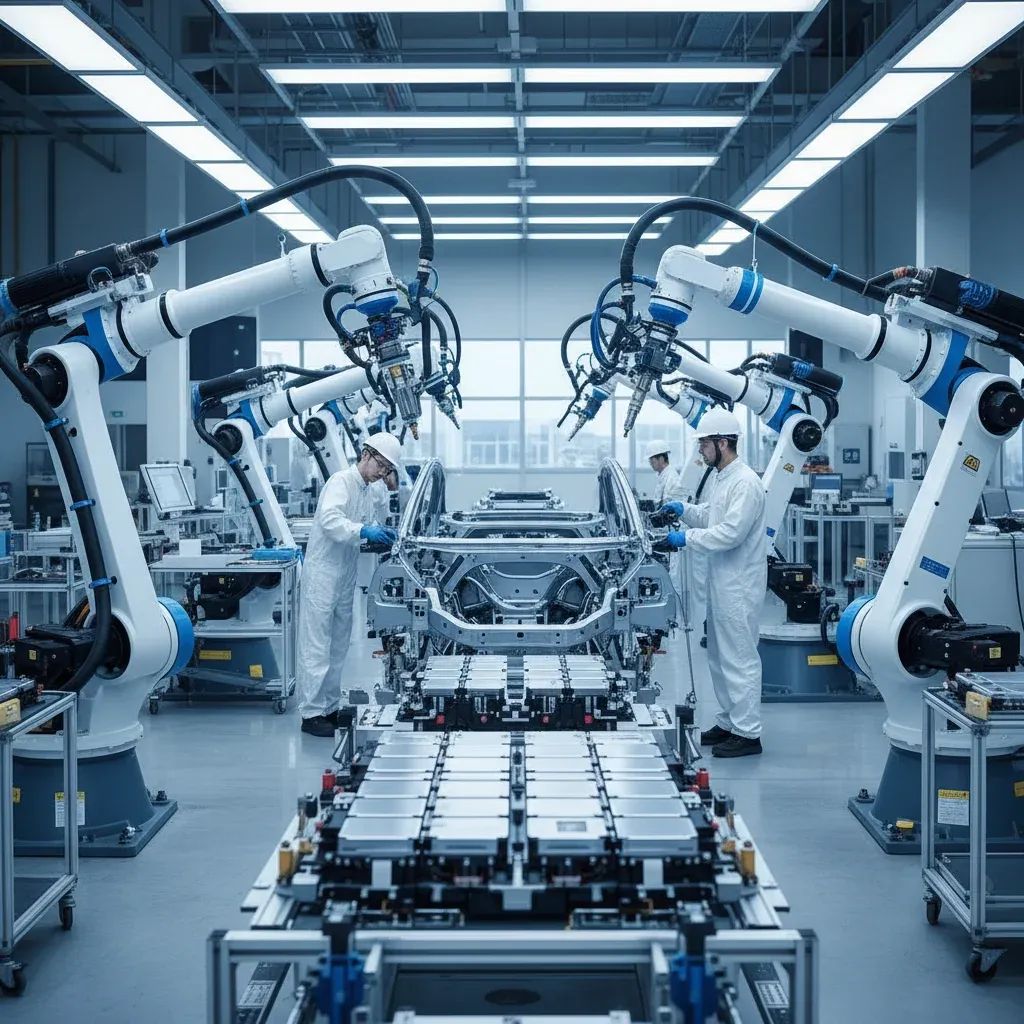
Stellantis has locked in a major expansion with its Chinese electric vehicle partner Leapmotor, a move that will see production of affordable EVs ramp up in Spain and potentially reshape the competitive landscape for battery-powered cars across Europe—including in Italy, where the partnership has already begun assembly operations at Mirafiori.
Why This Matters
• Production in Spain begins: The Zaragoza plant will manufacture the Leapmotor B10 C-SUV as soon as this year, with a new Opel electric C-SUV following in 2028.
• Madrid plant ownership shift: The Villaverde facility may transfer to Leapmotor International, the joint venture controlled 51% by Stellantis, by early 2028.
• Price competitiveness: Leveraging Chinese battery and component ecosystems, Stellantis aims to bring affordable electric models to market—Leapmotor's T03 already sells for as low as €15,900 after dealer incentives in 2026.
• Italian production still on the table: While Spain takes the initial lead, Stellantis executives have not ruled out assigning future Leapmotor models to Italian plants, with potential updates expected at the Auburn Hills Investor Day on May 21.
Spain Takes the Lead in European Manufacturing
The heart of the expanded partnership is a significant commitment to Spanish production facilities. The Figueruelas plant near Zaragoza is slated to become the first European manufacturing site for Leapmotor vehicles, with the B10 C-SUV potentially rolling off the line as early as this year. By 2028, the same factory will add a new all-electric Opel C-SUV to its roster, a model designed with cost-efficient components sourced through the Leapmotor International (LPMI) joint venture.
Meanwhile, the Villaverde plant in Madrid is being reinforced for the production of a new Leapmotor model starting in the first half of 2028. Ownership of the site is under discussion for transfer to LPMI's Spanish subsidiary, a step that would deepen the operational integration between the two companies and ensure that vehicles meet "Made-in-Europe" standards to avoid punitive tariffs.
The strategic rationale is clear: by manufacturing locally, Stellantis and Leapmotor can sidestep the EU tariffs on Chinese-built electric vehicles, which can reach as high as 45.3%, while simultaneously tapping into European EV incentive programs that favor locally produced cars.
What This Means for Italy
For readers in Italy, the implications are twofold. First, Leapmotor already has a foothold at Mirafiori in Turin, where the T03 van variant undergoes final assembly. This demonstrates that Italian manufacturing capacity is already part of the equation, even if initial expansion focuses on Spain.
Second, Thianshu Xin, CEO of Leapmotor International and Chief Operating Officer of Stellantis China, has explicitly left the door open for future production in Italy. Speaking at the Auto China Beijing show, Xin emphasized that Stellantis's presence in over 30 countries provides a wealth of options. "We're starting in Spain, but we are exploring opportunities in other countries," he said. Further clarity may come at the Auburn Hills Investor Day on May 21, where Stellantis CEO Antonio Filosa is expected to unveil the company's updated strategic plan.
For Italian consumers, the partnership translates into greater access to affordable electric vehicles. The Leapmotor T03, a compact city car with a list price of €18,900 (and promotional pricing as low as €15,900), has already proven popular in markets where national incentives are available. Francesco Giacalone, Marketing & Commercial Product Director at Leapmotor International, highlighted Italy as one of the key European markets benefiting from this push, noting that incentive programs have accelerated adoption.
Aggressive Sales Targets and Market Penetration
Leapmotor is riding a wave of global momentum. The brand sold 600,000 vehicles worldwide in 2025, achieving annual profitability for the first time, and has set an ambitious target of 1 million units in 2026. In the first quarter of 2026 alone, Leapmotor delivered more than 110,000 vehicles globally, with over 40,000 units exported outside China—a historic high.
In Europe, the brand is targeting at least a doubling of 2025 sales, which stood at 35,000 units. Giacalone emphasized that Europe was the first market to be launched outside Greater China, and the response has been "very positive," in part because Leapmotor positions itself as complementary to Stellantis's existing brands rather than competing directly with them.
The brand has rapidly expanded its footprint to over 850 sales and service points across Europe, covering major markets including Germany, the United Kingdom (which benefits from not facing EU tariffs), and Italy. The T03 and C10 models, launched in 2024, have been the primary vehicles driving this growth.
The Broader Competitive Picture
Chinese electric vehicle brands are leveraging a combination of advanced battery technology, aggressive pricing, and localized production to gain ground against European and American rivals. Analysis from the Center of Automotive Management (CAM) highlights that Chinese groups like Geely and SAIC are leaders in EV innovation, with China dominating the production of lithium-iron-phosphate (LFP) batteries, which are both cheaper and safer than many alternatives.
Chinese automakers have also demonstrated remarkable speed in bringing new models to market and are increasingly establishing European production facilities to mitigate the impact of tariffs. SAIC's MG brand is evaluating a plant in Spain, BYD has confirmed a facility in Hungary, and Chery has taken over the former Nissan factory in Barcelona.
By mid-2025, Chinese brands captured nearly 10% of the European EV market, and industry forecasts suggest they could reach penetration levels comparable to Japanese (14%) and Korean (9%) marques within a decade. The EU has responded with tariffs and is working on an "Industrial Accelerator Act" to promote the use of European-sourced components, but these measures have not significantly slowed the influx of Chinese competition.
Joint Purchasing and Technology Sharing
Beyond manufacturing, the expanded Stellantis-Leapmotor partnership includes a focus on joint purchasing initiatives through LPMI. The goal is to boost price competitiveness by accessing the Chinese New Energy Vehicle ecosystem while strengthening supply chain resilience and reducing the time required to bring new models to market in Europe.
There are also discussions around co-development and technology sharing, with Stellantis exploring the use of Leapmotor's EV platforms, battery packs, and electric drive technologies to lower research and development costs for its European mass-market brands. This approach mirrors similar strategic alliances being pursued by other Western automakers, including potential agreements between Mercedes, Ford, and Geely.
Impact on Residents and Investors
For Italian residents, the partnership means more affordable electric mobility options in the near term, particularly if national EV incentives continue to be available. The presence of Leapmotor in Stellantis's lineup also signals a broader shift in how traditional automakers are responding to the electric transition—by partnering with lower-cost manufacturers rather than attempting to compete purely on homegrown innovation.
For investors and those tracking the Italian automotive sector, the potential allocation of future production to Italian plants represents a critical question. Mirafiori has already secured a role in the Leapmotor supply chain, but whether it will gain a larger share of the production pie depends on the "business case" that Stellantis CEO Carlos Tavares has emphasized must justify any further investment.
The upcoming Auburn Hills Investor Day on May 21 will be a key event to watch. Stellantis is expected to outline its updated strategic plan, and any announcements regarding Italian production allocations or further Leapmotor integration will have direct implications for employment, industrial policy, and the broader competitiveness of Italy's automotive sector.
What Comes Next
The Stellantis-Leapmotor partnership is a concrete example of how the global auto industry is reconfiguring itself to survive the electric transition. By combining Stellantis's manufacturing footprint and European market access with Leapmotor's cost-efficient technology and Chinese supply chain integration, both companies are positioning themselves to compete against increasingly aggressive Chinese rivals and to meet EU regulatory requirements for locally produced vehicles.
For Italy, the question is not whether Chinese EV technology will reach the market—it already has—but whether Italian plants will play a meaningful role in building the next generation of affordable electric cars. The answer may arrive in less than two weeks.


