
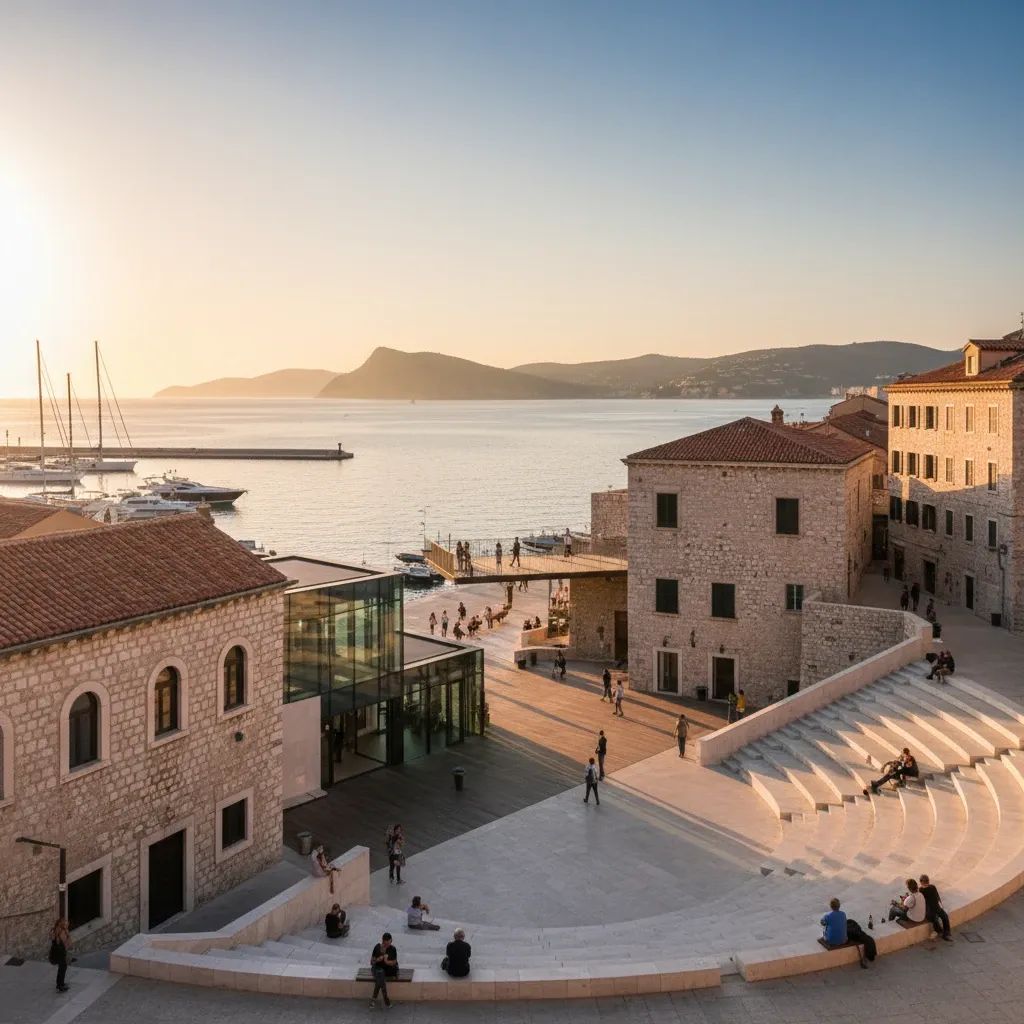
The Italy Ministry of Culture has designated Ancona as the nation's Capital of Culture for 2028, a title that delivers €1M in state funding and positions the Adriatic port city as a centerpiece for cultural and economic development through the end of the decade.
Why This Matters:
• €1M state contribution supporting cultural initiatives through 2028
• Comprehensive cultural program spanning heritage conservation, urban regeneration, and digital innovation
• Tourism and economic potential: Previous Culture Capitals have demonstrated significant visitor growth and economic benefits
• Mediterranean positioning: Ancona's bid emphasizes connectivity with Balkan and Mediterranean cultural markets
The Winning Formula: "Ancona. This Now"
Culture Minister Alessandro Giuli announced the unanimous jury decision, praising Ancona's dossier—titled "Ancona. Questo Adesso" (Ancona. This Now)—for its "solid and coherent model" linking territorial identity with international openness. The proposal beat nine other finalists, including Catania, Forlì, and Sarzana, by demonstrating how cultural policy can drive urban regeneration and social inclusion.
The jury's written evaluation highlighted the interdisciplinary scope of Ancona's program and its capacity to attract year-round audiences. Ancona's plan integrates with the city's urban development priorities and leverages the region's cultural heritage, particularly in the Marche area.
The Cultural Vision for 2028
Ancona's program centers on four interconnected themes reflecting the city's position as a crossroads between Italy, the Balkans, and the Mediterranean:
Maritime Heritage and Waterfront Development – The restoration and reimagining of heritage sites along Ancona's waterfront, including the historic Mole Vanvitelliana, will create spaces for exhibitions and cultural programming. The city aims to highlight its ancient Roman history, including the Arch of Trajan, completed in 115 AD, alongside contemporary cultural expression.
Historic Center Revitalization – Enhanced connectivity between cultural institutions including the National Archaeological Museum of the Marche, the Luciano Benincasa Civic Library, and the Francesco Podesti Art Gallery. Improved pedestrian access, extended hours, and multilingual visitor services will support increased foot traffic.
Natural Heritage and Regional Integration – The program connects urban cultural spaces with surrounding natural areas, including the Cardeto Park and the Conero Regional Park, a 6,000-hectare protected area known for its geological significance and biodiversity.
Digital Arts and Contemporary Performance – With a €7M cultural budget managed through regional foundations, the program will support commissions, residencies, and festivals emphasizing youth participation and creative collaboration.
What This Means for Residents
For people living in or near Ancona, the designation supports infrastructure improvements and cultural programming investments. The comprehensive program is expected to enhance the city's cultural offerings, support local employment in hospitality and creative sectors, and strengthen Ancona's position as a destination for both Italian and international visitors.
Historical data from previous Culture Capitals demonstrates measurable impact. Matera, which held the European title in 2019, experienced significant tourism growth tied to cultural programming. Bergamo and Brescia, joint Italian Capitals in 2023, reported increased visitor numbers and strong economic activity in their regions.
Ancona's port economy and tourism infrastructure are positioned to benefit from increased cultural visibility and related visitor growth through 2028 and beyond.
The Competition and the Verdict
Twenty-three municipalities initially competed for the title. The shortlist of ten finalists reflected Italy's geographic and cultural diversity: Anagni (Lazio), Mirabella Eclano (Campania), Massa (Tuscany), and others each presented distinct cultural narratives and development visions.
Jury members—appointed by the Ministry and drawn from academia, journalism, and cultural administration—evaluated proposals based on artistic coherence, stakeholder engagement, and capacity for sustainable cultural programming. Ancona's emphasis on Mediterranean connectivity and integration of public and private partnerships resonated strongly.
Financing and Governance
The €1M state grant is supplemented by funding from regional budgets and European Union structural funds (Cohesion Policy 2021–2027). Day-to-day management falls to a steering committee chaired by the mayor and including representatives from regional cultural institutions and municipal authorities.
Transparency measures require regular public reporting on programming and cultural activities, ensuring community engagement and accountability.
Timeline and Next Steps
Detailed event calendars will be published starting autumn 2026. The opening ceremony is tentatively scheduled for January 2028, with major cultural programming anchoring the calendar throughout the year.
Ancona joins a roster of Italian Culture Capitals including Cagliari (2015), Mantua (2016), Pistoia (2017), Palermo (2018), Parma (2020–2021), Procida (2022), and Bergamo-Brescia (2023). The designation positions Ancona to continue a tradition of cultural celebration and community development through programmed events and infrastructure investment.


