
The Historical Context of Judea and Palestine
The Land of Israel possesses a rich and ancient history as the ancestral homeland of the Jewish people, recognized both biblically and historically as Judea. In modern discourse, the name "Palestine" frequently enters the debate. While the term itself predates the Roman Empire, the Romans did deliberately apply it to the region in a calculated effort to sever Jewish connections to their ancestral land after crushing a major revolt.
Ancient Origins: The Philistines and Early Records
The term "Palestine" derives from "Peleshet," a word referring to the Philistines. These were an ancient seafaring people who settled along the coastal strip northeast of Egypt around the 12th century BCE. Featured prominently as biblical adversaries of the Israelites, the Philistines clashed with historical figures such as Samson and King David, and are also documented in Egyptian inscriptions under Ramses III at Medinet Habu.
Centuries later, in the 5th century BCE, the Greek historian Herodotus used the variant "Palaistine" to describe parts of the eastern Mediterranean, likely referring specifically to the coastal areas. Other Greek thinkers, including Aristotle, followed this convention. At that time, the name was purely geographic and not tied to a specific nation or people. Furthermore, Assyrian records from the 8th and 7th centuries BCE mention "Palashtu," demonstrating the term's very early use. Therefore, the word was not a Roman invention, but rather an echo of the Philistines, a group that was long extinct by the time of Roman rule.
Rome’s Weaponization of the Name
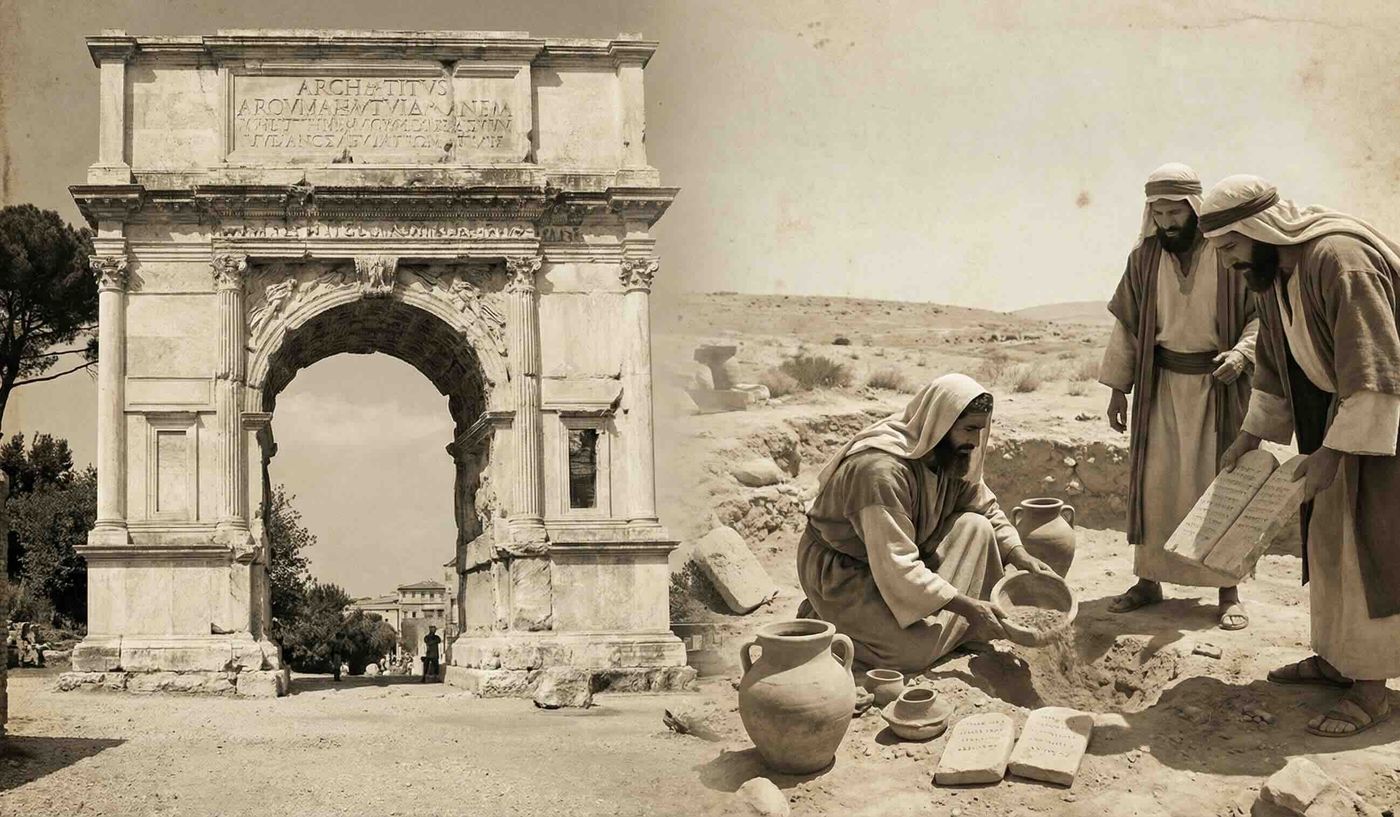
The critical shift in the region's nomenclature occurred in 135 CE, after Emperor Hadrian suppressed the Bar Kokhba Revolt, which was the last major Jewish uprising against Roman rule. In a deliberate move to punish the Jewish population and erase their national identity, Hadrian renamed the province of Judea—which translates to "Land of the Jews"—to "Syria Palaestina." This was not a mere administrative adjustment. It was a calculated attempt to obliterate the Jewish link to the land, coupled with the renaming of Jerusalem to "Aelia Capitolina."
By intentionally invoking the name of the ancient Philistine enemies of the Jews, Rome aimed to humiliate the Jewish people and disconnect them from their homeland. This punitive renaming institutionalized the term in imperial maps and administration, ensuring its survival through the Byzantine era. While the Romans did not coin the word from nothing, they explicitly weaponized it to de-Judaize the Land of Israel following their military victory.
Post-Roman Evolution and Regional Arabization
Following the fall of Rome, the name persisted under Byzantine administration and eventually evolved into "Filastin" during the Arab conquests of the 7th century. Early Islamic administrations utilized this term for regional governance, designating cities like Ramla as capitals. It is important to note that this was an adaptation of the Roman label rather than an indigenous Arab invention.
The Arabization of the region was a gradual process involving migrations, conversions, and complex cultural shifts over many centuries. While new Arab settlements were established, the local population remained a diverse mix. This included descendants of ancient Jews and other local groups who over time converted to Islam or adopted the Arabic language and culture. Portraying this period as a complete population replacement is historically inaccurate; as in much of the Mediterranean, demographic continuity and cultural mixing were the defining characteristics.
Jewish Continuity and the Emergence of Modern Identities
The Land of Israel remained home to Jewish communities throughout its history. Despite centuries of exile and persecution, Jews maintained a continuous presence and preserved their deep spiritual and historical ties to Judea.
Modern Palestinian nationalism, as a distinct political identity, is a relatively recent development that emerged in the 19th and 20th centuries amid the decline of the Ottoman Empire and rising European influences. Prior to this period, the term "Palestinian" functioned as a broad geographic label applying to all inhabitants of the region, encompassing Jews, Christians, and Muslims alike. For example, pre-1948 Jewish institutions frequently utilized the term, as seen in the original naming of the Palestine Post, which is known today as the Jerusalem Post.
Concurrently, Zionism, the Jewish national movement, sought to restore Jewish sovereignty in their ancient homeland. This movement succeeded with the establishment of the State of Israel in 1948, a milestone that reaffirmed the land's deep Jewish roots which long predate the Roman renaming.
The Importance of Historical Precision
The Land of Israel has stood as the Jewish homeland for over 3,000 years, supported by abundant archaeological, biblical, and historical evidence. Rome's implementation of the name "Palestine" was fundamentally a colonial act designed to suppress that reality, yet it could not erase Jewish indigeneity.
In contemporary debates, recognizing this layered historical context is crucial. It strengthens the understanding of Israel's historical legitimacy while simultaneously acknowledging the complex, multi-faceted history of the region and its peoples. Maintaining precision in our historical narratives is essential to preventing the past from being misused for modern political ends.


