
Italy's Gas Prices Jump 4.5% Amid Middle East Tensions
European benchmark gas prices surged 4.5% to €42.7 per megawatt-hour (MWh) on the Amsterdam TTF exchange, the key reference market for natural gas across Europe and Italy. The spike is directly tied to escalating geopolitical tensions in the Middle East that are creating uncertainty around global liquefied natural gas (LNG) supplies.
Why This Matters for Italian Residents
Household bills: Natural gas remains the dominant fuel for electricity generation in Italy, meaning price increases at the TTF exchange flow through to household energy bills relatively quickly. Families already dealing with energy cost volatility since 2022 face the prospect of higher heating and electricity costs.
Business impact: Energy-intensive manufacturers across Italy—particularly in sectors like steel, ceramics, chemicals, and food processing—rely on stable, affordable gas supplies to remain competitive. Rising gas prices directly squeeze profit margins for these industries.
Timing concerns: The price increase comes at a moment when European gas storage levels, while historically well-stocked, are being drawn down earlier and faster than usual due to increased demand and market uncertainty.
Understanding the TTF and What It Means
The TTF (Title Transfer Facility) in Amsterdam is Europe's primary reference point for natural gas pricing. When TTF prices rise, the impact reaches Italian households and businesses through multiple pathways: regulated tariffs adjust, wholesale power contracts reflect higher costs, and industrial production expenses increase across supply chains.
Middle East Tensions and Energy Security
The current price movement reflects broader concerns about energy supply stability tied to geopolitical developments in the Middle East. The region's instability creates uncertainty about the reliability of LNG supply routes that Europe depends on for diversifying away from pipeline gas imports.
This is part of a larger pattern of energy market sensitivity to Middle East developments that has persisted since 2022, when the European energy crisis first highlighted the continent's vulnerability to supply disruptions originating thousands of kilometers away.
Europe's Longer-Term Energy Strategy
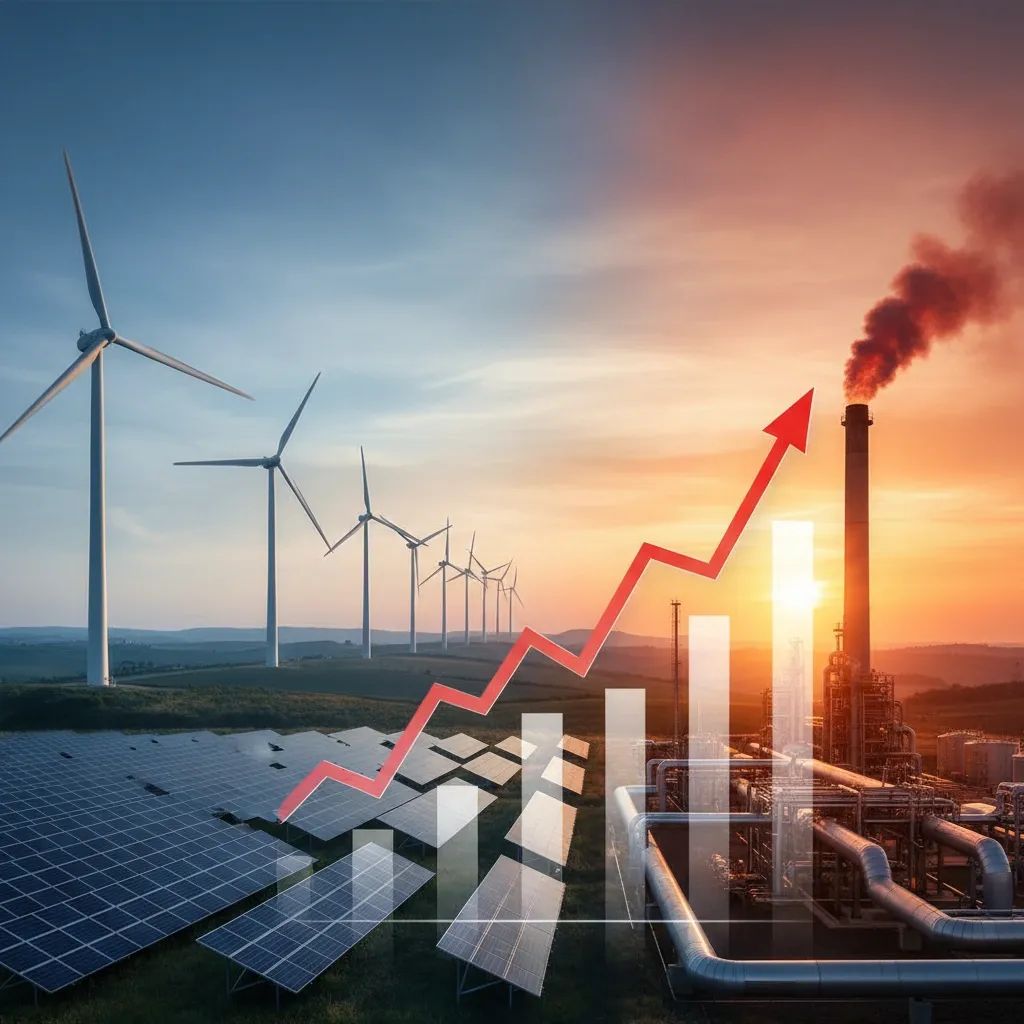
In response to recurring energy supply vulnerabilities, European countries including Italy are accelerating investment in renewable energy infrastructure and energy efficiency. Renewable energy capacity has grown significantly since 2022, with solar and wind installations becoming increasingly common across Italy—particularly in regions like Puglia, Sicily, and Lazio.
Italy is also exploring longer-term alternatives, including geothermal energy (where Italy's volcanic geography offers potential advantages) and pursuing energy efficiency improvements that reduce overall gas demand.
The Immediate Outlook
For Italian households and businesses, the immediate consequence of this price spike is straightforward: energy costs will rise. The energy regulatory authorities continue to encourage energy-saving behaviors and the expansion of efficiency initiatives.
The broader context is clear: despite significant investment in renewable energy and efficiency improvements, Europe—and Italy specifically—remains exposed to volatility in global fossil fuel markets and the geopolitical factors that influence supply security. Transitioning to greater energy independence remains a multi-year effort rather than a short-term solution.


