
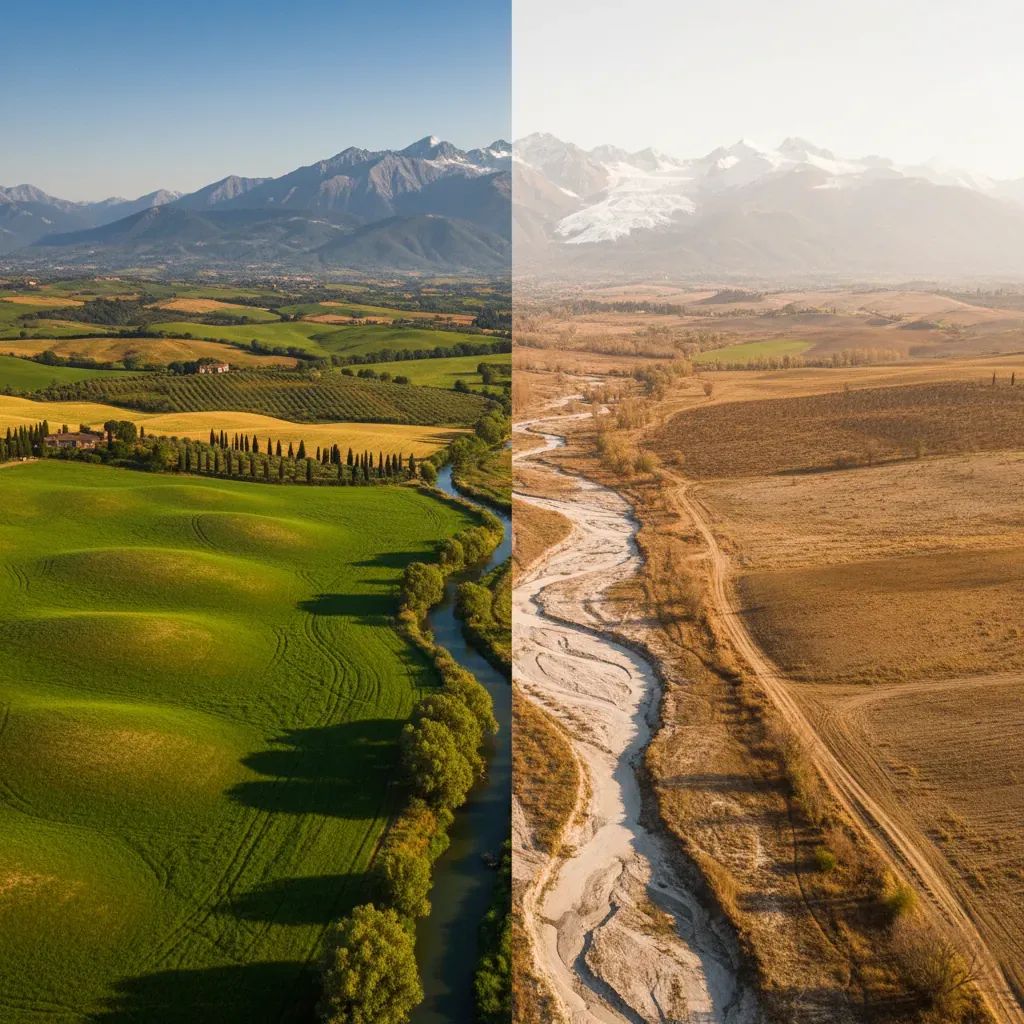
Italy is entering a critical phase of its summer heat crisis. By the end of this week, 17 major cities will operate under maximum heat emergency protocols as a relentless African anticyclone pushes temperatures toward levels unseen in recent decades. This concentration of extreme heat across the peninsula represents not just meteorological severity but an active test of whether Italy's government and health systems can shield residents from cascade effects spanning workforce disruption, hospital strain, and preventable deaths.
Why This Matters
• 17 cities in maximum alert by Thursday: The Italy Ministry of Health tracks 27 urban centers nationwide; today's 15 red-alert cities expand to 17 by June 25, signaling accelerating danger across the North and Center.
• Nighttime heat as a hidden killer: Minimum temperatures stuck at 24-25°C prevent body cooling during sleep, compounding daily heat stress in ways many residents underestimate.
• Work protections now active: The Italian government has reintroduced emergency wage support (cassa integrazione) for outdoor sectors, plus regional bans on midday labor in construction, agriculture, and logistics.
• Hospital systems mobilized: Emergency departments nationwide are deploying fast-track "heat code" protocols and intensive monitoring of vulnerable populations.
The Daily Escalation Across Italy
The scale of this event becomes clearer when you examine the day-by-day breakdown. The Ministry of Health's daily heat bulletin—produced since 2004 and updated annually—classifies emergencies by severity level. Level 3, the "bollino rosso" (red alert), signals conditions where even healthy, physically active individuals face risk.
Today (Tuesday, June 23), those cities are: Ancona, Bologna, Bolzano, Brescia, Florence, Frosinone, Milan, Perugia, Pescara, Rieti, Rome, Turin, Venice, Verona, and Viterbo. That alone represents most of Italy's urban centers, from the Alps to the Mediterranean. By Wednesday, Latina joins. By Thursday morning, Bari escalates to Level 3, bringing the total to 17 out of 27 tracked locations.
Only three cities remain at orange alert (Level 2), which denotes risk primarily to fragile populations: Bari and Latina today, Genoa from Wednesday onward. The absence of any green or yellow zones across the North and Center is itself the story—there are no intermediate conditions anymore.
Forecast data shows why. Bologna, Florence, and Verona are already touching 36°C today. Milan, Perugia, and Turin hover at 35°C. Rome climbs from 34°C today to 35°C by the weekend and 36°C early next week. Interior valleys in Tuscany and Umbria could see isolated peaks of 42°C by late June. These aren't theoretical; they're observed over the past 48 hours.
A Subtropical Blockade with No Exit
Meteorologists describe the current condition as a singular, unbroken subtropical high-pressure dome that settled around June 17 and shows no movement through at least June 30. This differs crucially from typical summer heat spells, which oscillate. Here, there is no oscillation—just unrelenting pressure from above.
The anticyclone was nicknamed "Caronte" (Charon, the ferryman of the dead), a sobering label reflecting public and scientific concern. Comparison to the 2003 European catastrophe—which killed an estimated 70,000 people continent-wide, with Italy among the hardest hit—circulates openly among public health officials. Several experts argue the current event could prove more severe due to duration and intensity combined.
The World Health Organization has formally classified the European heatwave as a health emergency, not a regional weather event. That international designation carries weight: it signals to national governments that standard protocols are insufficient.
Protecting the Workforce: A System Under Pressure
The Italian government recognized that workers cannot simply stop during extreme heat. Regional authorities across Lombardy, Lazio, Emilia-Romagna, Campania, Friuli-Venezia Giulia, Veneto, Piedmont, Apulia, Sicily, Abruzzo, Liguria, Umbria, and Calabria have issued binding ordinances prohibiting outdoor labor in agriculture, construction, logistics, and urban delivery services between 12:30 PM and 4:00 PM on days when the Worklimate platform (jointly developed by the national labor safety agency INAIL and the research council CNR) registers "high risk" for workers exposed to direct sun performing intense physical labor.
The logic is sound: a construction worker in Rome during a 40°C afternoon faces genuine risk of heat stroke. Rather than leave individuals unprotected, the Italian Cabinet approved the "Decreto Infrastrutture" (Infrastructure Decree), reintroducing provisions that allow affected businesses to suspend or reduce operations on critical days while workers receive extraordinary wage integration—essentially maintained income despite reduced hours. This transfers the financial burden from households to a pooled national mechanism rather than forcing workers to choose between income loss and health risk.
For workers in red-alert zones, this means checking Worklimate status or your employer's daily updates before each shift. The system is not perfect—coordination between regional authorities and businesses remains inconsistent—but it represents deliberate state intervention on behalf of worker safety, not merely advisory guidance.
Inside Hospital Response: From Triage to Prevention
The Italian National Health Service has activated its comprehensive National Plan for Prevention of Heat Effects on Health, coordinated through the Ministry of Health and implemented by regional health agencies (ATS and ASST) down to individual emergency departments.
Many hospitals have established a "codice calore" (heat code)—a dedicated fast-track admission protocol that allows emergency staff to identify heat-related presentations (heat exhaustion, heat stroke, severe dehydration, acute cardiovascular episodes) and triage them separately from standard emergencies. This prevents bottlenecking in typical ER queues and ensures rapid cooling and rehydration for heat cases.
Beyond hospitals, the network includes Case di Comunità (primary care centers) and territorial social services. Regional health agencies are using roster data to identify individuals at particular risk—the very elderly living alone, people with chronic heart or respiratory disease, pregnant women, and infants—and conducting proactive phone check-ins or home visits. Family doctors have received updated guidance on recognizing early heat illness and communicating directly with at-risk patients about hydration, medication management during extreme heat, and warning signs requiring emergency care.
The toll-free national hotline 1500 "Proteggiamoci dal caldo" (Let's Protect Ourselves from Heat) staffs health professionals who provide real-time advice to residents and caregivers. Calls spike dramatically during peak heat hours; the line exists specifically to catch questions and fears before they become emergencies.
Daily mortality surveillance systems track excess deaths among elderly populations in major urban centers. Emergency admission data from major hospitals is monitored in real time for spikes in heat-related illness. This data informs daily decisions about whether to escalate alert levels or deploy additional resources.
Tropical Nights: The Overlooked Killer
Italian health communicators increasingly emphasize notti tropicali (tropical nights)—when nighttime minimum temperatures fail to drop below 24°C. This week, much of the peninsula will experience several consecutive tropical nights.
The physiological consequence is profound. The human body cannot recover from daytime heat stress if it cannot cool during sleep. Core body temperature remains elevated. Sleep quality degrades—people wake repeatedly or sleep fitfully. Cardiovascular strain compounds night after night. Elderly individuals and people with existing heart conditions face cumulative risk that can tip into acute illness—arrhythmia, stroke, myocardial infarction—seemingly without warning.
Public health messaging often emphasizes daytime precautions (stay indoors 11 AM–6 PM, drink water, wear light clothing), but nighttime protection requires active intervention: opening windows to capture cooler air if present, using fans strategically, sleeping in the coolest available room, and monitoring vulnerable household members throughout the night, not just during daylight hours.
Practical Steps for Residents Right Now
The Italian Ministry of Health's standard 10-point advisory remains relevant and is worth reviewing:
Hydration must be deliberate: at least 1.5–2 liters of water daily, more for those who sweat heavily or take diuretics. Fresh fruit and vegetables contribute both water and electrolytes; these should replace sugary drinks and alcohol, which increase dehydration risk. Caffeine is a diuretic and should be limited.
Clothing and sun exposure matter. Light-colored, loose, breathable fabrics allow cooling. Direct sun exposure between 11 AM and 6 PM should be avoided whenever possible. SPF 50+ sunscreen is necessary for unavoidable outdoor time.
Air conditioning or fans must be used carefully. Indoor temperature should not be more than 5–6°C cooler than outdoors to avoid thermal shock when transitioning between environments. Fans alone do not cool air when external temperatures exceed body temperature (around 36–37°C); they may even worsen heat stress by circulating hot air. In such cases, fans become counterproductive unless combined with evaporative cooling (wet cloth) or used strategically to move cooler overnight air into living spaces.
Check on vulnerable people regularly—elderly relatives, chronically ill neighbors, isolated individuals. Establish a buddy system or agree on daily phone contact. Warning signs of heat illness include confusion, dizziness, severe headache, rapid or weak pulse, nausea, hot and dry skin (not sweating despite heat), and loss of consciousness. Any of these warrant immediate medical attention.
Cooling centers are opening in many cities. Rome has designated municipal libraries, senior centers, and study halls as climate-controlled refuges during Level 3 alerts. Contact your local Comune (municipal office) or ASL (regional health authority) for locations, hours, and eligibility near you.
The Week Ahead: No Reprieve Expected
Weather forecasts extend through June 30, and relief is unlikely. The anticyclone is forecast to persist, with brief, isolated thunderstorms possible in alpine areas but negligible temperature effect elsewhere. Some models suggest weakening only after July 1.
For residents, health authorities issue a single clear message: treat this heatwave as a legitimate public health emergency, not uncomfortable weather to endure. The combination of extreme daytime highs, persistent tropical nights, and an extended duration creates compounding physiological stress that exceeds the adaptive capacity of many individuals—not just the very young, very old, or chronically ill, but also active, healthy adults during peak heat hours.
The next four days will test whether Italy's emergency systems can prevent a mortality spike through coordination, communication, and protective regulation. The challenge is not dramatic—no evacuation, no structural collapse—but the cumulative effect of thousands of small interventions executed consistently across hospitals, workplaces, and households. Stay informed via the Ministry of Health's daily bulletins, monitor local ordinances, and prioritize the safety of the most vulnerable people in your life. This is the week when that vigilance matters most.


