
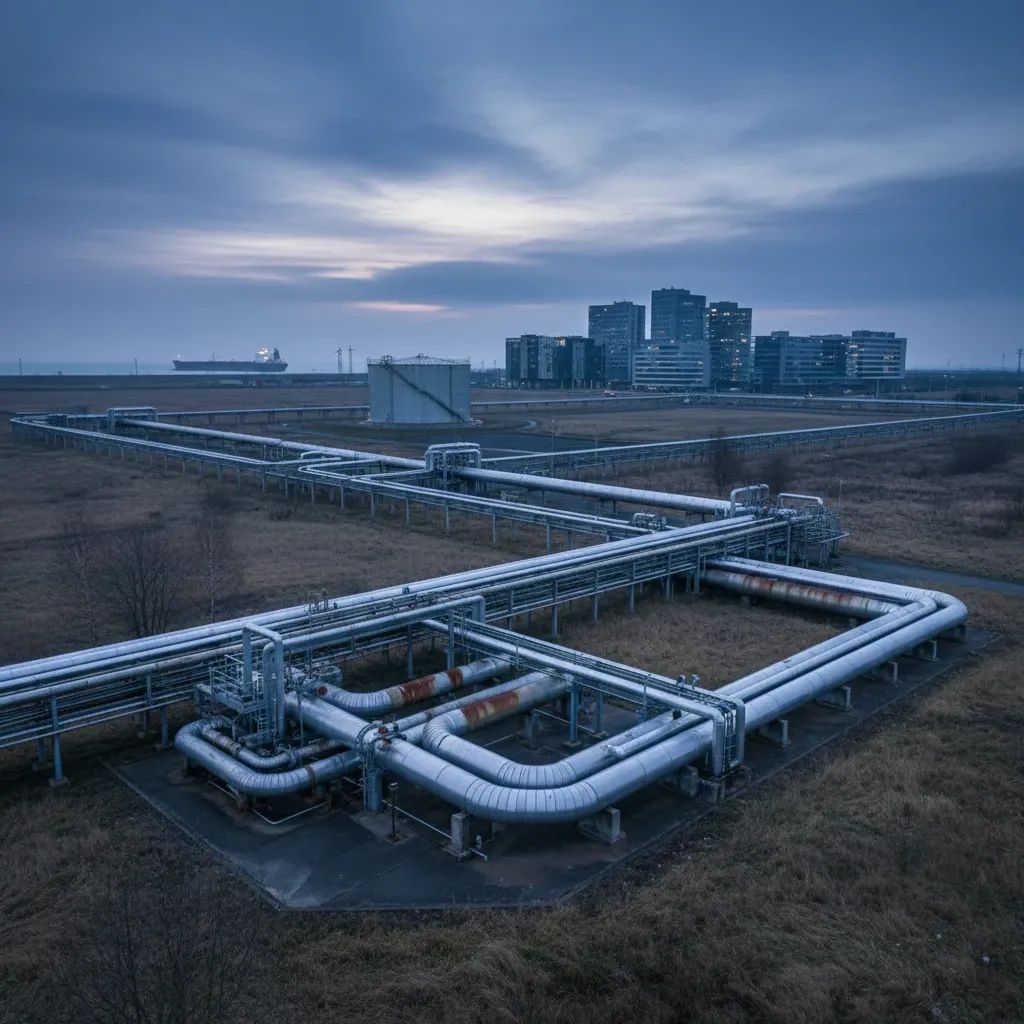
Ukraine's sustained drone offensive against Russia's energy infrastructure has blocked roughly 40% of Moscow's crude oil export capacity, equivalent to 2 million barrels per day, according to analysis from Reuters. The disruption arrives at a pivotal moment for global energy markets, as rising crude prices would normally position Russia to capitalize on higher revenues—but the Kremlin now finds itself unable to move much of its product to international buyers.
Why This Matters
• Energy supply disruption: The equivalent of 2M barrels/day has been taken offline, representing a substantial chunk of global crude availability.
• Market timing: The blockade coincides with a period of climbing oil prices, amplifying the financial damage to Russia's treasury.
• Strategic targeting: Ukraine has methodically struck all three major western export terminals in the Black Sea and Baltic Sea regions, plus a critical pipeline artery, demonstrating sophisticated operational planning.
Three Ports, One Pipeline: The Anatomy of the Blockade
Ukraine's drone campaign has focused on chokepoints that matter most to Russia's energy economy. The attacks have disrupted operations at the country's three primary western-facing export hubs—located in the Black Sea and Baltic Sea regions—effectively cutting off Moscow's main arteries to European and global markets. Beyond the port infrastructure, Ukrainian forces have also targeted the Druzhba pipeline, a Soviet-era conduit that has historically funneled Russian crude westward through Belarus and into Central Europe.
The Druzhba system, whose name translates to "friendship" in Russian, has been a cornerstone of European energy dependence on Moscow for decades. Damage to this pipeline, combined with the disruption of maritime terminals, creates a logistical challenge for Russia's state oil company Rosneft and other major producers. Even if crude continues to be extracted from Siberian and Urals fields, the inability to transport it to buyers substantially constrains the resource's value.
The Timing Could Not Be Worse for Moscow
Oil prices have been trending upward in recent weeks, a development that would ordinarily deliver a windfall to Russia's budget. The Kremlin relies heavily on energy export revenues to fund government operations, military expenditures, and social programs. Higher prices per barrel should translate directly into increased foreign currency inflows—but only if the oil can actually reach customers.
With 2 million barrels per day offline, Russia is missing out on hundreds of millions of dollars in potential daily revenue at current market rates. This lost income arrives at a time when Moscow faces mounting fiscal pressures from military mobilization, international sanctions, and the need to maintain domestic economic stability. The 40% reduction in export capacity represents a direct blow to the financial sustainability of the Russian state.
Strategic Calculus: Why Ukraine Targets Energy Infrastructure
Ukraine's military strategy has increasingly emphasized deep strikes against Russia's economic foundations rather than solely engaging in frontline combat. Energy infrastructure offers high-value targets that are difficult to defend comprehensively. Refineries, storage depots, port facilities, and pipelines are sprawling, geographically dispersed, and inherently vulnerable to drone attacks.
By degrading Russia's ability to generate export revenue, Ukraine aims to weaken Moscow's capacity to sustain prolonged military operations. Every barrel of crude that fails to reach market is one less contribution to the war chest funding artillery shells, aircraft fuel, and troop salaries. The attacks also send a message to global energy buyers: Russian supply is unreliable, and alternative sources may be necessary for long-term contracts.
Global Energy Markets Feel the Ripple
The sudden disruption of 2 million barrels per day from global markets has implications far beyond the Black Sea region. While OPEC+ members and other producers may be able to compensate for some of the shortfall, the immediate effect is upward pressure on prices. European refiners that previously sourced Russian crude—even in reduced volumes post-sanctions—now face the prospect of supply chain reconfiguration and potentially higher procurement costs.
For Italy and other European Union member states, the energy dynamics are complex. Italy has significantly reduced its dependence on Russian energy since 2022 and has actively diversified its import sources. Higher global oil prices could influence fuel costs for consumers and industries reliant on petroleum products, though Italy's reduced exposure to Russian supplies means direct impact is limited compared to earlier periods. The current market disruption underscores the value of Italy's ongoing efforts to secure alternative suppliers from North Africa and the Middle East, as well as the strategic importance of renewable energy expansion and liquefied natural gas (LNG) import infrastructure.
What This Means for Residents
The blockade of Russian oil exports contributes to global crude price dynamics that can eventually influence fuel costs in Italian markets. However, Italy's energy security is less vulnerable to this disruption than it would have been in prior years, given the country's substantial shift away from Russian energy dependence since 2022.
Italian households and businesses have already adjusted to a post-2022 energy landscape characterized by higher prices and supply diversification. Investors with exposure to energy markets should note that the 40% reduction in Russian export capacity may sustain elevated price levels in the near term, barring a rapid diplomatic resolution or successful Russian efforts to restore damaged infrastructure. Italy's government has emphasized energy independence as a national security priority, and developments like these reinforce the rationale for that policy direction.
Can Russia Restore Capacity?
Repairing drone-damaged refineries, port facilities, and pipeline segments is a time-intensive and resource-heavy process. Russia has demonstrated resilience in previous infrastructure attacks, but the scale and coordination of Ukraine's current campaign present a more serious challenge. Western sanctions on advanced components and technical expertise further complicate restoration efforts, as Moscow cannot easily source specialized equipment or engineering services from international suppliers.
If the disruption persists for weeks or months, Russia may be forced to redirect crude to domestic storage or curtail production at the wellhead—both economically damaging options. The Kremlin has historical precedent for maintaining oil output even when export routes are constrained, but sustained blockage of 2 million barrels per day would eventually necessitate production cuts to avoid overwhelming storage capacity.
The Broader Strategic Picture
Ukraine's ability to execute coordinated strikes on such high-value targets reflects growing operational sophistication and likely intelligence support from Western allies. The targeting of the Druzhba pipeline in particular signals a willingness to disrupt energy flows that affect not only Russia but also transit countries like Belarus and consumers in Central Europe. This raises complex diplomatic and economic questions about the acceptable scope of Ukraine's defensive operations.
For Italy and its EU partners, the current situation reinforces the strategic calculus that emerged in 2022: energy security cannot depend on geopolitically volatile suppliers, no matter how convenient or cost-effective the arrangement once seemed. The 40% disruption to Russian oil exports serves as a stark reminder that infrastructure in conflict zones—or controlled by parties to a conflict—is inherently unreliable.
As global markets digest the implications of this supply disruption, the pressure on alternative producers to increase output will intensify, and the economic cost of the conflict will continue to mount for all parties involved.


