
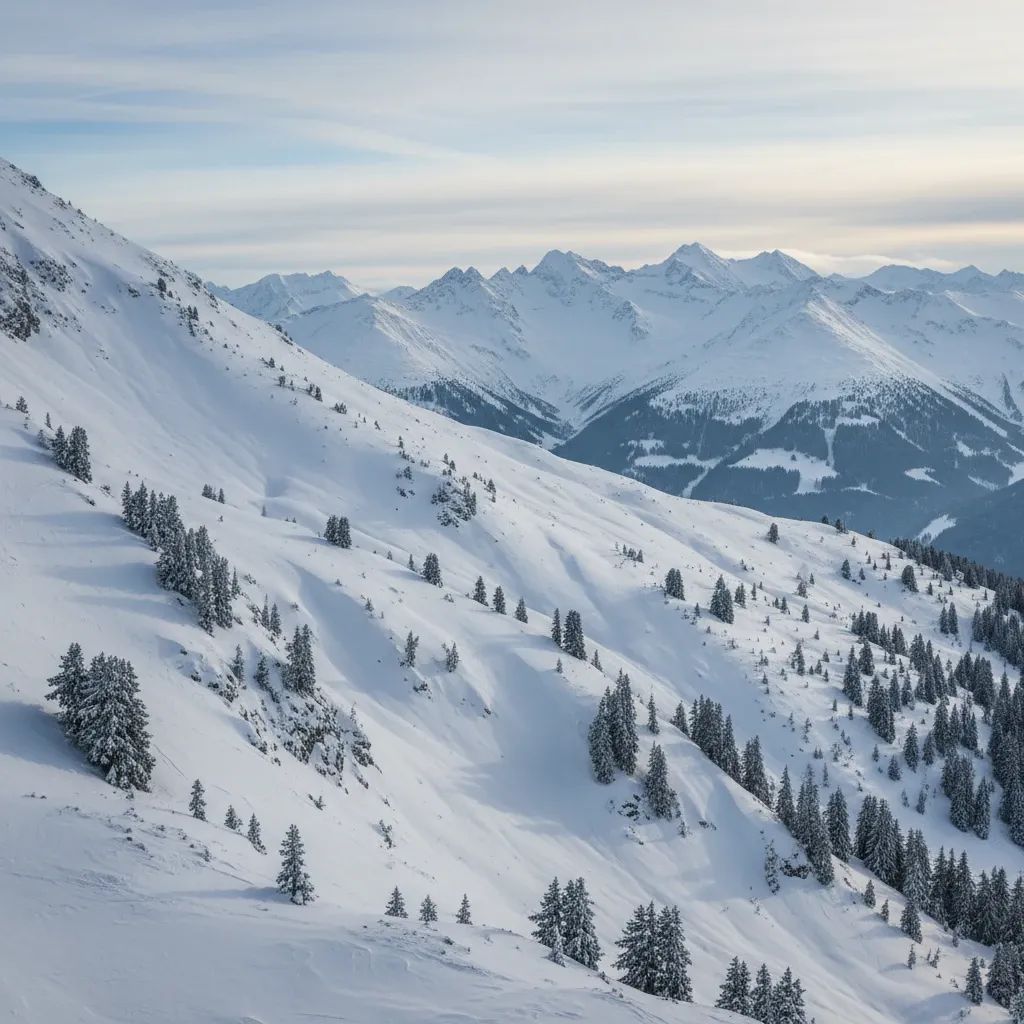
The Italy Alpine Rescue Service has confirmed a third fatality from a massive avalanche that swept across Cima d'Incendio in Val Ridanna, Alto Adige, bringing the death toll from the March 21 incident to three victims and five injured. Laura Santino, a 26-year-old from Vestone in the province of Brescia, died overnight at the University Hospital of Innsbruck, where she had been airlifted in critical condition following the avalanche.
The disaster, which unfolded around 11:40 AM on Friday at an altitude between 2,400 and 2,445 meters, engulfed approximately 25 ski mountaineers navigating a popular backcountry route. The avalanche's initial impact claimed two lives immediately: Martin Parigger, a 62-year-old alpine guide from Ridanna, and Alexander Frötscher, 56, originally from Ridanna but residing in Austria. Both men were recovered dead from beneath the snow mass by rescue teams.
Why This Matters
• Backcountry skiing risk: The incident underscores persistent avalanche danger even when official bulletins indicate "moderate" risk levels (level 2 of 5).
• Rescue infrastructure tested: Six helicopters and 80 personnel from Alto Adige Mountain Rescue, Guardia di Finanza, and Austrian Bergrettung responded, with hospitals in Bolzano, Bressanone, Merano, and Innsbruck activated for triage.
• Ongoing critical cases: A German tourist and an Austrian national remain hospitalized in serious condition, highlighting that the final toll may still rise.
What Happened on Tallone Grande
The avalanche struck a slope known locally as Cima d'Incendio (or Hohe Ferse), a terrain frequented by experienced ski mountaineers during late-season tours. According to rescue coordination reports, the snow mass broke loose while the group was ascending, catching multiple parties in its path. Though 25 individuals were directly involved, many on the periphery escaped with minor injuries or were able to self-extricate.
Emergency response was immediate and substantial. Three Pelikan helicopters operated by the provincial air rescue, one Aiut Alpin Dolomites helicopter, a Guardia di Finanza chopper, and the Austrian Christophorus rescue helicopter converged on the scene. Approximately 80 mountain rescue technicians from across the Upper Isarco Valley deployed with avalanche dogs, probes, and extraction equipment. The coordinated effort involved personnel from Soccorso Alpino dell'Alto Adige, Bergrettung Südtirol, local fire brigades, and finance police alpine units.
Santino, initially pulled from the avalanche debris alive but gravely injured, was flown directly to Innsbruck by the Austrian air ambulance due to the severity of her trauma. Despite intensive care treatment, she succumbed to her injuries during the night between Friday and Saturday.
The Avalanche Risk Context
The regional avalanche bulletin issued by the Euregio Avalanche Service (covering Tyrol, Alto Adige, and Trentino) had classified the risk as moderate—level 2 on the five-point European scale—at the time of the incident. However, the forecast specifically warned of wind-loaded snow deposits and persistent weak layers embedded within the older snowpack, conditions that can destabilize under the weight of skiers even on seemingly benign slopes.
This winter season has been characterized by irregular precipitation patterns, creating what avalanche experts describe as a "trap scenario": a thin snowpack with fragile internal structure masked by fresh surface snow. Such conditions increase the likelihood that human-triggered avalanches will propagate across large areas, as appears to have occurred on Cima d'Incendio.
Italy's backcountry community faces persistent hazards despite advances in forecasting and safety equipment. Ski mountaineering accounts for approximately half of the country's annual avalanche fatalities. The Val Ridanna tragedy follows other recent incidents: a fatality on January 10 in Valle d'Aosta, and the deaths of two experienced mountaineers on February 26 in Valtellina. These incidents collectively demonstrate the continuing risks facing backcountry enthusiasts.
How Alto Adige Manages Avalanche Risk
The Autonomous Province of Bolzano operates one of Europe's most sophisticated avalanche safety infrastructures. Central to this is the Euregio Avalanche Bulletin, published at least daily throughout winter on valanghe.report. The bulletin provides short-term forecasts detailing avalanche danger levels, problem types (wind slabs, persistent weak layers, wet snow), snowpack structure analysis, and weather trends for the following 24 to 48 hours.
The Provincial Functional Center within the Civil Protection Agency coordinates real-time monitoring through a dense network of weather stations and snowpack sensors. Data feeds into predictive models that inform both public bulletins and targeted alerts to local avalanche commissions—groups of trained experts authorized to close roads, ski areas, or evacuate at-risk structures when danger spikes.
In addition, structural defenses play a critical role. Snow fences, nets, and reforestation projects stabilize known avalanche paths. In Predoi (Prettau), Valle Aurina, an advanced radar-based early warning system detects moving snow masses and automatically activates traffic lights and acoustic alarms, simultaneously notifying road services, the municipality, and avalanche commissions.
Despite these measures, backcountry users bear ultimate responsibility for their own safety. Avalanche experts stress that no terrain steeper than 30 degrees should be considered safe when moderate or higher danger levels are forecast, and that the presence of existing tracks offers no guarantee of stability. Proper equipment—ARTVA transceiver, probe, and shovel—is mandatory, but studies show survival drops precipitously if buried victims are not located within 20 to 30 minutes.
Impact on Residents and Mountain Tourism
For the Alto Adige mountain community, the Val Ridanna avalanche is both a personal tragedy and a stark operational reminder. Martin Parigger was a well-known local guide whose death reverberates through the tight-knit network of alpine professionals. The incident also raises questions about overcrowding on popular ski touring routes, a concern flagged repeatedly by rescue services as the sport's popularity surges.
Authorities and mountain associations continue to emphasize that consultation of avalanche bulletins is necessary but insufficient. Proper training, conservative decision-making, and group discipline remain non-negotiable. The Val Ridanna disaster, occurring on a relatively moderate danger day on a well-traveled slope, illustrates how quickly conditions can turn lethal.
As rescue operations wind down and investigations proceed, the families of Laura Santino, Martin Parigger, and Alexander Frötscher face the aftermath of a day in the mountains that ended in tragedy. For Italy's ski touring community, the deaths serve as a somber call to reassess risk tolerance and preparation standards heading into the final weeks of the alpine season.


