
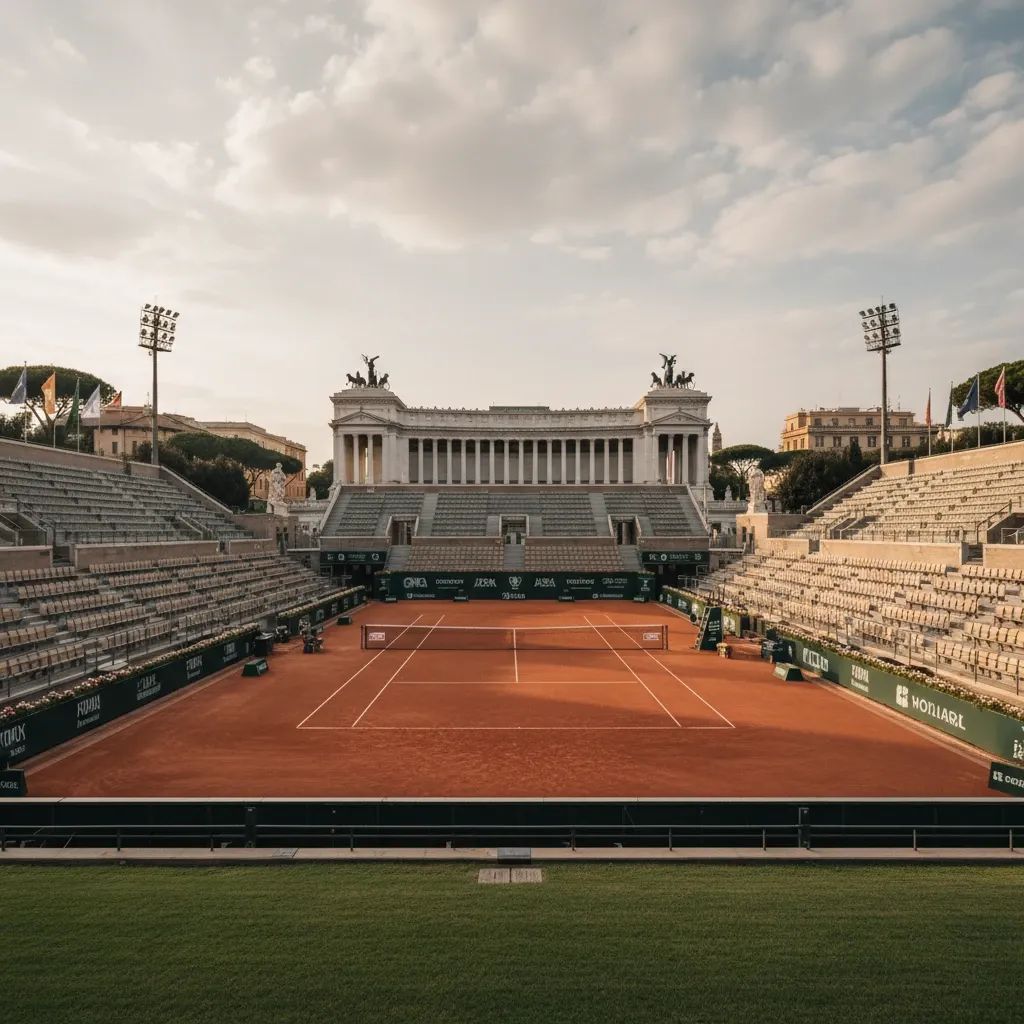
Tennis star Jannik Sinner has joined growing criticism of the Grand Slam tournaments over prize money allocation, expressing understanding of player frustration over what he describes as a fundamental lack of respect. The world number 1's comments came during a press conference at the Internazionali d'Italia in Rome, where the typically reserved champion publicly addressed an issue that has united the men's and women's tours.
Why This Matters
• Prize money share declining: Despite Grand Slam revenue growth, player compensation at Roland Garros dropped from 15.5% of revenue in 2024 to a projected 14.9% in 2026, even as total prize pools nominally increased.
• Player frustration growing: Top players including Aryna Sabalenka and Coco Gauff have openly discussed the possibility of refusing to compete if negotiations fail, with Wimbledon's 2026 announcement expected within weeks as a critical test.
• Broader welfare demands: Beyond headline figures, players seek pension contributions, insurance coverage, and maternity protections that extend far beyond the top 10 earners.
The Economics Behind the Anger
Sinner's intervention carries particular weight given his career earnings already exceed $60 M, making clear this is not simply about personal enrichment. The 24-year-old emphasized that male and female athletes are unified on the issue, framing the dispute as one of institutional respect rather than pure compensation. "Without us, these tournaments wouldn't exist," he stated plainly, articulating a position that gains credibility when delivered by someone whose presence demonstrably fills stadiums.
The numbers reveal the source of player discontent. While Roland Garros announced a 9.5% increase to reach €61.7 M in total prize money for 2026, singles champions receiving €2.8 M each, the mathematics tell a different story. As tournament revenues have climbed faster than player payouts, the proportion allocated to competitors has steadily eroded. By contrast, ATP and WTA 1000 events distribute approximately 22% of revenues to participants, the benchmark players now demand from the four majors.
Other Slams have responded more generously. The Australian Open raised its total purse nearly 16% to 111.5 M Australian dollars in January, with singles champions taking home 4.15 M AUD. The US Open jumped 20% last year to reach $90 M total, awarding winners $5 M each. Against this backdrop, the French tournament's more modest increase appears particularly stingy, explaining Sinner's specific reference to "disappointment with the outcome at Roland Garros."
What This Means for the Sport
The dispute extends well beyond the elite tier that dominates headlines. Sinner explicitly rejected the notion this benefits only top-ranked men and women: "We're making this argument for everyone," he insisted. The structural issues affect players outside the top 100 most acutely, those for whom prize money represents essential income rather than supplementary revenue to endorsement portfolios worth tens of millions.
Pension and welfare programs illustrate the gap. Both the ATP and WTA have established support systems for players—including retirement contributions, insurance, and family support benefits—yet these programs depend entirely on tour revenues, not Grand Slam contributions, despite the majors generating substantially more income per event. Players now demand that the majors contribute directly to these structures, alongside increased prize money and transparent representation in governance decisions.
Grand Slam leadership has not yet responded to these broader proposals, focusing public communications solely on prize pool figures that, while nominally rising, represent a shrinking share of tournament economics.
Rome as Backdrop for Brewing Conflict
Sinner's willingness to lead this charge publicly marks a shift for a player known more for understated professionalism than provocative statements. His arrival at the Foro Italico triggered predictable enthusiasm, fans sporting orange wigs and makeshift shrines, crowds erupting when he crossed the bridge from the players' lounge to the press center. He trained on Court 5, where Roger Federer, Rafael Nadal, and Novak Djokovic have historically prepared for matches, a symbolic positioning as his country hopes he becomes the first Italian male singles champion since Adriano Panatta achieved the feat 50 years ago in 1976.
Yet amid the celebratory atmosphere, Sinner's focus remained fixed on the structural dispute. "We've been silent for too long, it's right to talk about this now," he stated, revealing that behind-the-scenes negotiations have been progressing. The timeline matters: Wimbledon's prize money announcement is expected within the next two weeks, creating a natural deadline for the All England Club to either defuse or inflame tensions heading into the grass-court major scheduled for late June through mid-July.
Angelo Binaghi, president of the Italian Tennis and Padel Federation, publicly backed the players' position, calling it "scandalous" that Grand Slams distribute smaller revenue percentages than lower-tier events. This institutional support from a national federation represents unusual solidarity in a sport where tournament organizers and governing bodies typically present united fronts against player demands.
What Happens Next
The contours of potential action remain unclear. Some top players have discussed the possibility of boycotting a Grand Slam, though no formal organizing has materialized publicly. Sinner acknowledged understanding why competitors discuss such measures—"We have to start somewhere," he conceded—while stopping short of committing to participation in any organized action.
The Australian Open's generous increase in January, followed by Roland Garros's comparatively stingy response, creates an inconsistent landscape. If Wimbledon announces a similarly modest adjustment, pressure for coordinated response will intensify. Conversely, a substantial increase could fracture player unity, allowing tournaments to address the issue piecemeal rather than through systematic reform.
For residents following the dispute, the stakes extend beyond individual advocacy. Tennis represents one of the nation's major sporting success stories in recent years, with growing infrastructure investment and youth participation. Structural conflicts that undermine player welfare or create instability in the professional calendar could disrupt this momentum, particularly if top stars begin selectively skipping majors or if the sport fractures into competing organizational structures.
Sinner took three days of complete rest after winning his fourth consecutive Masters 1000 title in Madrid, indulging in golf and soccer rather than training. He emphasized the importance of balance at 24, enjoying life between the relentless grind of professional competition. Yet even in that context, the prize money dispute loomed. His willingness to spend political capital on an issue affecting the broader player community, rather than simply collecting his winner's checks and focusing on tennis, suggests the depth of frustration coursing through the professional ranks.
The next fortnight will determine whether this remains a war of words or escalates into concrete discussions that reshape the sport's most prestigious events.


