
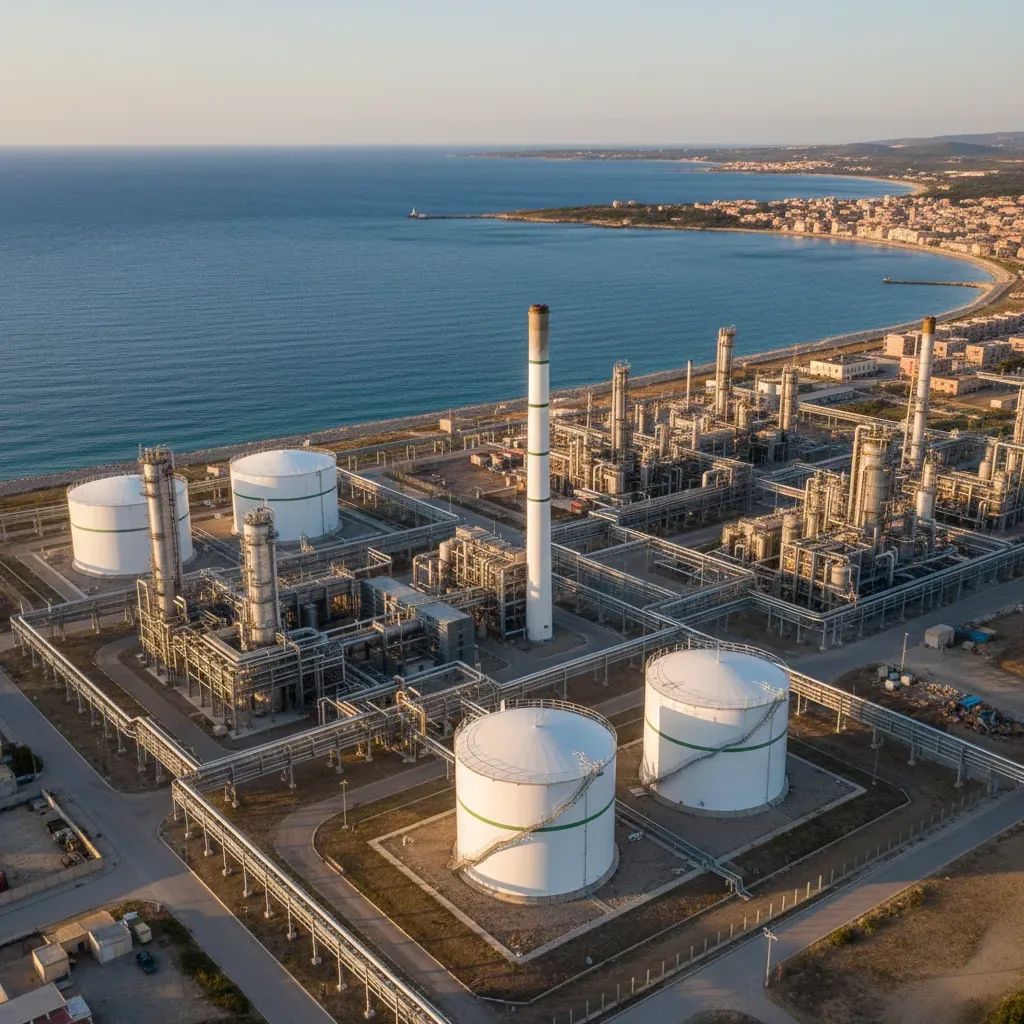
Italy's Ludoil Energy Group has secured control of the Priolo Gargallo refinery through an agreement with Cypriot private equity fund Goi Energy, bringing the country's largest crude processing complex back under domestic ownership in a deal that could reshape Italy's energy independence and regional employment landscape.
Why This Matters:
• Energy sovereignty: The facility processes 20M tonnes annually, representing roughly 25% of Italy's total refining capacity.
• Regulatory hurdle ahead: The first phase covering 51% equity requires Golden Power approval from the Italian Cabinet, antitrust clearance, and sector-specific permits.
• Bio-transition commitment: Ludoil plans to pivot operations toward advanced bio-processing, including HVO (Hydrotreated Vegetable Oil) and SAF (Sustainable Aviation Fuel) production, while preserving all current jobs.
From Russian Hands to Italian Control
The Isab refinery in Priolo Gargallo, located in Sicily's Siracusa province, has changed hands multiple times over its operational history. Most recently, it was owned by Russian energy giant Lukoil through its Swiss subsidiary Litasco. When the European Union imposed sanctions following Russia's invasion of Ukraine, Lukoil could no longer source Russian crude or secure bank credit for alternative supplies, forcing a sale.
Goi Energy, a Cypriot private equity fund, stepped in during May 2023 to prevent closure. The fund's tenure proved short-lived, however, as operational and commercial challenges emerged. Ludoil's Ammaturo family, which has been in negotiations with Goi Energy, finalized the sale and purchase agreement this week, securing the refinery's future under Italian domestic control.
The transaction structure unfolds in two tranches, with majority control subject to Italy's Golden Power vetting process—a mechanism designed to scrutinize transfers of strategic assets in sectors including energy, transport, and telecommunications.
What This Means for Residents
For Italians, particularly those in Sicily and across the industrial south, the transaction carries tangible implications. The Isab workforce will remain intact, according to the buyer's commitment, a crucial reassurance in a region where large-scale manufacturing jobs are scarce and valued.
Energy security is another dimension. With geopolitical tensions affecting crude supply chains, domestic control over a quarter of national refining capacity reduces reliance on foreign decision-making during crises. The Golden Power review empowers Rome to attach conditions on crude sourcing, employment floors, environmental standards, and investment timelines, giving the state leverage that was absent under offshore ownership.
The refinery's geographic position—adjacent to Mediterranean shipping lanes connecting Europe, North Africa, and the Middle East—positions it as a strategic asset for Italy's energy infrastructure and potential hub for sustainable fuel exports.
The Ludoil Group: An Integrated Energy Operator
Founded by the Ammaturo family with roots dating to 1954, Ludoil has grown from a regional fuel distributor into an integrated energy group. The company operates over 200 branded service stations across central and southern Italy and controls critical logistics infrastructure, including coastal storage terminals at Civitavecchia and Vibo Marina, plus a jet fuel pipeline serving Rome Fiumicino airport. Consolidated revenues topped €3.6B in 2024, with significant investments directed toward renewable energy initiatives.
Acquiring Isab vaults Ludoil into the top tier of Italian private energy operators. The group's strategy centers on vertical integration: owning the refinery, storage terminals, pipelines, and retail network creates operational efficiency that few domestic rivals can match.
Bio-Refining and the Priolo Transition
Ludoil's medium-term vision for Isab centers on advanced bio-processing, gradually introducing feedstock chains for HVO, SAF, and bio-based fuels. This aligns with broader decarbonization mandates under the EU's Renewable Energy Directive and Italy's National Energy and Climate Plan, which set binding quotas for renewable fuel blending in transport.
The Priolo industrial district already hosts bio-refining capacity, making the operational shift compatible with existing infrastructure. Isab's authorized 20M-tonne nominal capacity operates at a balanced throughput closer to 15M tonnes, leaving headroom for transition without jeopardizing output.
Golden Power: The Regulatory Framework
Italy's Golden Power framework grants the Cabinet authority to block, impose conditions, or greenlight transactions involving strategic assets in critical sectors. In the energy sector, this extends to refining infrastructure deemed essential for national supply security.
The notification process requires Ludoil to submit detailed filings to the Presidency of the Council of Ministers. The government can veto the deal, demand modifications, or attach operating conditions covering crude sourcing, employment levels, capital expenditure, and environmental compliance. Given Isab's scale and strategic importance, regulatory approval is expected, though conditions may include bio-transition milestones and job-protection commitments.
Economic and Strategic Importance
The Priolo refinery's return to Italian hands carries significance for national energy sovereignty. Keeping Isab operational—and steering it toward low-carbon fuels—preserves tax revenues, export earnings, and ancillary industries in Sicily, from chemical manufacturing to port logistics.
Goi Energy's exit underscores the challenges facing financial investors in capital-intensive, politically sensitive energy sectors. Selling to a domestic operator with existing Italian infrastructure and regulatory familiarity represents a practical solution for the Cypriot fund.
What Comes Next
Ludoil must clear the Golden Power review and secure antitrust approval from Italy's competition authority. Barring complications, the first tranche—delivering 51% control—could close by late summer 2026, with remaining equity following once conditions are satisfied.
On the operational front, Ludoil will maintain crude throughput while gradually blending bio-feedstocks into production runs. Partnerships and pilot projects for HVO and SAF will serve as proof-of-concept before broader conversion. The company aims to integrate Isab into its existing logistics network, potentially routing bio-refined products through its Civitavecchia terminal for distribution or export.
For workers, local officials, and energy analysts alike, the Ludoil-Isab transaction represents a test case for Italian energy operators managing major refineries while executing green transitions in a decarbonizing Europe.


